

By Amanda Szulc, Opinion Contributor
Accepting that this state is permanently lost is the surest way to make it true.
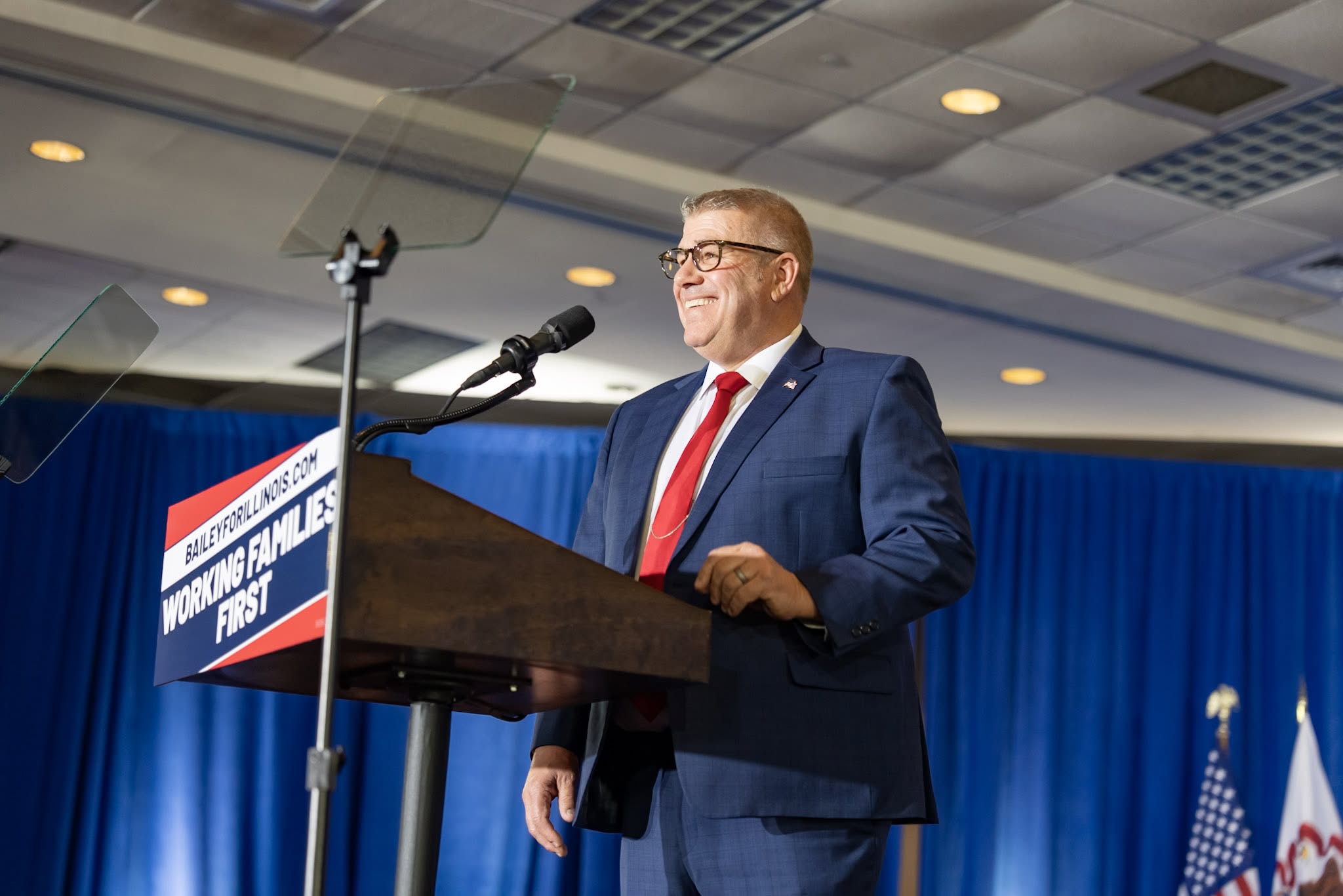
Darren Bailey and Aaron DelMar won the Republican primary for governor and lieutenant governor. That should have been a moment of momentum for a party that has struggled for decades in Illinois. While some Republican candidates and officials have shown support, the broader response has been marked by hesitation and silence. Too many have stayed quiet or kept their distance. In a state where Republicans have been out of power for so long, this lack of full and public unity after a primary is not just disappointing — it is self-defeating.
This is not a new problem. For years, the Illinois Republican Party has operated more like a collection of individuals protecting their own political futures than a unified force willing to challenge the Democratic machine that dominates the state. The result has been predictable. Democrats have maintained total control of the governor’s office and hold large legislative supermajorities. Chicago has not had a Republican mayor since 1931. Even in areas where Republicans have an opportunity to compete, internal division and a lack of courage often prevent them from mounting a serious challenge.
Too many Republican leaders have adopted a cautious, self-preserving approach. They avoid taking strong positions. They refuse to fully back their own nominees. They seem more concerned with not rocking the boat than with actually winning. This strategy has failed for decades, yet it continues. When the party refuses to unite behind its candidates, it signals to voters that even Republicans do not believe they can win. That message is damaging, and it reinforces the very defeatism that keeps the party weak.
But the problem does not stop with the leaders. A dangerous mindset has taken root among too many Illinois voters:
“It is what it is.”
“This is a Democratic state.”
“Nothing will ever change.”
“My vote doesn’t matter.”
“Pritzker has too much money and power.”
I understand how easy it is to feel this way. I have felt the weight of it myself. Living in a state that has been dominated by one party for so long can make hope feel naïve. Watching high taxes, families leaving, corruption scandals, and years of public safety failures can leave people exhausted. It is human to grow weary. But when weariness turns into resignation — when we decide that nothing we do will matter — we become part of the problem.
The “it is what it is” attitude is not neutral. It is corrosive. It teaches our children that their voice is worthless. It tells candidates that there is no point in running. It tells donors that their money is wasted. It tells volunteers that their time is meaningless. And it hands the status quo exactly what it needs to continue: silence and low turnout.
I have seen this up close as a precinct committeeperson and as someone working on the ground in Will County. I have watched people who care deeply about the direction of this state still decide to stay home on Election Day because they have already accepted defeat. Every time that happens, the machine grows stronger and the people who want something better grow quieter. Doing nothing is not harmless. It is a choice — and it has a cost.
Illinois does not have to stay this way. Other states with long histories of one-party dominance have shifted when enough people decided they were no longer willing to accept the status quo. Change does not happen by accident. It requires unity from leaders and courage from voters. Right now, both are in short supply.
Real progress will require more than winning a primary. It will require Republican leaders to stop protecting their own positions and start acting like a party that actually wants to govern. That means setting aside personal grievances, rallying behind the nominee, and presenting a clear vision. It also requires voters to reject the lie that their participation is pointless. Your vote is not wasted because the state has been blue for a long time. Your voice is not irrelevant because one side has more money. And giving up is not realism — it is surrender.
I refuse to accept that Illinois is permanently lost. I refuse to believe that the people of this state are incapable of demanding better. And I refuse to stay silent while the “it is what it is” mindset continues to hollow out any chance of change.
Scripture tells us not to grow weary in doing good, for in due season we will reap if we do not give up. That principle applies to more than personal faith. It applies to the stewardship of the communities and the state God has placed us in. Faith without action is incomplete. Hope without effort becomes empty. And silence in the face of decline is not humility — it is abandonment of responsibility.
The choice is simple. Republican leaders can continue with the same fractured, cautious approach that has kept them out of power for decades, or they can decide that the future of Illinois is worth fighting for together. Voters can continue accepting the narrative that nothing will ever change, or they can reject that mindset, show up, and demand better.
Illinois does not have to remain a one-party state. But it will not change on its own. Change requires courage from leaders and clarity from voters. Both are still possible. The only question is whether we are finally willing to supply them.

By Mark Weyermuller, Opinion ContributorActor Tony Danza helped lead the annual Columbus Day Parade in downtown Chicago this past Monday as one of the grand marshals. You might...
Read moreDetails