

By Illinois Review
Illinois Republicans suffered devastating legislative losses Tuesday night as Democrats flipped at least six GOP-held seats in the General Assembly and led in seven additional races early Wednesday, threatening to reduce Republican representation in Springfield to historic lows.
The losses, coming alongside Gov. JB Pritzker’s decisive re-election victory over Darren Bailey, could leave Democrats with their largest legislative majorities since the 1980 Cutback Amendment reshaped the General Assembly.
If all outstanding Democratic leads hold, Republicans would be reduced to just 13 of 59 seats in the Illinois Senate and 33 of 118 seats in the Illinois House – leaving the GOP with even less influence in a state government already dominated by Democrats.
As of approximately 2 am Wednesday, the Associated Press had called four Republican-held Senate seats for Democrats:
++ 24th District: Democrat Ben McAdams defeated Republican Sen. Seth Lewis, 55% to 45%.
++ 26th District: Democratic Rep. Nabeela Syed defeated Republican Sen. Darcy Hills, 57% to 43%, in one of the most expensive legislative races in Illinois history. The campaigns raised approximately $6.5 million combined, with Syed outraising Hills by more than two to one, according to Reform for Illinois.
++ 33rd District: Democrat Michele Clark defeated Republican Danielle Penman, 62% to 38%, capturing the open seat of retiring Republican Sen. Don DeWitte.
++ 56th District: Democrat Marsie Geldert-Murphey defeated Republican Sen. Erica Harriss, 53% to 47%.
Two additional Republican Senate incumbents were trailing in races that had not yet been called.
In the 32nd District, Democrat Karen Battaglia led Republican Sen. Craig Wilcox, 53% to 47%, with approximately 90% of the vote counted.
In the 35th District, Democrat Sarah Mertens held a narrow lead of approximately 900 votes over longtime Republican Sen. Dave Syverson, 50.6% to 49.4%. Syverson was first elected to the Senate in 1992.
Democrats entered Election Day controlling the Senate 40-19. The four projected Republican losses would expand that advantage to 44-15. If both outstanding Democratic leads hold, Democrats would control the chamber 46-13.
The political damage extended into the Illinois House, where Democrats flipped two Republican-held seats overnight and led in five additional districts.
In the 47th District, Democrat Erica Bray-Parker defeated Republican Robert Vrankovich, 59% to 41%, capturing the open seat previously held by Republican Rep. Amy Grant.
In the 52nd District, Democrat Maria Peterson defeated Republican Rep. Martin McLaughlin, 56% to 44%, reversing their razor-thin 2024 contest, which McLaughlin won by just 47 votes.
Five additional Republican-held House districts remained in danger:
++ 48th District: Democrat Amanda Zahorak led Republican Rep. Jennifer Sanalitro, 55% to 45%, with 84% counted.
++ 65th District: Democrat Ricky Rivard led Republican Rep. Dan Ugaste, 58% to 42%, with 63% counted.
++ 70th District: Democrat Veronica Garcia-Martinez led Republican Rep. Jeff Keicher, chairman of the House Republican Conference, 53% to 47%, with 72% counted.
++ 104th District: Democrat Mary Catherine Roberson led Republican Rep. Brandun Schweizer, 51.3% to 48.7%, with 79% counted.
++ 114th District: Democrat George McClellan Jr. led Republican Rep. Kevin Schmidt, 50.8% to 49.2%, with 96% counted.
Democrats entered the election with a 78-40 House majority. The two projected flips would expand their advantage to 80-38. If all five additional races break their way, Democrats would hold an overwhelming 85-33 majority.
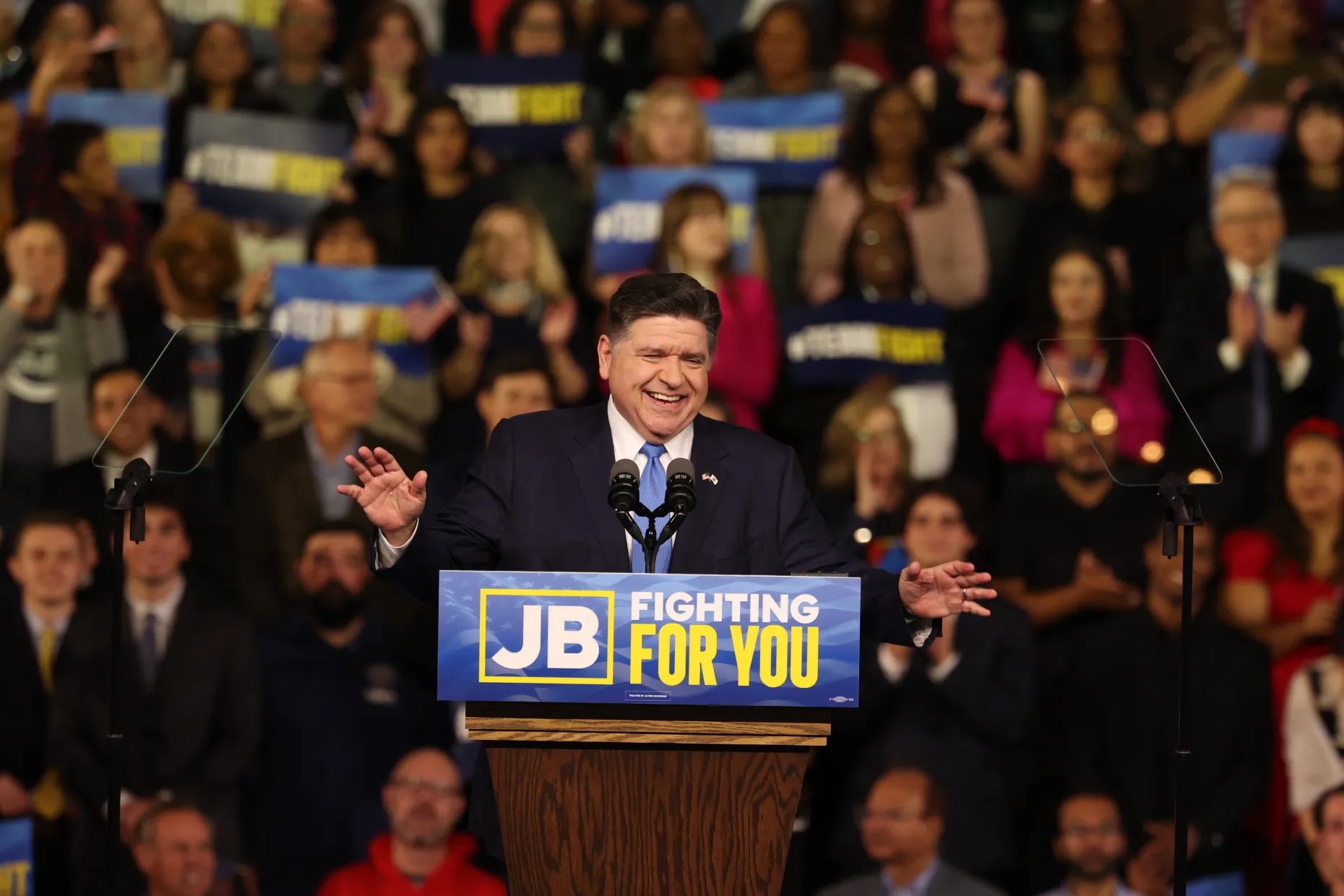
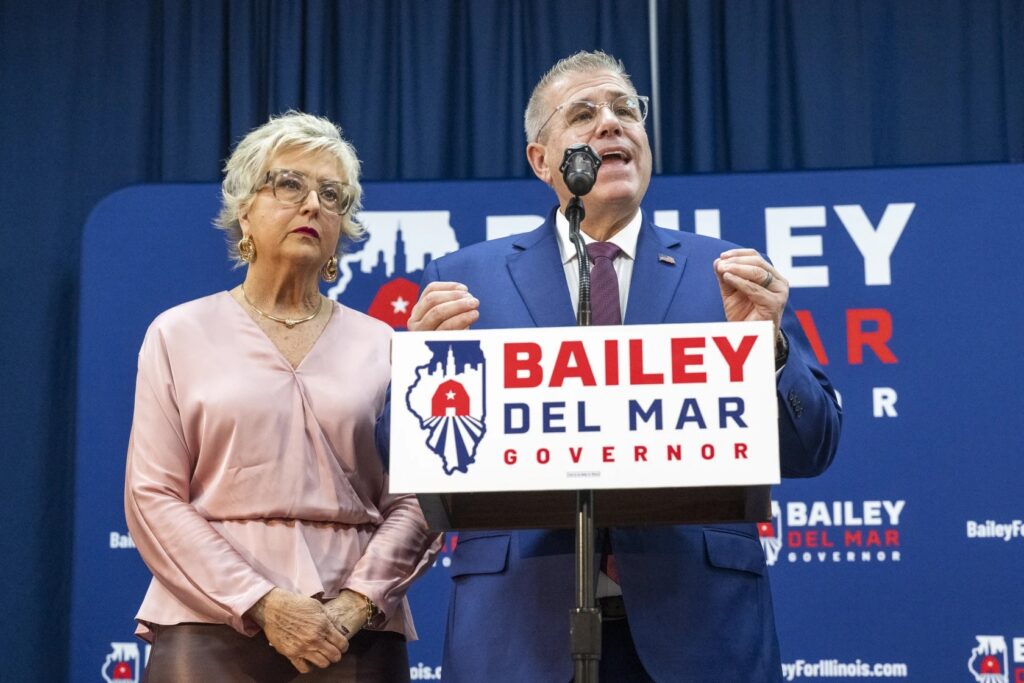
At the top of the ticket, Pritzker defeated Bailey in their gubernatorial rematch, leading approximately 64% to 35% overnight and becoming the first Democrat in Illinois history to win a third term as governor.
Lt. Gov. Juliana Stratton also defeated former Illinois Republican Party Chairman Don Tracy by 23 points in the race to succeed retiring U.S. Sen. Dick Durbin.
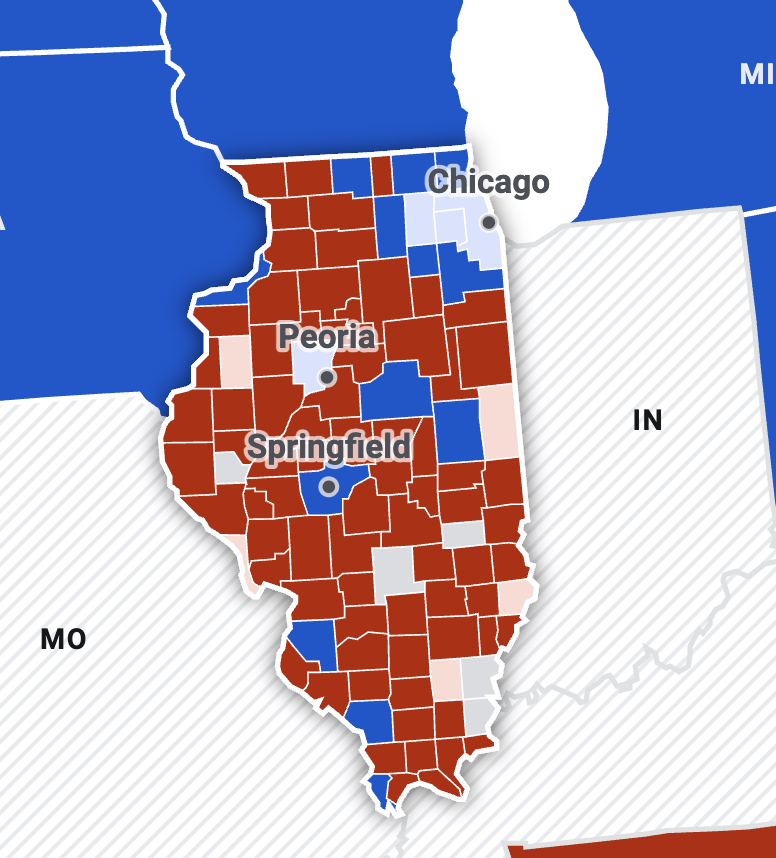
Democrats swept the remaining statewide constitutional offices.
House Speaker Chris Welch celebrated the legislative results, saying Democrats had accomplished their goals of protecting incumbents and expanding their majority.
Meanwhile, neither House Republican Leader Tony McCombie nor Senate Republican Leader John Curran had issued a public statement as of early Wednesday morning.
The implications extend well beyond Election Night.
With Democrats already controlling the governor’s office and both legislative chambers, additional Republican losses would further consolidate Democratic power in Springfield, leaving GOP lawmakers with diminished influence over legislation, spending priorities and state policy.
For Illinois Republicans, the results also raise serious questions about party leadership, candidate recruitment, campaign strategy and the GOP’s ability to compete in suburban districts that once formed a critical part of its legislative base.
The extent of the damage will become clearer as outstanding ballots are counted.
All results remain unofficial. Mail-in ballots received after Election Day and provisional ballots could affect several close races, particularly the 35th Senate District and the 104th and 114th House districts.
County election authorities will certify their results in the coming weeks, followed by the Illinois State Board of Elections.
The newly elected General Assembly will take office in January.