

By Melissa Ortiz, Guest Opinion Contributor
As America prepares to celebrate her 250th birthday in a few months, it has seemed important to revisit her founding documents. The preamble to our Declaration of Independence states clearly that we have the unassailable right to life, liberty, and the pursuit of happiness. We are all, as humans – as Americans – promised the right to live freely and try our best to find and live out what makes us happy.
Sadly, that first and most fundamental right – life, is under attack in various states.
On Friday, Illinois Gov. JB Pritzker is expected to sign Senate Bill 1950 — the End-of-Life Options for Terminally Ill Patients Act, also known as “Deb’s Law.” The legislation was amended to shift its focus toward legalizing so-called “medical aid in dying.”
In a post on X Wednesday, NBC 5 political reporter Mary Ann Ahern wrote, “Look for @GovPritzker to sign medical aid in dying bill Friday.”
If signed, Illinois would become the 13th state or jurisdiction in the United States to legalize physician-assisted suicide – a practice critics condemn as inhumane and dangerous, particularly for the elderly, disabled, and vulnerable.
On Thursday, I sat in a meeting with other detractors of the legislation and respectfully implored the governor’s staff to encourage him to delay the signing until the concerns about the legislation could be resolved satisfactorily. It seemed as if the meeting was a “going through the motions” event to hush up people with disabilities and others who know how dangerous this type of legislation is and are thus concerned.
While I do not live in Illinois, parts of my family grew up there. I have travelled there for work and recreation. I am shocked that a state known for its solid midwestern values would consider this legislation.
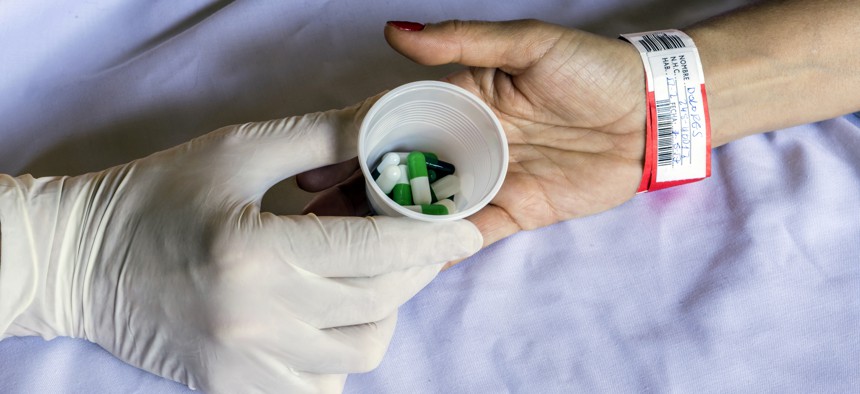
SB 1050 is the first step in creating a culture in Illinois, and, perhaps, the entire country, which devalues the most fundamental right we have as human beings: life. It also erodes one of the most important relationships we have outside of our faith and family: that of our trust in our medical professionals.
So, why should this concern me? It concerns me because I have seen the fear that it creates in vulnerable people who go to the hospital for care during a medical crisis. I have seen the coercion that happens, albeit gently and subtly.
I have been directly affected by this. I am a proud member of Gen X, which does make me a bit old by some standards. That’s perfectly fine with me. I am proud to be among the first group of people born with spina bifida to survive in large numbers past childhood well into adulthood.
Living with a disability is not for the faint of heart. Still, I adore my life on wheels. I have enjoyed almost all the normal human experiences like getting an education, falling in love, and making my mark in the professional world. Alongside the good things, I have also experienced the hard things like the death of parents and beloved friends.
In January of 2021, I faced my greatest challenge yet: aggressive breast cancer.
Anyone who has ever gone through cancer treatment will agree that it ravages each patient equally, demanding everything you have to give, just like maneuvers in a military war zone. Coupling it with a disability makes it even more strenuous.
The treatment I received was exceptional with one caveat: each time I was triaged before a chemo treatment, I was peppered with questions that were gently leading me to have “the discussion.” To discuss the availability of physician assisted suicide if I had less than six months to live and/or felt that the suffering I was undergoing was untenable.
After the third such discussion, I asked to see the administrators of the chemo clinic, politely but forcefully making it clear that I was not to be asked any more related questions when I came in for treatment.
Six months into treatment, the things that all cancer patients fear happened all at once. I had a reaction to the chemo, along with a UTI that went septic because my body couldn’t fight it. Also, I was neutropenic and had C Diff from the antibiotics given to me to treat the UTI that had taken hold of me because of being an intermittent catheter user.
Even though I was very weak and tired, the medical team finally answered my persistent questions honestly. On a Thursday afternoon, I was told that if I lived through the weekend, it would be considered a miracle. As they left the room, I snuggled with my loyal service dog and made the necessary phone calls.
That evening, my husband and I met with our priest to go over things and make plans. It was a bit surreal to make plans for my own funeral and navigate the reality that my life on earth would transition to life in heaven. Still, we trudged forward. Our priest left, leaving me with my husband and service dog. My husband, who is also my best friend, left about 90 minutes later, taking my service dog with him so he could walk her before taking her home to sleep. I was alone in my room pondering everything, more vulnerable than I had ever been in my life.
As I was drifting off to sleep, I had the feeling that someone was standing beside my bed. Opening one eye slightly, I noticed a nurse reading my vitals and glancing at my chart on her iPad. While I did not recognize her, I was unconcerned until she began to speak to me while fiddling with something in pocket. She asked me if I had been told that I was going to most likely die over the weekend. I told her I understood that my prognosis at that point was terminal. She began to tell me, unsolicited, about an organization for which she was a volunteer. An organization that was committed to helping terminal patients die with dignity. Compassion and Choices.
Suddenly wide awake, I worried that she might have a shot in her pocket that could end things for me right then. Each word that came out of my mouth got louder to the point that within 30 seconds, my room was filled with medical personnel.
To place a protective guardrail around patients, the law states that the patient is to bring up the discussion. Medical personnel are to do NOTHING to lead the discussion. That was totally ignored in my situation.
To further protect patients, the law stipulates that the medical diagnosis must be clear that there is no conceivable way the patient will live six more months. Lastly, the life ending medical compound is to be self-administered. My diagnosis was changeable with my body’s response to all that was being to do to help me. It could turn quickly and suddenly into a recovery position from a terminal one.
Since I am here five years later (and three years NED -no evidence of disease), things turned out grandly. Still, the truth remains that in my weakened condition that night, pressure was brought to bear, albeit subtly, to choose the drugs so that I would not suffer unduly or be a burden on family and friends.
In retrospect, I feel extremely fortunate that I was able to resist.
I strongly believe my disability factored into the offer of lethal drugs, as I, in real time, faced the very fears of disability patients that their lives are not valued and therefore expendable. I worry deeply about others who, at a vulnerable moment, lacking the capability to decide due to illness, and without support, would end their lives prematurely.
What happens to patients who are not as strong in their self-advocacy as I am or who have no one to support them in said advocacy?
Today, I am a cancer survivor and run my own business. I call on Gov. Pritzker to veto this law which would leave people like me in a situation that, under duress, would give away hope of recovery and years of life.
We deserve better.
With the advances in hospice care, pain does not have to be unbearable. More importantly, each of our lives has something to offer the world. To cut them short for any reason at the hand of a person sworn to do no harm would be cruel and unnecessary.
—
Melissa Ortiz previously served as Senior Advisor to the National Center for Public Policy Research’s Able Americans Project.
A self-described “happy warrior,” Ortiz is passionate about fostering meaningful dialogue between individuals living with disabilities or chronic illness and policymakers across the political spectrum – particularly within the conservative movement. Her professional background includes work in education in Nashville, Tennessee, as well as leadership roles in the nonprofit sector in New York City and Washington, D.C.
Ortiz was honored to serve as a Commissioner for President Donald J. Trump’s Administration on Disabilities. She is also the first female board member of The Conservative Caucus, one of the nation’s oldest conservative organizations. She currently resides in Washington, DC, with her husband, Tony, and her service dog, Annie Oakley. For more information about Melissa, please visit HERE.