


By John F. Di Leo, Opinion Contributor
The news stories at the end of the calendar year are different from the news stories the rest of the year.
There are always stories about politics and crime, features and culture, business trends and entertainment activity. All year long.
But from mid-December through mid-January, there’s a different kind of article that fills the newspapers and floods our websites: the year-end summary.
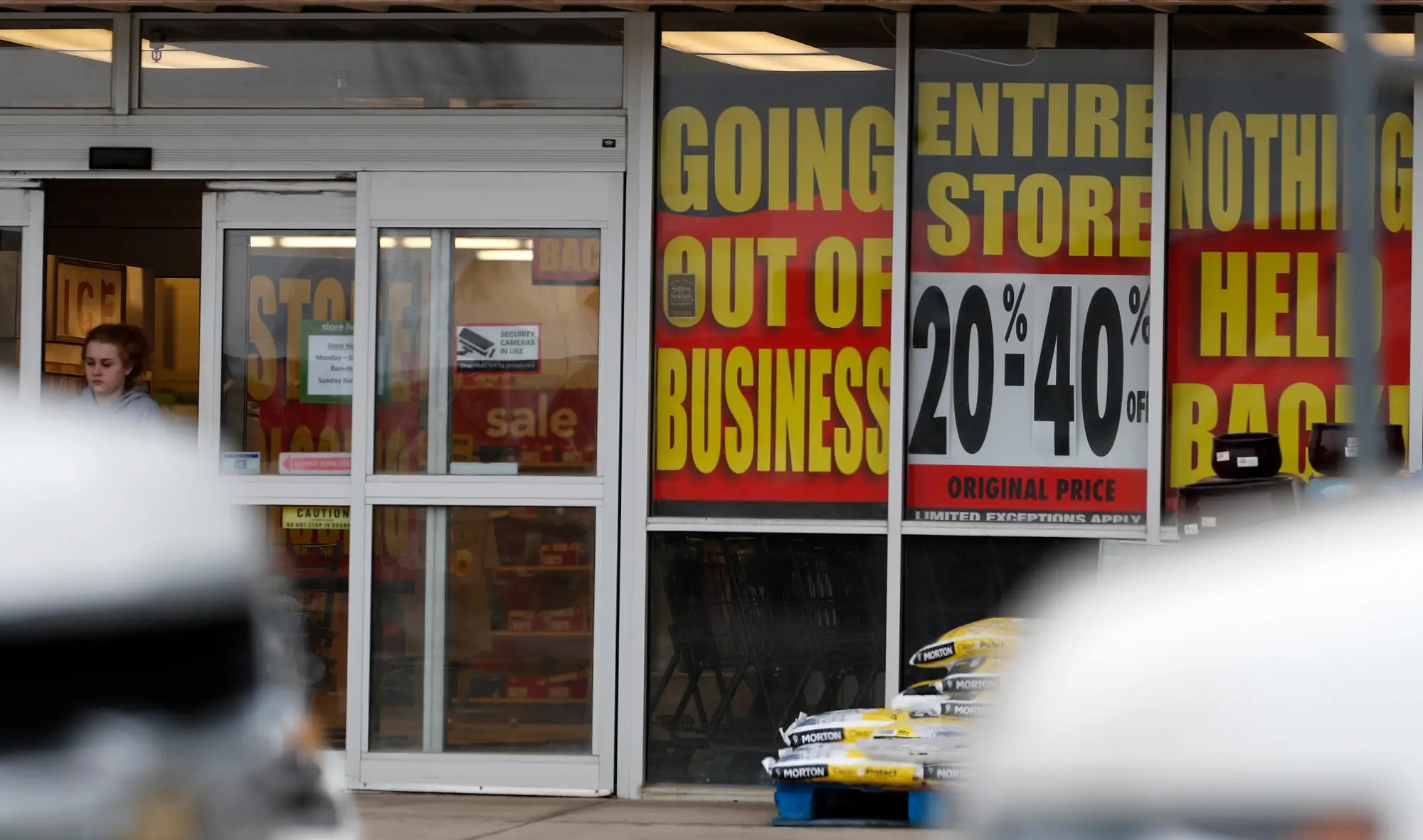
It’s not just that some trucking companies, retailers, and restaurants went out of business in December; no, that’s not enough. The writers take this opportunity to put together a year-end retrospective: lots of companies in that same field went out of business this year, so let’s talk about why.
What can be the harm in telling the truth? If JoAnn Fabrics went out of business in the spring, or some athletic shoe chain or regional LTL carrier closed their doors in the fall, what’s the harm in reporting it again?
The problem is that they guess at reasons why the businesses went out of business, and it’s often nowhere near as easy as people think.
Companies are started every day, and companies close down every day. The start-ups very rarely make the news, but the closures often hit page one. So we start off the subject with a serious psychological disparity: readers are always seeing reports of bankruptcies, and they hardly ever see reports of new business openings.
But the big problem is the guesswork. Writers sometimes do the analysis themselves; sometimes they quote expert analysts who might be right or who might be making it up out of whole cloth.
Here in Chicagoland, for example, retail seems busy and successful at Old Orchard, Woodfield, and Oak Brook. Visit any of these busy malls and you’ll see crowds of people with bags of purchases. But other shopping malls and business districts are empty, with shopkeepers praying for someone to walk in the door just to make sure the hinges still work.
From this do we learn that retail is strong, or that retail is weak? We don’t know; there aren’t enough data points.
To be honest, there are so many differences from business to business and from location to location, it’s very difficult, maybe even impossible, to assign blame for the closure of a single business with certainty.
There are chains that are heavily exposed to regions where the minimum wage doubled in five years, and chains that didn’t have many locations suffering this massive change in the cost of payroll. Two chains might be managed identically, and one would thrive and the other would fail, based on their relative exposure to the unjustifiable doubling of their labor cost.
There are chains with locations in urban areas with progressive county prosecutors (those known as “the Soros prosecutors”), who refuse to prosecute retail crime, and there are chains with locations in red states or rural areas where shoplifting is no serious risk because the criminal justice system does its job. Even if the two chains are run identically in every other way, one will succeed while the other will be destroyed by insurance premiums, security system cost, and the massive losses that unchecked shoplifting causes.
And there are chains that sell the same kind of products, or advertise the same way on the same stations, but their purchasing is unwise; some source domestically, or from low-cost countries that aren’t our enemies, while others source from China and haven’t even tried to change their purchasing habits. With tariffs rising, and with public understanding of such dangers as Xi Jinping’s rare earths controls, IP theft, slave labor, and currency manipulation, both the cost and the public tolerance of that “made in China” label have changed. The chain that depends on our nation’s enemies for its goods will lose market share to the chain that doesn’t.
These are only a few examples of the underlying issues affecting the news; issues that are rarely mentioned in those year-end retrospectives about this industry or that one losing another respected chain.
Local conservative activist Mark Weyermuller has been tracking business closures in Chicago for years for his social media accounts and articles, showing how street closures from never-ending road construction drives off customers from some places, how idiotic bike lane additions on once-major thoroughfares permanently reroute traffic away from once-thriving business districts, and of course, how the continually skyrocketing costs of crime, taxes, and insurance rates keep driving businesses out of Chicago or out of business entirely.

Again, this is just the tip of the iceberg; there are lots of different reasons why a business might fail – mismanagement, poor advertising, bad luck, too much competition in a narrowing market, and a host of others.
But these year-end articles, all too often, are written as an excuse to share the political opinion of the author. One writer might blame everything on tariffs, another might blame everything on inflation, another might blame everything on unemployment; some are even blaming loss of sales on the deportation of illegal aliens (though that’s such a stretch, it’s difficult to see how one would do it with a straight face).
Are businesses closing? Yes indeed, of course. Businesses are always closing, all too often, due to the destructive policy choices of an overgrown, corrupt, bureaucratic and wasteful government.
The malevolent destruction of the electric grid by so many states’ closure of nuclear and coal plants, and the toxic spread of useless wind and solar farms, have increased the cost of electric power to the point that many energy-dependent industries, such as food service and manufacturing, are simply unaffordable in a dozen states or more. How many of these year-end retrospectives mention that as a potential cause?
The long, slow destruction of America’s small towns, primarily due to the Obama-era goal of shutting down rural healthcare options, forcing people into the cities, has robbed rural businesses of their old clientele. How many of these year-end retrospectives recognize that chains dependent on small town America have been starved of customers by such federal policies?
In all honesty, the American economy is a mixed bag at the moment. The Trump administration’s policies have succeeded in bringing down inflation surprisingly quickly, and have cut the most important single cost – energy – which will pave the way for future growth.
But as in any sweeping correction, there are companies, industries, and regions that are suffering. Those dependent on imported components, for example, due to fifty years of policies that shut down so much American manufacturing; it will take time to rebuild domestic supply. Those dependent on a labor force with skill sets that have dwindled, as the teachers’ unions spent a generation abandoning shop class and home economics to push social science and to waste class time on multiculturalism and climate change hogwash. It will take time to rebuild our factories and to retrain our workforce.
And to get there – to make it happen – we need Congress, and the states, and the cities – to make America welcoming to industry again.
It’s not really hard to do, but there’s a whole political party that’s going to kick and scream and punch and bite at any effort to restore the conditions that will America a prosperous country again.
We’ll need the help of Divine Providence to manage this quest.
Copyright 2025 John F. Di Leo