

By Illinois Review
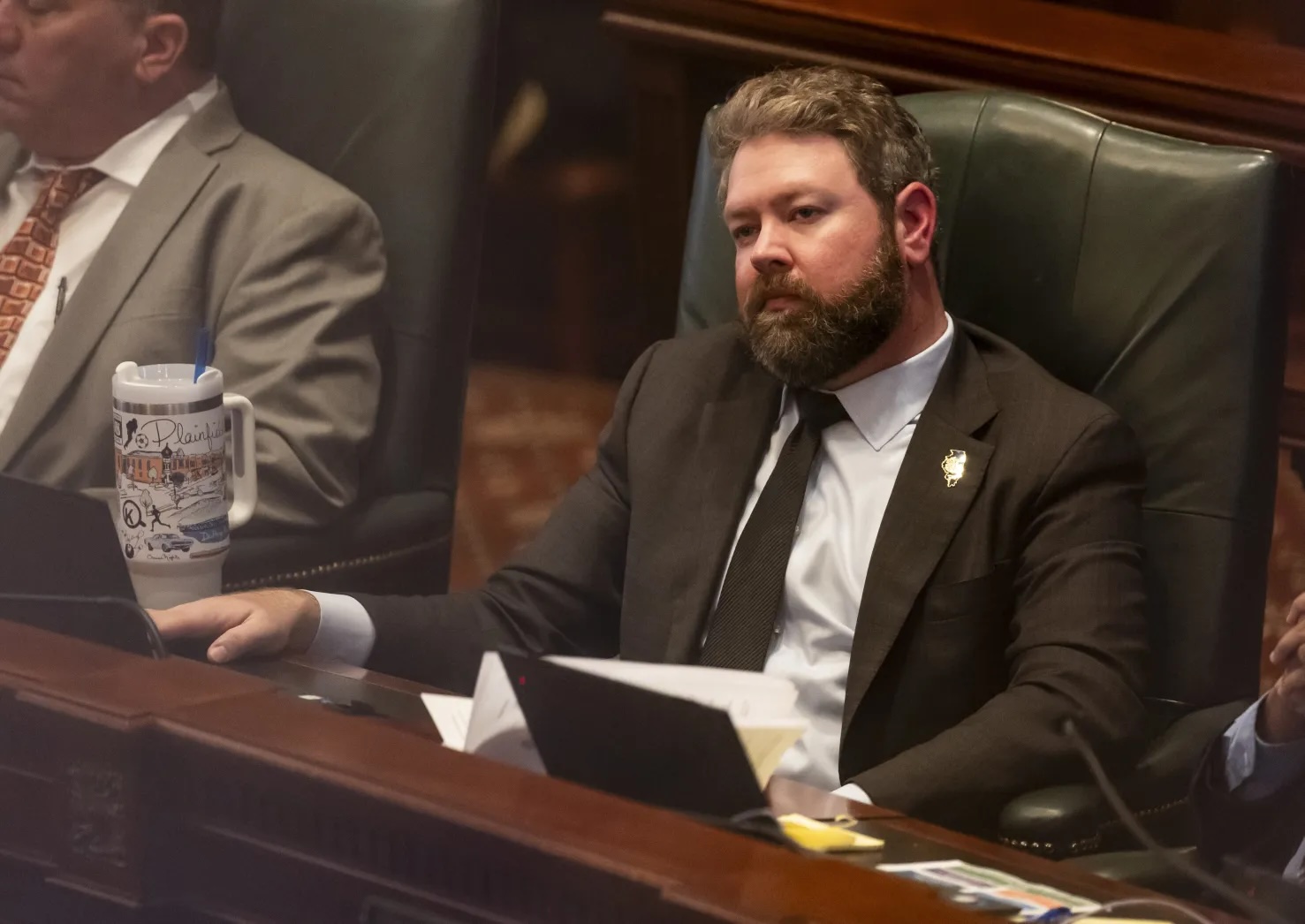
The recent resignation of former Illinois State Rep. Harry Benton has brought renewed attention to a little-known provision of Illinois law that allows some elected officials to simultaneously hold multiple public offices and collect two taxpayer-funded salaries.
Benton resigned from the Illinois House of Representatives last week following an ethics investigation into allegations of inappropriate conduct.
However, he continues to serve as the elected Wheatland Township Highway Commissioner, a position that reportedly pays approximately $72,000 annually and includes benefits and the use of a government vehicle.
Until his resignation from the General Assembly, Benton was legally receiving compensation from both positions at the same time.
His case has renewed questions about Illinois’ laws governing dual office-holding and whether taxpayers should be funding multiple government salaries for the same elected official.
Under current Illinois law, legislators are not automatically prohibited from holding certain local elected offices while serving in the General Assembly. Unless the offices are determined to be legally incompatible under Illinois law or prohibited by another statute, an elected official may serve in both positions simultaneously.
That means some Illinois politicians are permitted to receive two government paychecks funded by taxpayers.
Members of the Illinois General Assembly currently receive annual base salaries approaching $100,000 before additional compensation such as leadership stipends and per diem reimbursements.
Despite that level of compensation, the legislature is generally considered a part-time body rather than a full-time legislature. Lawmakers typically spend roughly 50 days each year in regular session in Springfield, although committee hearings, legislative hearings, and district work continue throughout the year.
As a result, most legislators maintain full-time employment outside the General Assembly. While many work in the private sector, Illinois law also allows some lawmakers to hold other elected government positions, enabling them to collect a second taxpayer-funded salary in addition to their legislative pay.
Local elected offices, including township positions, establish their own salaries based on state law and local board action, allowing some officeholders to receive substantial additional compensation.
Benton became Wheatland Township Highway Commissioner in May 2025 while continuing to serve as a state representative. For more than a year, he held both offices concurrently and legally collected compensation from each position.
While Benton has resigned from the General Assembly, he has not stepped down as highway commissioner.
Several Wheatland Township officials have publicly called for Benton to resign from that office following the ethics controversy. As of this writing, he remains in the position.
The issue extends beyond Benton.
Illinois has long faced criticism for having more units of local government than any other state in the nation, including counties, municipalities, school districts, special districts, and more than 1,400 townships.
Critics argue that the state’s overlapping layers of government create opportunities for elected officials to hold multiple offices simultaneously while increasing costs to taxpayers.
Government reform advocates have periodically called for stricter incompatibility laws, greater transparency regarding outside public employment, and limitations on elected officials receiving multiple taxpayer-funded salaries at the same time.
Supporters of the current system argue that voters ultimately decide whether an official should continue serving and that many local offices benefit from individuals with legislative experience.
The General Assembly has not enacted a broad prohibition preventing legislators from holding most local elected offices.
As Benton leaves Springfield but continues serving in township government, his case has renewed debate over whether Illinois should revisit its dual office-holding laws.
For now, Illinois law continues to permit many elected officials to serve in multiple government positions simultaneously – and, in some cases, collect two taxpayer-funded salaries.
By Illinois ReviewFormer Illinois House Republican Leader Jim Durkin endorsed Democratic Gov. JB Pritzker for a third term Monday, breaking with Republican nominee Darren Bailey while working with...
Read moreDetails