

By Amanda Szulc, Opinion Contributor
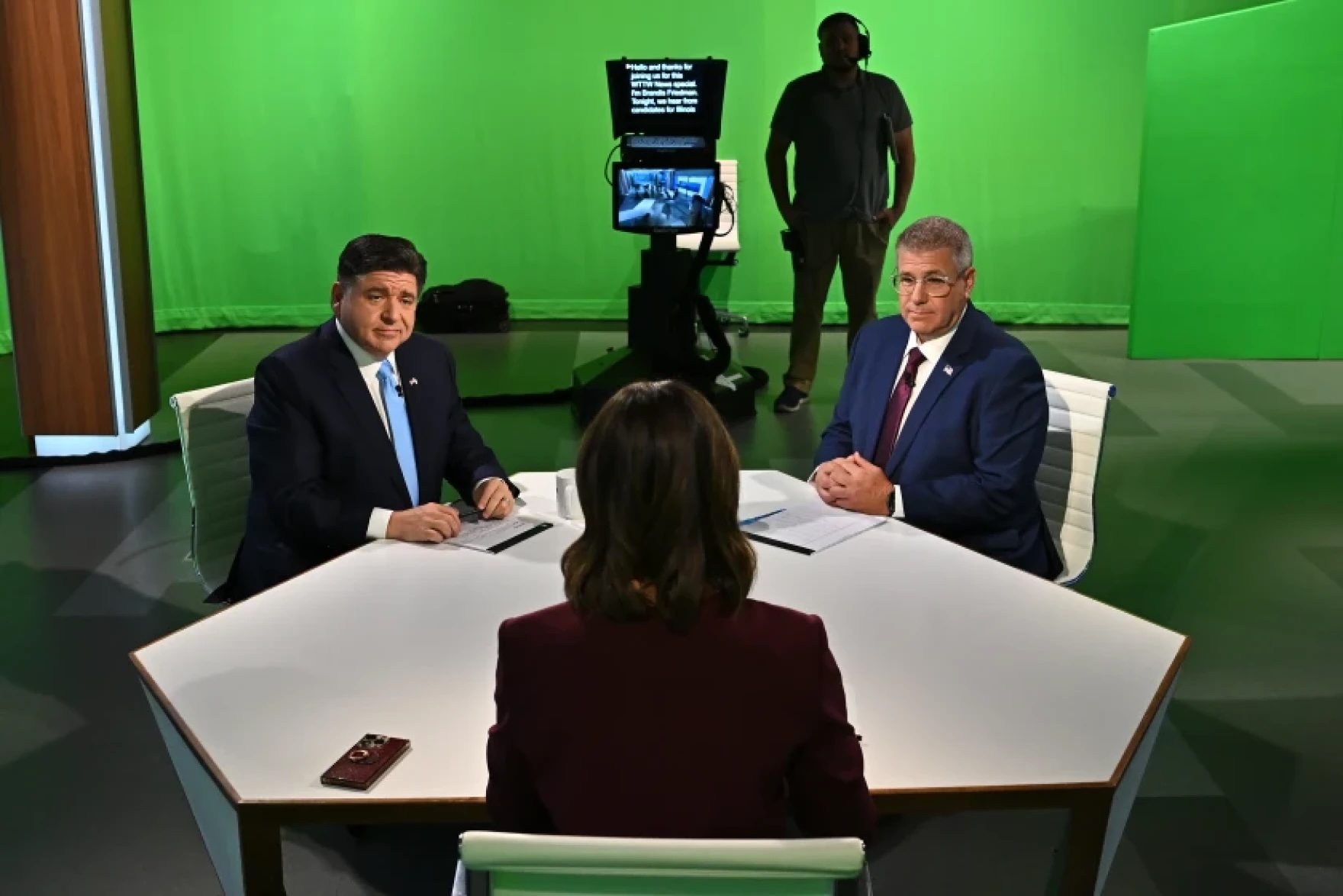
Last Tuesday, Governor J.B. Pritzker and Darren Bailey met for the only televised debate of the campaign. It was not a polite exchange of policy papers. It was an hour of interruptions, accusations of lying, and two sharply different answers to the same question: Who is responsible for the condition of Illinois?
Bailey opened by telling viewers to count how many times Pritzker mentioned Donald Trump. He was not joking. Throughout the night, the governor repeatedly tied Illinois problems to Washington. Bailey kept returning to the same ground: high taxes, high crime, failing schools, and a state people are leaving. The contrast was not subtle.
Crime and the SAFE-T Act
Bailey called for repeal of the SAFE-T Act, arguing that law enforcement and state’s attorneys were left out of the original process and that the result has not made communities safer. He pointed to repeat offenders and victims who live with the consequences. Pritzker defended the law and accused Bailey of wanting to return to a system in which the most violent criminals can buy their way out of jail. He called Bailey’s description of the current reality “lies.” The disagreement was not about statistics on a slide. It was about whether the law is working for the people who live with it every day.
Taxes, Spending, and the Pension Hole
Pritzker pointed to balanced budgets and credit upgrades. Bailey noted that the state budget has grown dramatically under the governor’s watch and that property taxes continue to crush families. When pressed on the pension deficit—still measured in the tens of billions—Pritzker spoke of progress on the funded ratio. Bailey’s response was simpler: the state must live within its means. He rejected the idea that the answer is always more revenue from the same taxpayers. One side offered more spending with better management. The other demanded cuts, zero-based budgeting, and an end to treating new revenue as the default solution.
Education and Local Control
Bailey argued for greater accountability in school budgets and more authority for local boards. He said expectations have shifted and that parents and communities should decide how children are educated. Pritzker defended increased state funding as relief for property taxpayers and pointed to selective rankings. Bailey’s reply was direct: too many children still cannot read or do math at grade level, and waving rankings does not fix that. The governor’s approach, in Bailey’s telling, protects the status quo. The alternative is local control and measurable results.
Affordability, Energy, and Priorities
Utility bills, property taxes, and the cost of living were recurring themes. Bailey said clean-energy timelines are phasing out reliable power too quickly and that data centers are driving costs higher without a clear plan for ratepayers. Pritzker disputed the energy-export claim and said future data centers should bring their own power. On immigration, Bailey said the state is spending billions on shelter, insurance, and services for people here illegally while veterans and seniors wait. Pritzker framed federal cuts to Medicaid and SNAP as the crisis and said he has been fighting for universal health care. Bailey’s answer was that a governor with a supermajority does not need to wait for Washington to prioritize Illinois residents.
Accountability
The sharpest moments came when Bailey asked why, with Democratic control of the legislature, the problems remain. He said the governor can fix what is broken if he chooses to. Pritzker’s pattern was consistent: interrupt, reframe the question as an attack, and pivot to Trump or to Bailey’s character. When Bailey mentioned victims of crimes committed by people who should not have been in the country, Pritzker accused him of exploiting pain for political gain. Bailey’s counter was that acknowledging the results of sanctuary policy and the Trust Act is not exploitation. It is describing what is happening.
This debate was not merely Democrat versus Republican. It was a contest between ownership and deflection. One candidate spent the hour explaining why the problems belong to someone else. The other spent it saying the people of Illinois cannot afford another term of the same priorities. Families struggling with bills, parents watching school performance, and communities dealing with crime do not experience these issues as abstract talking points. They live with the results.
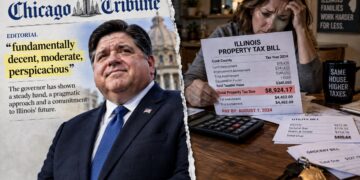
Illinois has the highest property taxes in the country. The pension shortfall remains enormous. Energy policy and data-center growth are raising utility costs. Crime legislation has not delivered the safety that was promised. These are not campaign inventions. They are the conditions under which people are deciding whether to stay.
For too many Republicans in this state, the response is still the same shrug: “My vote doesn’t matter. My voice won’t be heard. Illinois has always been blue. It is what it is.” That mindset is not realism. It is surrender. It hands the outcome to the very forces that have driven families and businesses out, and it guarantees the next generation inherits the same high taxes, the same crime, and the same excuses. Defeatism does not protect anyone. It simply ensures that nothing changes.
Scripture does not give us permission to check out. “I urge, then, first of all, that petitions, prayers, intercession and thanksgiving be made for all people—for kings and all those in authority, that we may live peaceful and quiet lives in all godliness and holiness” (1 Timothy 2:1-2). We are told to pray for those in power so that justice and peace can actually exist. “He changes times and seasons; he deposes kings and raises up others” (Daniel 2:21). Rulers rise and fall by God’s hand. “The king’s heart is a stream of water in the hand of the Lord; he turns it wherever he will” (Proverbs 21:1). And the standard we are to seek is clear: “Endow the king with your justice, O God, the royal son with your righteousness. May he judge your people in righteousness, your afflicted ones with justice” (Psalm 72:1-2).
This election matters because the alternative is another four years of the same priorities under the same supermajority. The debate made the choice plain. The only remaining question is whether enough Illinoisans will reject the lie that their vote is useless, show up, and pray and work for leaders who will actually govern with justice. If we do not, the downfall will not be the other party’s doing. It will be our own.