

By Illinois Review
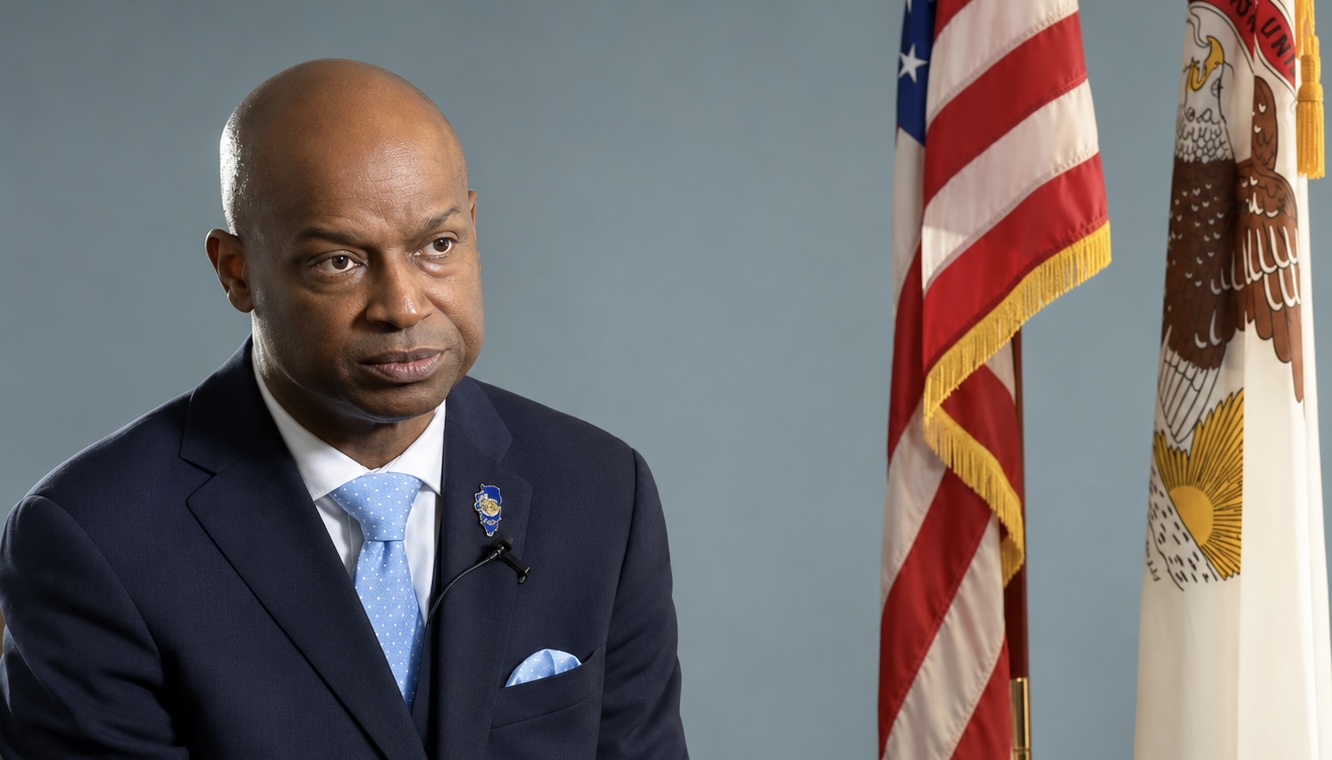
Illinois House Speaker Emanuel “Chris” Welch (D-Hillside) announced Thursday that he will not seek another term as Speaker, ending his five-year tenure as the chamber’s top leader following an extraordinary revolt within his own Democratic caucus.
The announcement came just two days after Democrats expanded their already commanding majority in the Illinois House, creating a remarkable political contradiction: Welch helped deliver historic electoral gains for his party but could no longer secure enough support from his own members to remain Speaker.
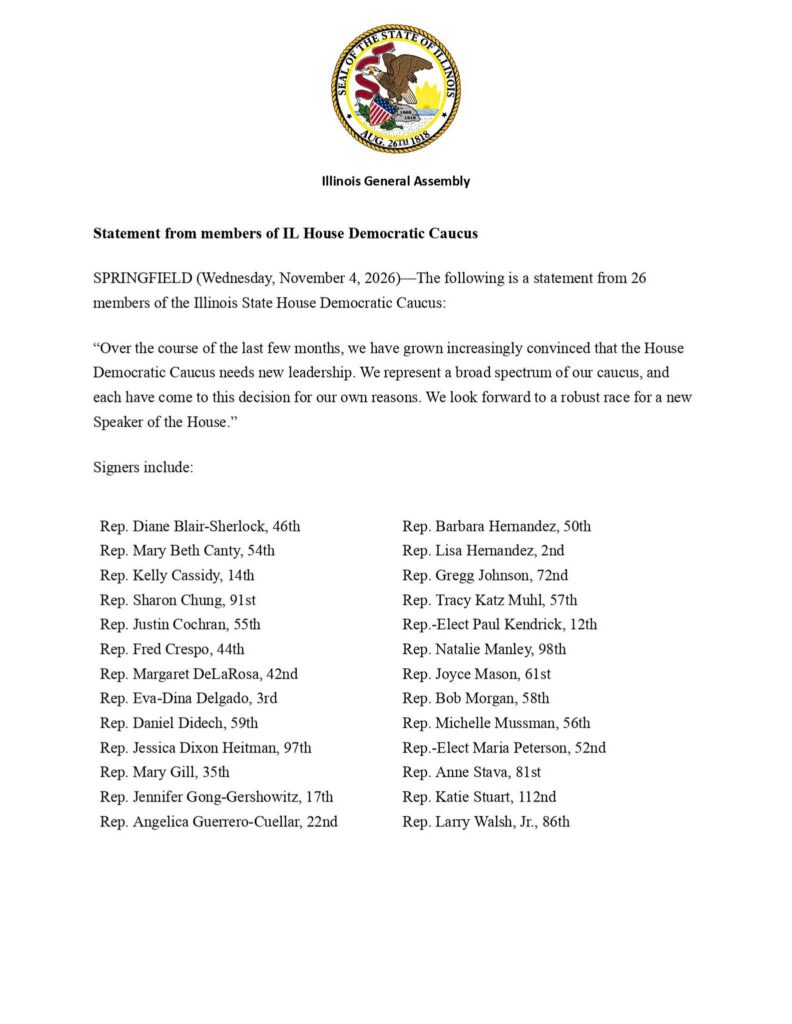
Late Wednesday, 26 current and incoming House Democrats publicly declared that the caucus “needs new leadership” and called for a competitive race to replace Welch.
With Democrats projected to control approximately 84 to 85 seats in the 118-member House, the 26 dissenters effectively blocked Welch from securing the 60 votes required to retain the speakership, assuming Republicans would not support him.
Of the 26 lawmakers, 19 were women. Four served on Welch’s own leadership team, including Rep. Lisa Hernandez (D-Cicero), deputy majority leader and chair of the Democratic Party of Illinois.
By Thursday, the political math was unmistakable.
“I serve at the pleasure of the caucus, and I want our caucus to lead in unity and take on the mandate we received from voters this past election confidently,” Welch said in his statement.
He added that he looked forward to joining his colleagues as they selected their next leader.
Welch will remain a state representative but relinquish the Speaker’s gavel when the new General Assembly convenes in January.
The rebellion followed months of controversy surrounding Welch’s handling of sexual harassment allegations against former Democratic State Rep. Harry Benton of Plainfield.
In April 2023, a female district staffer reported allegations of sexual harassment involving Benton to Welch’s office. Despite receiving the complaint, Welch’s senior staff did not confront Benton for approximately three months.
Welch’s political operation subsequently spent approximately $1.4 million supporting Benton’s 2024 reelection campaign.
Additional women later came forward with allegations against Benton, including a lobbyist. A Legislative Inspector General investigation found two instances of sexual harassment and documented a broader pattern of sexual harassment.
Benton was removed from the Democratic caucus in February 2026 and resigned from the Illinois House in July.
The controversy intensified as lawmakers questioned why Welch’s office had not acted more aggressively after receiving the initial complaint.
Rep. Kelly Cassidy (D-Chicago), among Welch’s most outspoken Democratic critics, questioned his response and dismissed his subsequent workplace reform efforts as insufficient.
Other Democrats raised concerns about Welch’s leadership style, internal caucus management and treatment of staff. The coalition opposing him cited a range of reasons for demanding change, making the Benton scandal a central issue but not the only source of dissatisfaction.
The controversy also revived uncomfortable comparisons to former House Speaker Michael Madigan, whose decades-long leadership ended in 2021 after a group of House Democrats withdrew their support amid mounting scandals and concerns about workplace misconduct.
Welch succeeded Madigan in January 2021, becoming the first Black Speaker in Illinois history and promising a new chapter in House leadership.
But five years later, allegations of institutional failures involving sexual harassment again became central to a Democratic Speaker’s political downfall.
The revolt was particularly striking because Welch’s political operation had just helped Democrats expand their supermajority.
The party is projected to hold its largest House majority since Illinois adopted its current 118-member, single-member district system in 1983.
But even a historic Democratic election victory could not save Welch from a rebellion within his own caucus.
The Democratic caucus must now determine who will succeed him. Internal leadership discussions are expected during the General Assembly’s upcoming veto sessions, scheduled for November 17-19 and December 1-3, before the House formally elects its next Speaker in January.
The next Speaker will inherit an expanded Democratic supermajority, considerable control over the legislative agenda and a caucus still confronting questions about workplace culture and accountability.
For Welch, the outcome represents a stunning reversal: a Speaker who strengthened his party’s grip on the Illinois House but ultimately lost his own leadership position.
Welch’s departure now leaves Illinois House Democrats facing a consequential test: whether new leadership will deliver the workplace accountability and institutional reforms promised after the Madigan era.