
By John F. Di Leo, Opinion Contributor
The American Left – along with certain Trump Derangement Syndrome-stricken Republicans – greeted the news of the American seizure of a tanker full of Venezuelan and Iranian oil with glee, happily parroting the talking points of Venezuela’s marxist dictator, Nicolas Maduro, in branding it “piracy on the high seas.”
As is usually the case where such matters are concerned, however, once the facts are seriously reviewed, the alleged lawlessness of the Trump Administration turns out to be utterly imaginary.
The basics sound simple enough:
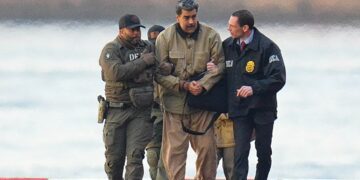
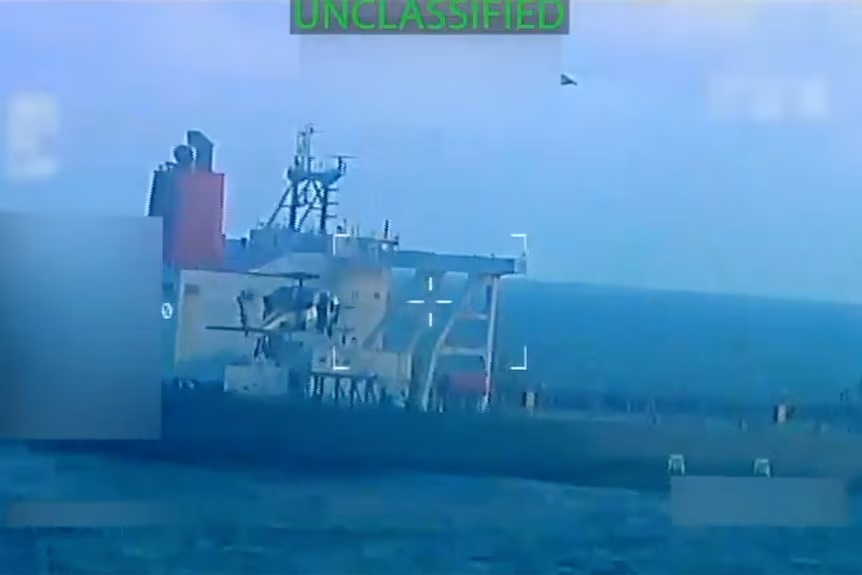
An 1100 foot oil tanker called The Skipper was sitting off the coast of Venezuela, when the U.S. Coast Guard boarded the vessel and took possession of ship, cargo and crew, launching an international chorus of hand-wringing, microphone-grabbing, and camera-mugging.
The understandable first impression is that this sounds like an illegal action. Has Congress declared war against Venezuela? Are these US citizens operating the tanker, to whom the US government can provide traditional Miranda rights? Is our President giving orders unsupported by US law?
Well, as it turns out, this action was totally legal, not even partisan at all, and fascinating in terms of the players involved.
Two pieces of background are necessary before we begin to study this case.
First, there is a practice in international maritime commerce known as “flag registry.” Traditionally, the owners of commercial ships register their ships with their home country’s government, earning the right to fly their nation’s flag. This warns off potential pirates or other enemies that attacking this vessel might draw a response from that nation’s navy, or might even be interpreted as an act of war against the flag country.
In modern times, with so many multinational companies in the transportation industry, a legitimate business has grown up around the practice of flag registry. Many countries, especially small countries with busy ports like Panama and Liberia, allow their flags to be used for a fee, under certain maintenance and employment conditions. “Put into our port once or twice a year for maintenance, hire a local crew of our citizens, honor the International Maritime Dangerous Goods Code (IMDG), etc. etc., and we’ll allow you to fly our flag for $6500/year,” for example.
People in the transportation business (and people in law enforcement too) eventually get an understanding of which flags are likely to mean the vessel is well-maintained, which ones mean the crew is likely to be unruly during shore leave, and even which ones indicate a high risk of finding criminality aboard.
And if someone flies a nation’s flag without having registered and earned the right to do so, he exposes himself as a criminal right there, clearly violating maritime law, likely as a cover for a host of other crimes.
Second, we need to understand the concept of the United States Export Controls. While these regulations have been around for generations, and are second nature to defense contractors, manufacturers of dual-use products, and companies involved in international trade, the rest of the general public may be unaware of these issues, so a short introduction is appropriate here.
While the federal government has many tools to manage national security, such as border patrols, army and navy, and a network of ICBM launchers, our nation’s security also needs the support of the private sector, especially the business community, to support our national defense initiatives.
These programs – which apply to all Americans and all American businesses – can be generally classified in three buckets:
–Restricted Countries with which we are forbidden to communicate or transact business without government permission (called an Export License),
–Restricted Parties (individuals, companies, organizations, groups, banks, vessels, etc.) with which we are forbidden to communicate or transact business without government permission (an Export License), and
–Restricted Products or technology (from machines to components, from software to hardware, from technical specs to other information of any kind) that we are forbidden to share in any way with any entity banned for that particular item – as classified in either the United States Munitions List (USML) or the Export Administration Regulations (EAR)… unless we get an Export License for it.
These are not partisan matters; administrations conservative and liberal, Republican and Democrat, have lived with these Export Controls for generations, and many foreign countries have similar programs (cf. Europe’s Wassenaar agreement).
The Restricted Parties are among the most familiar of these regulations. Companies purchase software to check their customer and vendor lists, and train staffers to review orders and contracts, to ensure that they don’t accidentally do business with these banned entities, which could include anyone from an obvious villain like a Muslim Brotherhood office or a named terrorist like Osama Bin Ladin (yes, his famous name was on these lists at one time), to an innocent looking party like a warehousing business or chemical factory, or a national bank or distribution conglomerate.
Once a business is found to be a participant in the actions of terrorist organizations or organized crime, perhaps as a safe house for their members, or as a holding tank for weapons involved in gun-running, or as a money-laundering step to hide the profits of a kidnapping or child-slavery ring, it gets added to the list, and all American businesses are banned from doing business with them in any way. We don’t want to be part of that network, and we certainly don’t want to help them get away with their illegal activities.
Such lists include the Specially Designated Nationals (administered by the Office of Foreign Assets Control), the Nonproliferation Sanctions list (administered by the State Department), and the Denied Persons List (administered by the Department of Commerce).
Now imagine the transportation of sanctioned products by a sanctioned transportation company, for the profit of a sanctioned terrorist organization in one or more sanctioned countries; such a move would be a violation of all three buckets of the US Export Controls.
Now we are ready to discuss the news of the day.
The oil tanker known as The Skipper was added to the SDN list in 2022 by the Biden/Harris regime. At that time, it was called the Adisa, and it was flying the flag of Panama.
But when it was identified off the coast of Venezuela this week, it was called The Skipper and it was flying the flag of Guyana, presumably in hope of throwing international police and other law enforcement agencies off the scent.
Guyana confirmed to multiple press sources Wednesday that it most definitely was not registered in Guyana, so it did not merit Guyana’s legal support in any way.
This ship is owned by a sanctioned Russian oligarch, Viktor Artemov, and to currently be controlled by the Nigerian shell company Thomarose Global Ventures Ltd.
And what business is it engaged in these days? Primarily transporting Venezuelan and Iranian oil, to or from Venezuela and Iran, in direct support of Hezbollah and the Iranian Revolutionary Guard.
This means the ship itself, its owners, its crew and its cargo are all essentially under sanctions. The seizure of this vessel, essentially enforcing a warrant issued by the Biden-Harris regime three years ago but apparently never followed up on, is not just legal, but an admirable accomplishment for this administration.
With the seizure of this tanker, the Iranian Revolutionary Guard, Hezbollah, and the Maduro regime have all lost a key revenue source. Depending on what kind of oil it’s carrying on each voyage and the product’s going price per barrel at the time, a tanker like this carries tens of millions of dollars’ worth of cargo on each and every run.
Such a loss adds up. The mullahs in Tehran have lost a regular revenue source; they’ll be buying fewer rockets. Hezbollah has lost a revenue source; they’ll be buying fewer bombs.
And Nicolas Maduro has lost a revenue source; he’ll be buying fewer guns with which to oppress the downtrodden people of Venezuela, who have voted him out of office at least two elections in a row (each time, he’s refused to step down).
The Left saw American troops, far from home, and desperately wanted to imagine war crimes and presidential overreach, but their knee-jerk reaction could hardly have been more wrong.
The capture of this oil tanker was a solid stroke in support of American law and justice, and on top of that, it was a solid stroke in support of everyone oppressed or threatened by the Maduro regime and their allies, the Iranian mullahs.
Copyright 2025 John F. Di Leo
By Illinois ReviewFor much of the 2026 gubernatorial campaign, Ted Dabrowski has been clear and consistent about what he believes is Illinois’ most pressing issue.Property taxes, Dabrowski has...
Read moreDetails