

By Illinois Review
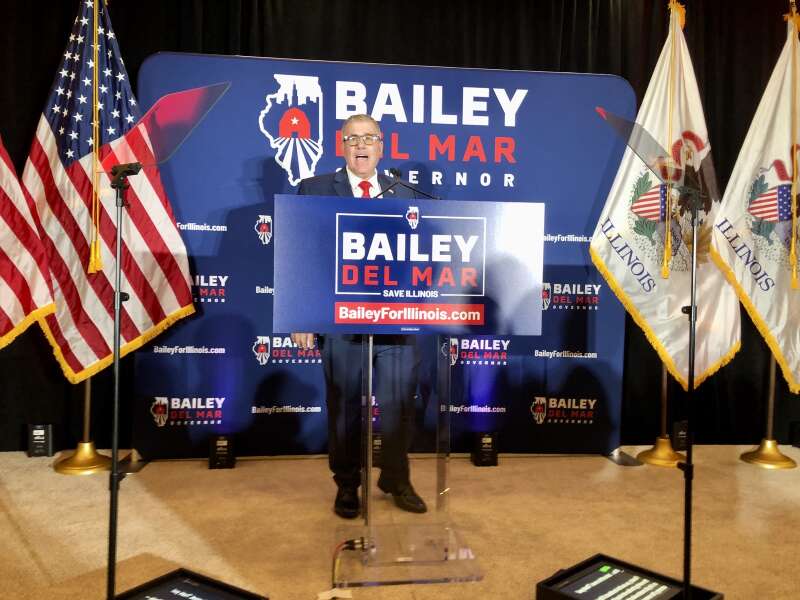
A new poll released by WGN-TV offers the first major snapshot of the 2026 Illinois Republican primary for governor – and it shows former state Sen. Darren Bailey with a clear early lead.
The survey, commissioned by WGN-TV and conducted by Emerson College Polling, was fielded January 3-5, 2026, among likely Republican primary voters.
Bailey leads the field with 34.4 percent. Businessman Ted Dabrowski trails far behind at 8.2 percent, followed by DuPage County Sheriff James Mendrick at 5.4 percent. Rick Heidner registers at just 1.1 percent.
While 46.4 percent of voters remain undecided, Bailey’s advantage is notable this early in the race. The Republican primary is March 17.
Bailey’s lead comes as he has aggressively rolled out policy proposals centered on crime, affordability, and accountability – issues that continue to plague Illinois families under one-party Democratic control.
He has made clear that public safety will be a priority in a Bailey administration, pledging to ensure violent and repeat offenders do not remain on the streets endangering communities. Bailey has repeatedly criticized Democratic leadership for siding with criminals over victims, pointing to Chicago’s persistent violence as proof of failure.
On Thursday, Bailey expanded on that message during a press conference outlining his “Blueprint for Illinois.” The plan would cap annual property tax increases so families are not paying more in property taxes than their mortgage, freeze energy rate hikes, and require public audits of major utility contracts to restore transparency and trust.
The Blueprint also includes the creation of a state-level Department of Government Efficiency (DOGE). The initiative would target waste, fraud, and abuse using a “scalpel” approach – focused audits and reforms rather than mass layoffs – with his lieutenant governor running mate Aaron Del Mar serving as DOGE Czar.
Bailey also backs a no-tax policy on tips and overtime, an idea championed by President Donald Trump but rejected by Democratic Gov. JB Pritzker.
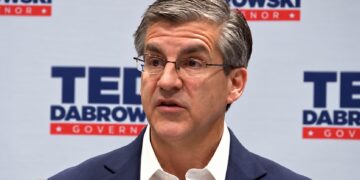
Dabrowski, meanwhile, has failed to break out of single digits despite raising more than $1 million, much of it from donors who have also funded progressive causes opposed to Republican policies.
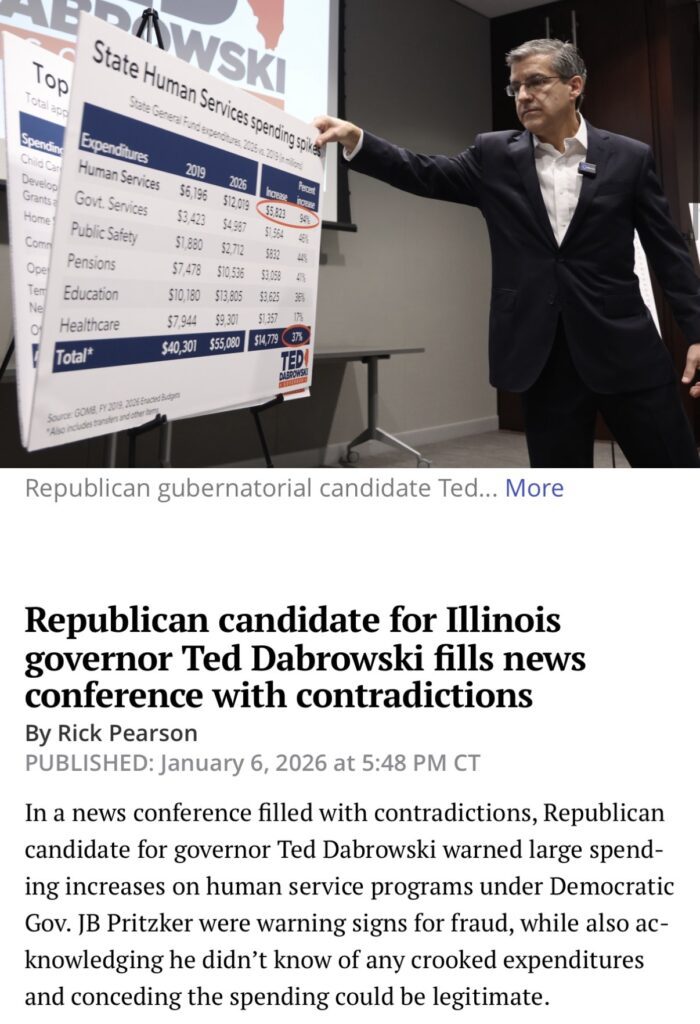
His campaign has been engulfed by self-inflicted wounds. Earlier this week, he announced his own version of DOGE – days after Bailey’s rollout. On Monday, Dabrowski botched a Chicago press conference on state finances, with the Chicago Tribune describing it as riddled with contradictions.
More troubling are the legal and ethical questions surrounding Dabrowski’s former nonprofit, Wirepoints. Wirepoints, a 501(c)(3), recently published a campaign-style attack on Bailey written by its founder Mark Glennon. The article mocked Bailey and framed him as a weak opponent – conduct that federal law strictly prohibits for tax-exempt organizations.
Dabrowski resigned from Wirepoints in September 2025 citing these restrictions, but resignation does not erase conflicts of interest. The IRS evaluates actions based on facts and circumstances, and the timing and substance of the article raise serious red flags.
Meanwhile, Mendrick is beginning to gain attention among voters focused on law and order. He drew notice after a strong performance at a gubernatorial debate in Kane County in November, as crime continues to dominate the political landscape. With Chicago leading major U.S. cities in shootings and murders and Illinois’ sanctuary policies under fire, public safety – along with affordability and accountability – is shaping up to be a defining issue in the GOP primary.
As the poll shows, Republican voters appear focused on results, not insider games. With crime, taxes, and energy costs crushing families, and with Chicago still leading the nation in shootings, the primary is shaping up as a referendum on who can actually take on Democratic failures – and who cannot.