


By Illinois Review
Illinois politics has a long history of blurred ethical lines, but the latest episode involving Wirepoints pushes those boundaries into legally dangerous territory.
Wirepoints, a registered 501(c)(3) nonprofit organization, has published a political attack piece targeting Republican gubernatorial candidate Darren Bailey – while its former president, Ted Dabrowski, is running for the same office in the 2026 Republican primary.
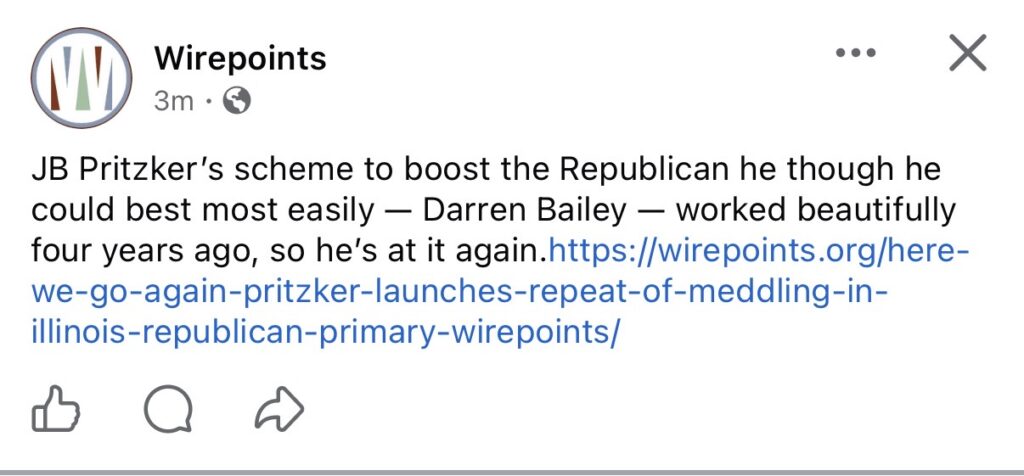
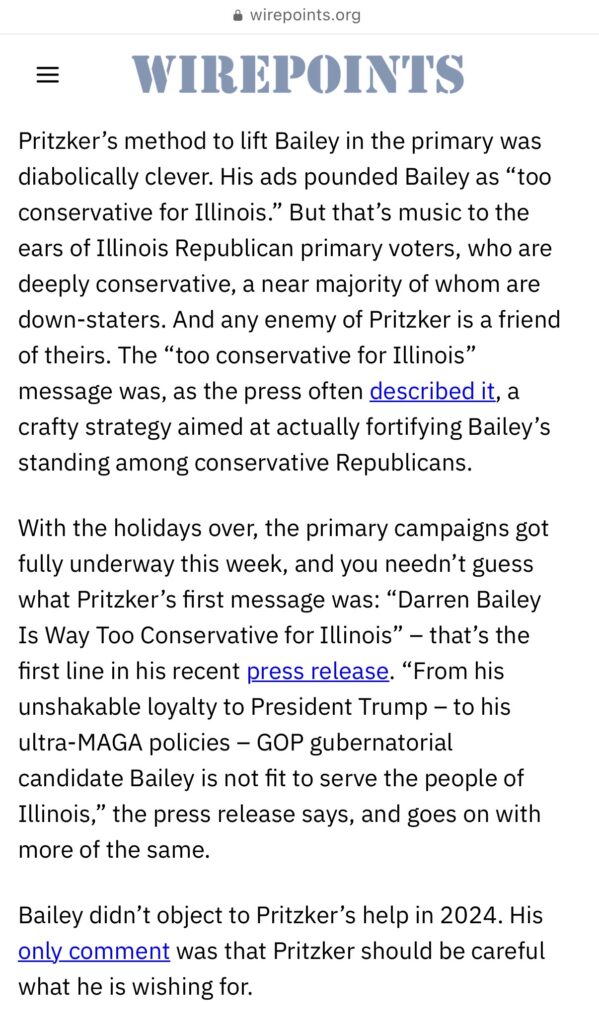
The article, written by Mark Glennon, frames Bailey as the preferred opponent of Democratic Gov. JB Pritzker and portrays him as a weak candidate easily manipulated by Democrats. It goes further, suggesting Republican voters are naive for supporting Bailey.
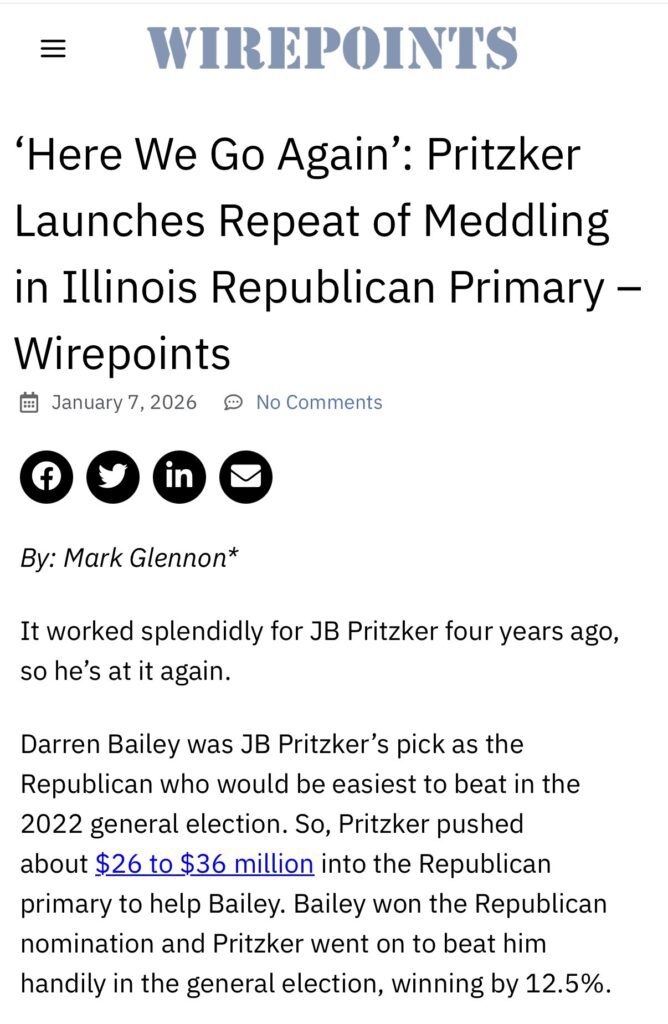
This was not a policy-focused critique. It was a campaign-style hit piece aimed squarely at a named candidate in an active primary election.
That is where the legal problem begins.
Wirepoints is not a private media outlet free to engage in partisan combat. It is a federally recognized tax-exempt nonprofit. Under IRS rules, 501(c)(3) organizations are absolutely prohibited from participating or intervening in political campaigns for or against any candidate for elective office. That prohibition is clear, strict, and well-established.
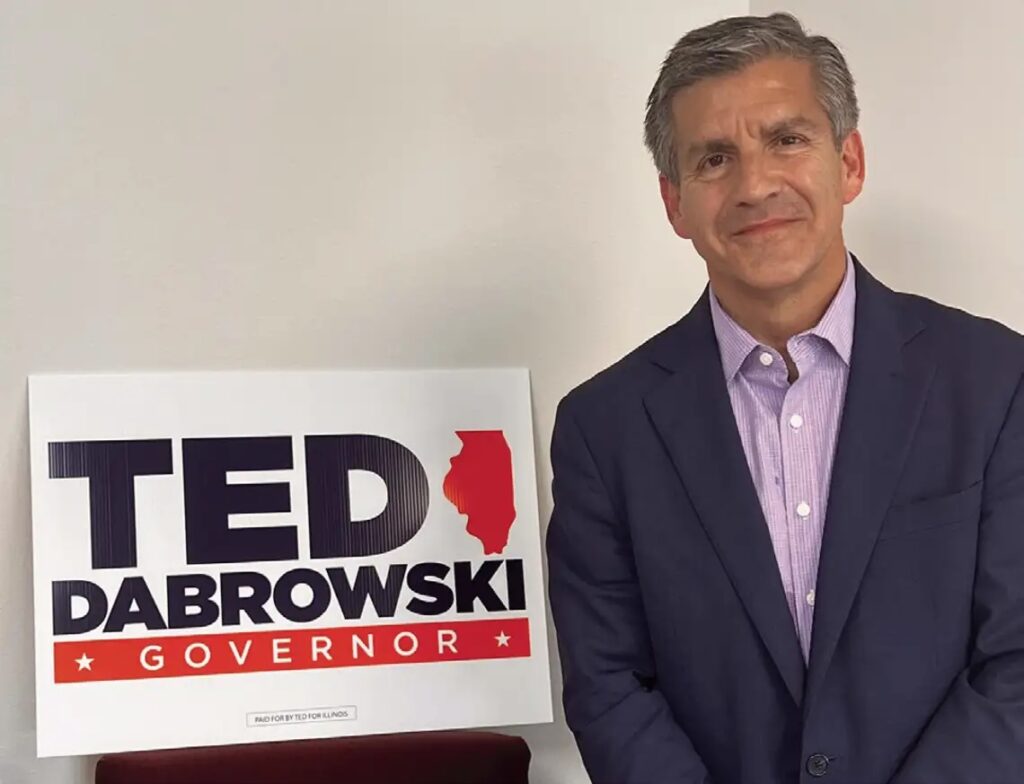
Dabrowski appeared to recognize this reality in September 2025, when he resigned as president of Wirepoints, explicitly citing the need to comply with 501(c)(3) restrictions ahead of his gubernatorial campaign.
Shortly thereafter, he formally announced his candidacy, named a running mate, and began raising campaign funds.
But resignation alone does not erase conflicts of interest.
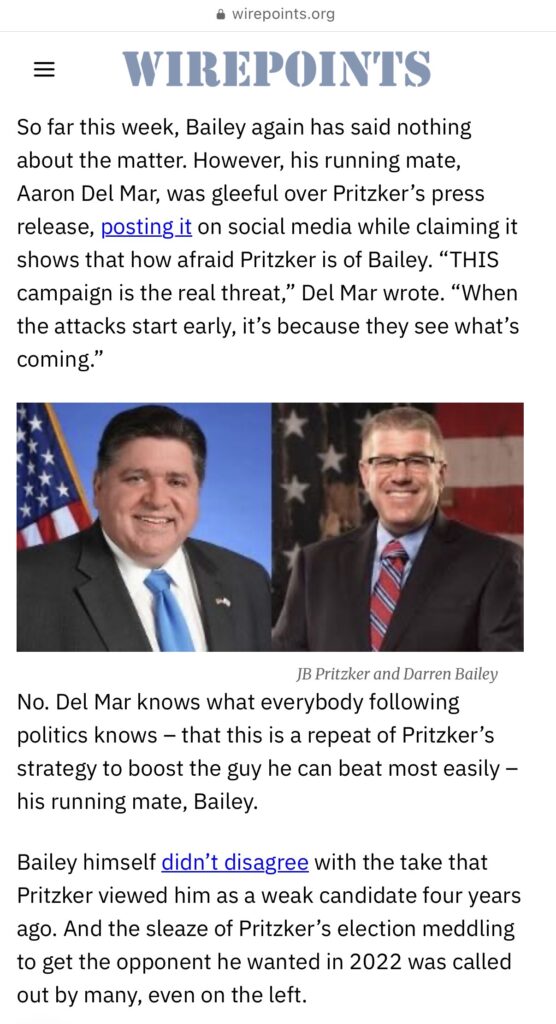
Wirepoints remains closely intertwined with Dabrowski. Its leadership structure, donor network, brand identity, and policy messaging were built with him at the center. And now, during a contested Republican primary, the organization has published an article by its founder attacking Dabrowski’s chief rival.
That raises serious legal and ethical concerns.
The IRS does not assess compliance based solely on job titles or resignation letters. It evaluates conduct under a “facts and circumstances” test. Publishing material that clearly undermines one candidate while benefiting another – especially when the beneficiary is the organization’s recently resigned president – can constitute prohibited campaign intervention.
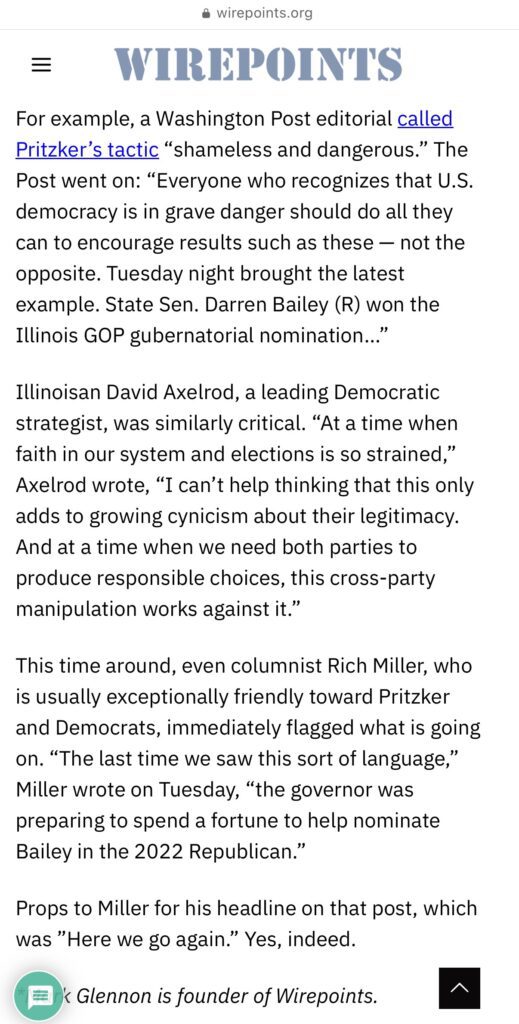
The Glennon article does not neutrally analyze tax policy, pension reform, or government spending. It ridicules Bailey, questions his legitimacy, and advances a narrative that conveniently advantages Dabrowski’s campaign.
If that does not qualify as indirect campaign activity, the standard becomes meaningless.
Defenders of Wirepoints will likely claim the piece is protected “issue advocacy.” That defense does not hold. IRS rules allow nonprofits to criticize policies and legislation. They do not allow nonprofits to attack or oppose named candidates in an election.
This article is about candidates, campaign strategy, and election outcomes – not public policy.
The consequences for violating 501(c)(3) rules are severe. The IRS can revoke Wirepoints’ tax-exempt status, impose excise taxes on the organization, and penalize managers who knowingly approved prohibited activity.
Donors could lose the tax deductibility of their contributions. In serious cases, the IRS can seek court action to halt further violations.
Compounding the concern is Wirepoints’ deteriorating financial condition. According to Illinois Review’s analysis of Wirepoints’ publicly available IRS Form 990 filings, the organization is effectively operating on fumes. Revenues have declined sharply, reserves are thin, and expenses have consistently outpaced incoming donations. By any reasonable nonprofit standard, Wirepoints appears functionally insolvent.
Illinois conservatives should be alarmed. Grassroots donors supported Wirepoints believing they were funding independent policy analysis – not a taxpayer-subsidized operation influencing a Republican primary.
The irony is striking. Wirepoints routinely condemns corruption, insider politics, and rigged systems. Yet here it is, using a nonprofit platform to take sides in a GOP race – while Democrats quietly benefit from the infighting.
If the rules matter, they must apply to everyone. And if conservatives demand accountability from the government, they should demand it from nonprofits that claim the public trust.