

By Janelle Powell, Opinion Contributor
Like Donald Trump before him, the lifelong Illinoisan built his life outside politics – and that independence is exactly what makes him a threat to those who have long controlled it.
There is a particular kind of silence that settles over political rooms when something unfamiliar enters the equation. It is not loud, and it is never announced, but it is unmistakable to those who understand how power actually works.
It is the silence of recognition – the moment when the system realizes it is confronting someone it did not create.
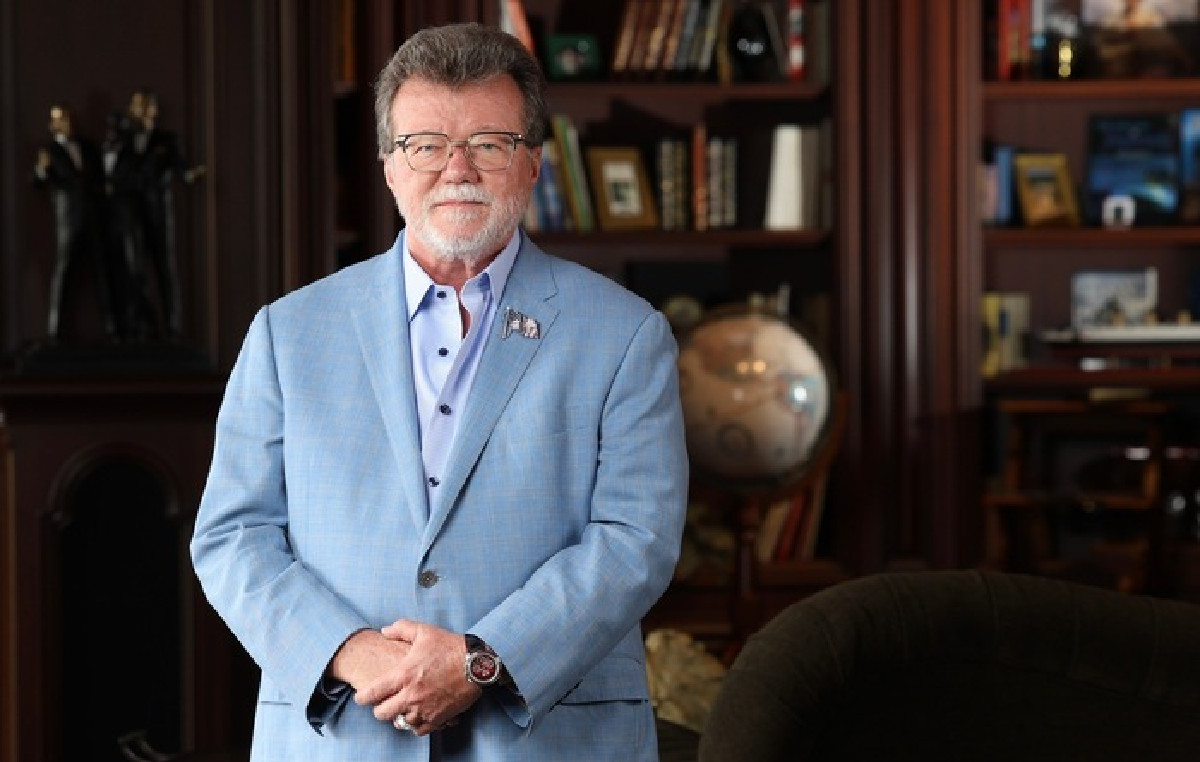
In Illinois, that silence has begun to form around Rick Heidner.
Not because he spent decades inside politics. He didn’t.
Not because he climbed the ladder in the way candidates are expected to. He never needed to.
And not because he sought permission from the consultants, donors, and operatives who quietly decide which candidacies are viable long before voters ever hear a name.
He built his life somewhere far more dangerous to them – outside their control.
To understand why that matters, you have to begin long before politics was ever part of the equation, in the small apartments of Chicago’s western suburbs where Heidner grew up. His mother never made more than $100 a week, yet she refused government assistance, even when accepting it would have eased the constant pressure.
She worked relentlessly, not because it was easy, but because she understood something fundamental: independence, once surrendered, is rarely returned. By the time Rick was 11, when the family moved into the King Arthur Apartments, he and his brother had already begun contributing to their own survival.
While other children their age spent weekends playing, Rick and his brother worked hard maintaining the very building his family lived in – cleaning hallways, mowing lawns, trimming bushes, replacing lightbulbs, repairing handrails – doing whatever was necessary to help their mother with rent.
Stability was not guaranteed. It was negotiated, earned, and protected through effort.
That kind of upbringing produces something political systems cannot manufacture: independence born of necessity rather than ideology.
Donald Trump emerged from a different world, but the outcome was the same. His identity was forged in business, in risk, in negotiation, and in the constant understanding that nothing lasting is built without consequence.
Long before politics entered his life, he had already built something the system could not
give him – and could not take away.
Rick Heidner comes from that same tradition.
He did not inherit a political network. He built businesses. He created jobs. He constructed a commercial real estate network spanning multiple states and supporting thousands of livelihoods. His life’s work exists independently of political approval, which means it cannot be undone by political disapproval.
Both men arrived in politics already defined by lives built outside its reach, shaped by risk, discipline, and decisions that carried real consequence long before any political title was ever attached to their names.
Their independence was not bestowed by party insiders, and it cannot be revoked by them now.
That is what makes them fundamentally different – and fundamentally threatening – to an establishment whose power has always depended on controlling who rises and who does not.
Because systems built on control can only govern those who depend on them, and Rick Heidner, like Donald Trump before him, built his life proving he never did.
The political class always recognizes this dynamic before the public does. It reveals itself not through confrontation, but through distance. Invitations extended elsewhere never arrive. Introductions offered to others are quietly withheld.
It is not an oversight. It is containment – an instinctive effort to preserve the balance of a system that senses something it cannot easily absorb.
Trump experienced this same resistance when he first entered politics. He was not embraced. He was isolated, dismissed, and underestimated. What the establishment failed to understand was that he did not need their approval to continue forward.
Rick Heidner now occupies that same space in Illinois. He did not spend his life preparing to be accepted by the political establishment. He spent it building something independent of it. That
independence cannot be negotiated away, and it cannot be neutralized by the mechanisms political systems have relied on for generations.
The establishment sees him clearly now, even if they refuse to acknowledge it publicly. They see someone who does not depend on their approval, does not require their protection, and does not answer to their authority. And that realization carries an unsettling implication: their control is no longer absolute.
Because what they are witnessing is not the end of something. It is the beginning.
Rick Heidner represents the same kind of structural disruption Donald Trump once did – a figure whose legitimacy does not come from the system, and whose future does not depend on its permission.
And whether this election delivers victory or resistance, one reality has already taken hold: his presence has altered the equation, and his story in Illinois is not nearing its end, but moving into its next and far more consequential chapter.
Homes gone. Houses burned. Costs climbing. Responsible flood protection? Vote Against Party Loyalty. Vote for Community Competence. By Jill B. Shestokas, Michelle Pennington, Tim Rueckert Imagine $9 -...
Read moreDetails