
By Illinois Review
A coalition representing some of the largest tribal nations in the United States is asking federal officials for timely assistance after new anti-fraud safeguards led to delays in childcare funding across Indian Country.
In a letter sent this week, the Coalition of Large Tribes (COLT) called on the Administration to prioritize verification reviews for tribal childcare programs so funding can resume without further disruption.
COLT represents more than 50 tribes with reservations of 100,000 acres or more – covering over 95 percent of Indian Country land and serving more than half of the Native American population nationwide.
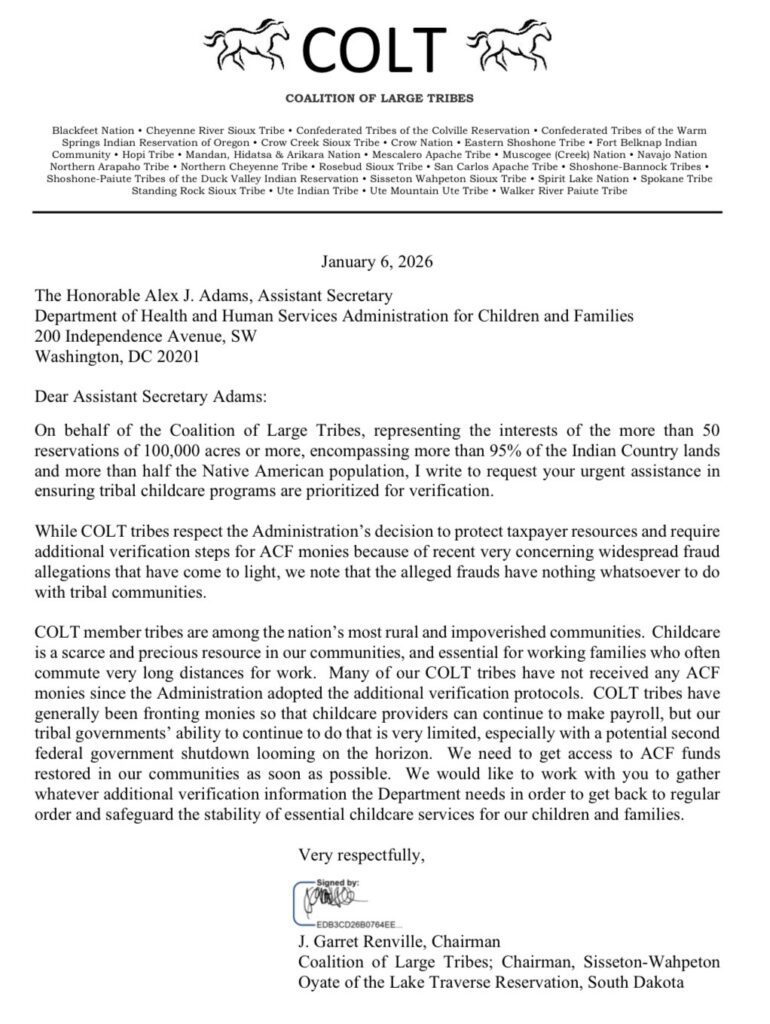
The letter underscores that COLT tribes support the Trump administration’s efforts to protect taxpayer dollars and strengthen oversight following recent fraud allegations tied to state-run childcare systems. However, the coalition emphasized that those allegations are unrelated to tribal programs.
“Childcare is a scarce and precious resource in our communities,” COLT wrote, noting that many tribal families live in remote, rural areas where parents often commute long distances for work. Consistent childcare access, the coalition said, is essential for maintaining workforce stability in those regions.
The funding delays stem from new verification protocols implemented in late December by the U.S. Department of Health and Human Services through the Administration for Children and Families.
The changes followed high-profile fraud investigations in several states, including Minnesota, where allegations centered on improper payments to non-tribal daycare providers without sufficient attendance or eligibility verification.
In response, HHS activated a national “Defend the Spend” system, added documentation and photo-verification requirements, and launched a federal fraud-reporting portal. The Administration has said the measures are intended to restore public trust, close loopholes, and ensure federal childcare funds are used appropriately.
COLT acknowledged those goals but warned that the broad rollout has had unintended consequences for tribal communities. According to the coalition, many member tribes have not received Child Care and Development Fund reimbursements since the new protocols took effect.
As a result, tribal governments have been advancing funds to keep childcare centers open and staff paid – an approach they say is not sustainable long-term, particularly with uncertainty surrounding future federal funding timelines.
The coalition also noted that tribal childcare programs operate under distinct regulatory frameworks that account for rural conditions, smaller populations, and tribal sovereignty.
To date, there has been no public evidence linking widespread childcare fraud to tribal providers.
COLT members include major tribal nations such as the Navajo Nation and the Rosebud Sioux Tribe, many of which already face economic challenges, workforce shortages, and limited infrastructure.
Rather than seeking exemptions, COLT said it is ready to work directly with federal officials to provide any additional verification needed. The coalition’s goal, it said, is to help restore regular funding flows while upholding accountability and ensuring essential childcare services for tribal families continue without interruption.
As federal agencies move forward with strengthened oversight, COLT is urging a balanced, collaborative approach – one that protects taxpayer resources while recognizing the unique circumstances of tribal communities and the essential role childcare plays in their economic stability.