

By Mark Vargas, Editor-in-Chief & Opinion Contributor
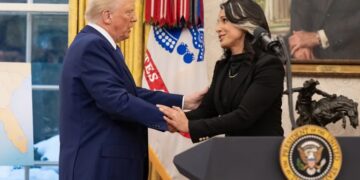
When President Donald Trump publicly praised outgoing Director of National Intelligence Tulsi Gabbard during Wednesday’s Cabinet meeting, it was more than a gracious farewell.
It was confirmation that Gabbard accomplished exactly what she set out to do.
Standing before his Cabinet and national media, President Trump praised Gabbard as a “terrific person” who worked “tirelessly to restore trust and focus on the intelligence community.” He credited her with exposing critical information, uncovering leads others believed were “dead,” dramatically reforming the Office of the Director of National Intelligence, and helping expose what he again called the “Russia, Russia, Russia hoax.”
For millions of Americans who watched public trust in intelligence agencies collapse over the past decade, Trump’s remarks reinforced what many conservatives already believed: Tulsi Gabbard did more to confront corruption, politicization, and weaponization inside the intelligence community than any Director of National Intelligence in modern American history.
And that is precisely why so many in Washington’s political establishment are quietly relieved to see her leave.
Unlike many officials who spend their time cultivating media attention and protecting bureaucratic interests, Gabbard quietly focused on reform. She never chased headlines. She went to work.
Under her leadership, the ODNI underwent one of the largest restructurings since the office was created. Staff levels were reduced by roughly 40 percent, bloated bureaucracy was cut back, and intelligence operations were redirected toward core national security missions involving counterterrorism, counternarcotics, border security, and cartel threats.
But her most significant reforms involved accountability.
For years, conservatives – including President Trump himself – warned that elements within the intelligence community had become increasingly politicized. Many Americans believed intelligence agencies were no longer operating as neutral national security institutions, but as powerful bureaucracies capable of shaping political outcomes, protecting insiders, and targeting opponents.
Previous administrations ignored those concerns. Tulsi Gabbard confronted them directly.
Through her Director’s Initiative Group task force, officials accused of leaks, politicization, or intelligence misconduct suddenly faced consequences. Security clearances were revoked. Senior officials were removed, and alleged leakers were referred for prosecution.
Equally important, Gabbard prioritized transparency. Major declassification efforts reopened public scrutiny into the Russia collusion investigation, Crossfire Hurricane, domestic surveillance controversies, and long-hidden government records tied to the JFK assassination.
To her supporters, this was not politicization – it was accountability.
Naturally, the attacks came quickly. Critics accused her of undermining institutions and politicizing intelligence. But those criticisms often sounded less like concern for democracy and more like anger that someone inside the system was finally willing to challenge it.
Trump’s public praise this week underscored just how valuable Gabbard became to his administration.
“She exposed mountains of evidence,” Trump said during the Cabinet meeting, crediting her work alongside FBI Director Kash Patel and others throughout the administration.
That statement alone explains why many entrenched figures in Washington viewed her as such a threat.
Her resignation to support her husband following his bone cancer diagnosis also reminded Americans of something increasingly rare in politics: personal sacrifice and loyalty still matter.
Many in the establishment may celebrate her departure. But Tulsi Gabbard leaves behind something far more important: a legacy of transparency, accountability, and renewed faith that America’s intelligence agencies can once again serve the American people – not the political establishment.
And if Wednesday’s Cabinet meeting proved anything, it is that President Trump knows exactly how important her work truly was.