

By Illinois Review
Americans for Prosperity-Illinois (AFP-IL) moved quickly in early December to publicly recognize two of the most powerful figures in Illinois House Republican politics – just as scrutiny grows over the organization’s close ties to an active GOP candidate on its payroll.
In the first week of December 2025, AFP-IL named House Minority Leader Tony McCombie and Deputy Minority Leader Norine Hammond as Prairie State Policy Champions, citing their advocacy for reducing government spending, lowering taxes, and promoting affordability-focused policies.
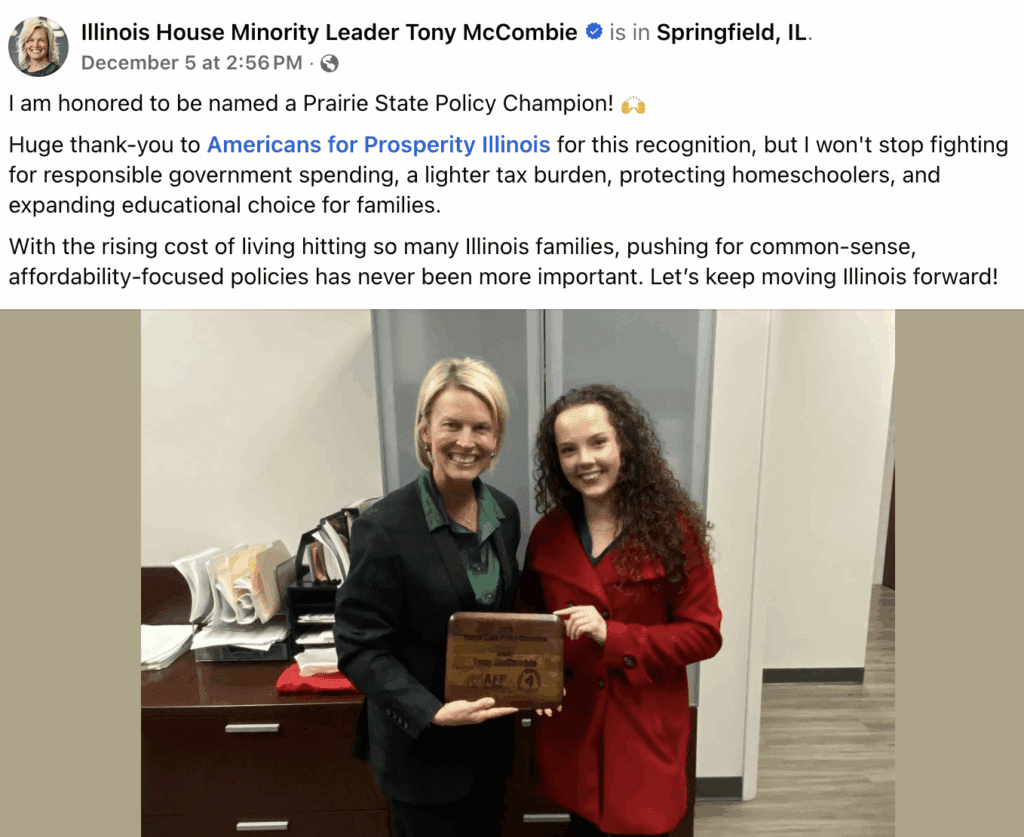
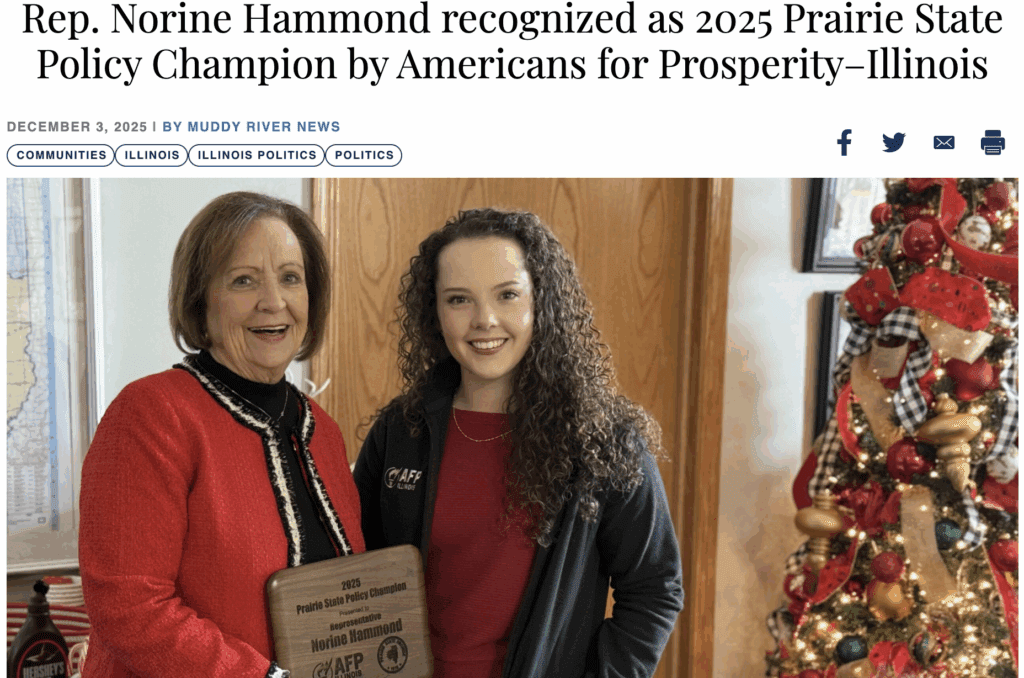
The organization announced its slate of 2025 champions in November, with individual recognition posts and awards following in the first week of December.
On paper, the honors align with AFP-IL’s stated mission. In practice, the optics tell a far more complicated story.
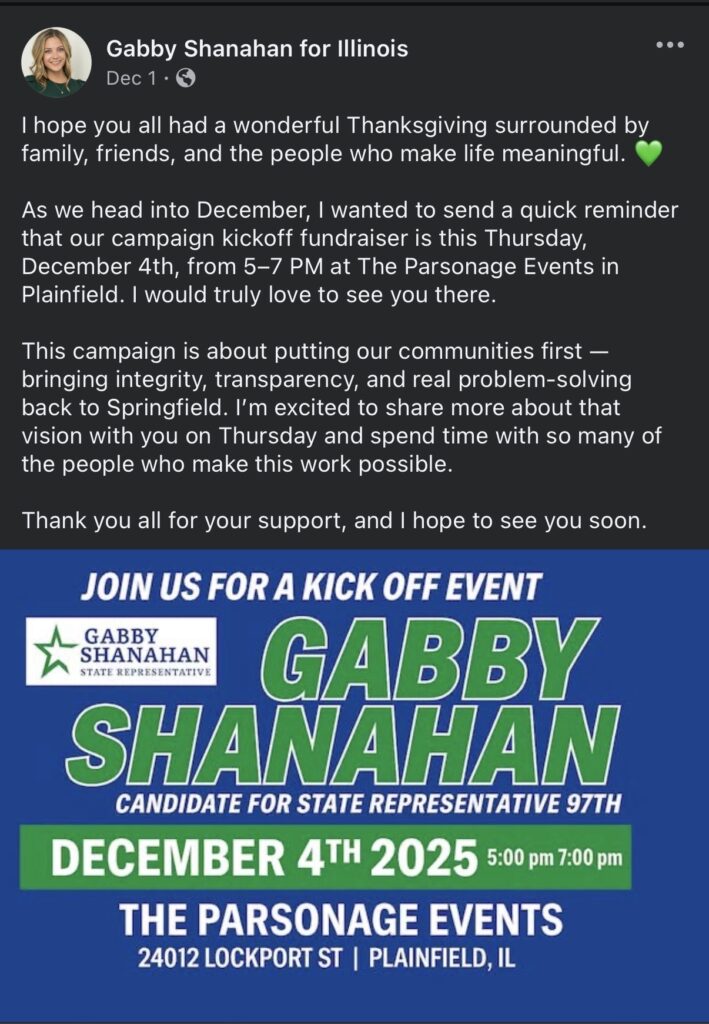
As previously reported, AFP-IL’s Grassroots Engagement Director, Gabby Shanahan, is also an active Republican candidate who has filed to run again for Illinois House District 97. Shanahan’s prior campaign relied heavily on institutional GOP money, and any future run will once again require approval and financial backing from House Republican leadership.
During the 2024 election cycle, Shanahan’s campaign committee, “Team Shanahan,” received massive financial support from Republican political organizations. Records show more than $304,000 came from the House Republican Organization. The group is controlled by McCombie and Hammond, giving both leaders direct influence over which candidates receive funding.
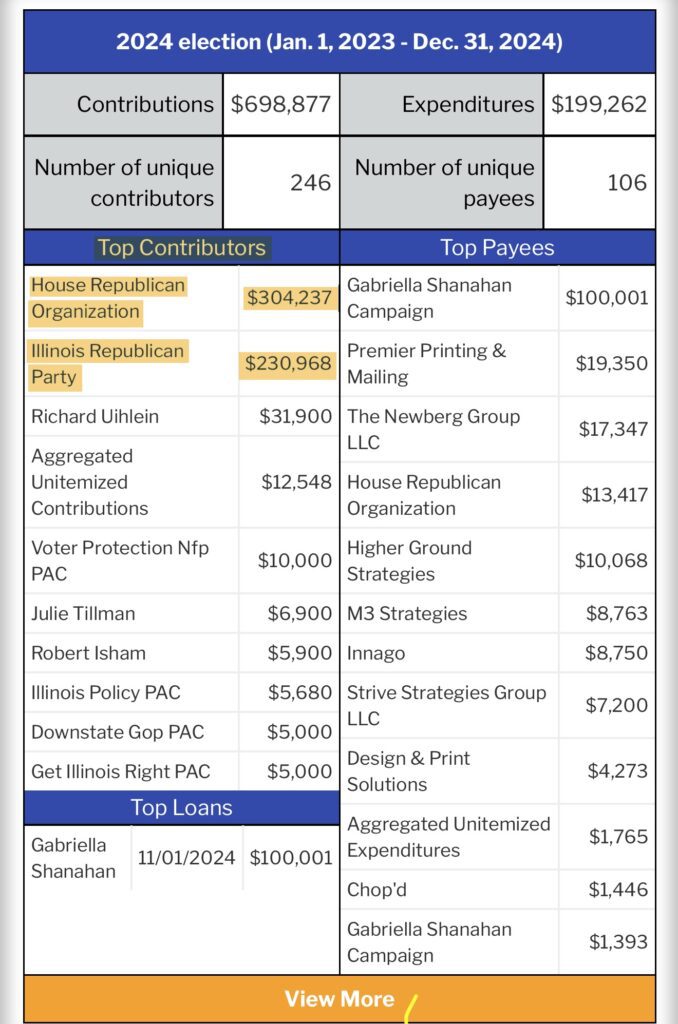
That reality makes the selection of McCombie and Hammond especially significant.
McCombie is not only the House Minority Leader – she is one of the most powerful financial gatekeepers in Illinois Republican politics. During the 2024 election cycle, McCombie’s political committee, McCombie for Illinois, contributed a precise total of $2.9 million to the House Republican Organization (HRO).
Those funds help determine which candidates receive money, staffing, and strategic support in competitive races. In practical terms, no serious House candidate advances without leadership buy-in, and McCombie’s approval is central to that process.
Norine Hammond, as Deputy Minority Leader, also wields influence within the caucus and donor ecosystem. But her inclusion as a “policy champion” struck many grassroots activists as especially tone-deaf given her record.
Hammond remains closely associated with a spending controversy dubbed “PillowGate,” after reports revealed taxpayer funds were steered to hire her own interior decorating company to decorate her taxpayer-funded legislative office.
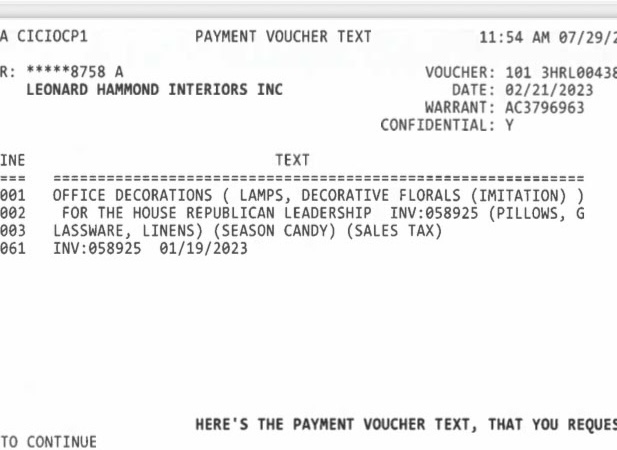
The episode raised questions about self-dealing and fiscal judgment – hardly the résumé many conservatives associate with “reining in government spending.”
Against that backdrop, AFP-IL’s decision to elevate Hammond as a model of fiscal responsibility was met with disbelief among grassroots Republicans who expect advocacy groups to reward restraint, not insider privilege.
The broader concern extends beyond individual awards. AFP-IL employs a declared House candidate who will soon be seeking financial and political approval from the very leaders the organization is now publicly praising.
While no rule may have been technically violated, the appearance of an insider advantage is undeniable.
Illinois Republicans have long criticized Democrats for machine politics, pay-to-play culture, and ethical double standards. If those criticisms are to mean anything, the GOP must apply the same scrutiny inward.
Advocacy groups and party leaders owe voters transparency. Right now, what many grassroots Republicans see looks less like independent policy advocacy – and more like an insider ecosystem rewarding power while protecting its own.