

By Illinois Review
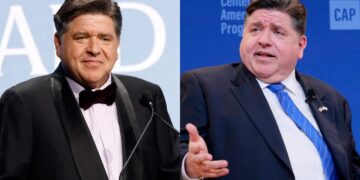
As new federal investigations in Minnesota uncover what officials describe as massive fraud tied to government programs, political observers are raising fresh concerns about Illinois – and whether similar issues could be unfolding under decades of one-party Democrat control.
In Minnesota, federal authorities have exposed schemes involving billions of taxpayer dollars, with investigators warning the activity may be only the “tip of the iceberg.” The revelations have sparked renewed scrutiny in states like Illinois, where Democrats have controlled state government for years and where spending has significantly increased under Gov. JB Pritzker.
That increase has been substantial. Since Pritzker took office, Illinois’ General Funds budget has grown by nearly $20 billion – rising from approximately $36 billion to $55 billion today.
Despite that surge in spending, many residents say services have not improved, and the overall condition of the state has not meaningfully changed.
Questions have also been raised about the scale and direction of state spending.
Public reporting has highlighted that more than $20 billion in state contracts have been awarded to a relatively small group of firms with ties to Pritzker’s broader financial network since 2019.
Separately, more than $180 million in taxpayer-backed investments have been directed toward projects linked to the governor’s family hotel interests through state entities.
While no formal findings of wrongdoing have been announced in connection with those expenditures, critics argue the scope and structure of the spending warrant closer review.
Those concerns are no longer limited to Illinois.
Last month, Karoline Leavitt confirmed publicly that President Donald Trump is aware of what she described as “waste, fraud and abuse” under Pritzker’s administration – marking the first time the issue has been acknowledged at the national level.
Illinois has long struggled with fiscal challenges, including some of the highest property taxes in the nation, persistent budget pressures, and ongoing population loss. At the same time, education outcomes in parts of the state continue to lag, and businesses have increasingly relocated elsewhere.
Analysts across the political spectrum often point to structural issues within the Illinois government, including entrenched political control and limited oversight, as contributing factors.
Those concerns have taken on new urgency in light of developments in Minnesota. Some advocates are now calling for federal authorities to take a closer look at Illinois finances.
Specifically, there are growing calls for the FBI and Department of Justice to examine how taxpayer funds have been allocated and whether any patterns of waste, fraud, or abuse exist.
Supporters of such a review argue it would provide clarity and help restore public trust, particularly at a time when many Illinois residents are struggling with rising costs of living.
Pritzker’s office has previously defended the administration’s fiscal management, pointing to balanced budgets, improved credit ratings, and investments in infrastructure and economic development.
Still, the broader debate over accountability continues.
Observers note that Illinois’ long-standing political structure – where one party has held dominant control of the executive and legislative branches – has limited the level of independent oversight typically seen in more competitive states.
For many taxpayers, the issue comes down to a simple question: where is the money going, and who is benefiting?
Until those questions are fully answered, calls for greater scrutiny are unlikely to fade.
And as concerns grow, one conclusion is becoming increasingly clear: until Illinois addresses the underlying issues of waste, self-dealing, and lack of transparency, meaningful reform will remain out of reach.