
By Shannon Adcock, Opinion Contributor & Founder, Awake Illinois
In America today, millions of parents feel trapped. Their children’s futures are dictated by zip codes, failing public schools, and a system that prioritizes adult jobs and union interests over student success. Chicago Public Schools exemplify this crisis: staffing has surged 20 percent since 2019 while enrollment dropped 10 percent, turning the system into a jobs program rather than an education one.
Illinois faces a severe literacy epidemic—just 30 percent of fourth-grade students met or exceeded NAEP reading proficiency standards in 2024, according to the Nation’s Report Card, ranking the state 29th nationally and down from higher standings in recent years. This means 70 percent of fourth graders are not proficient in reading, a foundational skill for all future learning, with little improvement over two decades despite massive spending increases.
Now, a fresh push for real change is underway. President Trump’s administration, through Education Secretary Linda McMahon, is advancing the Education Freedom Tax Credit—the largest federal expansion of school choice ever. This initiative empowers families with scholarships to attend schools of their choice or access other education supports, making 2026 the true “Year of School Choice.”

But not everyone welcomes this freedom. In Illinois, Democratic State Senator Graciela Guzman filed a bill to block the state from participating in Trump’s school choice program—right after receiving $72,500 from the Chicago Teachers Union (CTU). Since October 2023, she’s pocketed over $519,000 from teachers’ unions. The timing is no coincidence: she filed the anti-choice bill days after the big union payout.
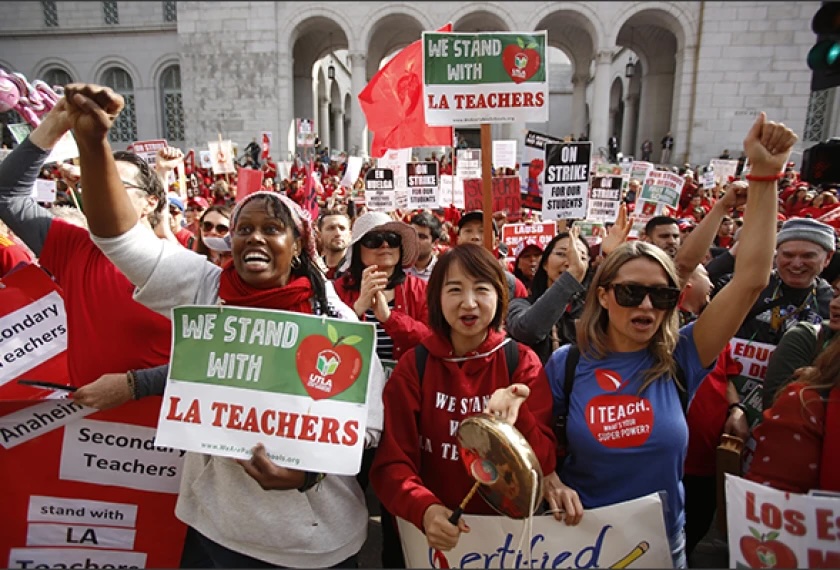
This isn’t about protecting kids; it’s about protecting power. Teachers’ unions, like the CTU, fight tooth and nail against competition because a true choice system exposes failures and forces accountability. When parents can take their children (and the funding) elsewhere, monopolies crumble. Government-enforced education monopolies break the feedback loop that serves families, allowing unions to strike indefinitely while parents have nowhere else to turn.
Even across party lines, the appeal is undeniable. Democratic Colorado Governor Jared Polis opted his state into the federal Education Freedom Tax Credit program, calling it a “no-brainer”. In interviews and statements, he described it as a “real boom of investment in kids” and emphasized not leaving federal dollars on the table—ensuring Coloradans could benefit from scholarships for tutoring, after-school programs, summer camps, and more, rather than seeing money flow to other states. Polis, a long-time school choice proponent who co-founded charter schools, joined mostly Republican governors in making this move, showing that empowering families transcends partisanship.
States like Texas are already proving the model works: Over 130,000 families applied for Education Freedom Accounts in the program’s first weeks—far exceeding initial projections—with demand exploding from low-income and working-class families. This surge shows parents are eager for options that better fit their children’s needs.
The evidence is overwhelming that education freedom delivers real benefits for students and families. A comprehensive review by EdChoice of over 200 empirical studies on private school choice programs found that 84 percent show positive effects on students, schools, or state budgets.
Specifically:
-Parent satisfaction is sky-high: Nearly all studies (33 out of 33) report higher satisfaction among families using choice programs, as they gain alignment with values, safety, and quality.
-Long-term outcomes shine: Multiple rigorous studies highlight gains in high school graduation, college enrollment, and completion—especially for low-income, minority, and disadvantaged students. For example, in Ohio’s EdChoice program, participants were 32 percent more likely to enroll in college (64 percent vs. 48 percent) and 60 percent more likely to earn a bachelor’s degree (23 percent vs. 15 percent). Low-income students saw even larger boosts—up to 175 percent more likely to graduate college in some subgroups. Black students were 138 percent more likely.
-Broader benefits: Programs often improve public school performance through competition, with many studies showing modest test score gains for students who remain in traditional schools. Fiscal analyses across dozens of programs show they save taxpayers money—often $3,300–$7,800 per participating student—by redirecting funds more efficiently.
While some recent studies on test scores in larger programs show mixed or initial negative results (often temporary as students adjust), the consensus from long-term data points to stronger attainment: higher graduation rates (gains of 4–21 percentage points in several studies), increased college access, and better life outcomes like reduced crime and higher earnings.
Parents shouldn’t have to beg for what’s best for their kids. Education freedom means empowering families to choose the learning environment that fits—public, charter, private, homeschool, or otherwise—without government gatekeepers or union vetoes.
In a midterm election year, this is the time for action: Support education freedom now. Contact your state legislators and demand they opt into federal school choice opportunities like Trump’s Education Freedom Tax Credit. Ask candidates if they support this tax credit program and back those who prioritize parental rights over union donations. Amplify voices and organizations fighting for these reforms. Share stories of families trapped in failing schools.
Parents shouldn’t have to beg for what’s best for their kids. Education freedom means empowering families to choose the learning environment that fits—public, charter, private, homeschool, or otherwise—without government gatekeepers or union vetoes. In states like Illinois, where literacy rates lag and children are left behind, choice isn’t optional—it’s essential.
Shannon Adcock is the founder and president of Awake Illinois, a grassroots nonprofit dedicated to parental rights, educational transparency, and protecting children from ideological agendas in public schools.