


By Amanda Szulc, Opinion Contributor
As a conservative Christian writer committed to honoring God, defending truth, and standing in the light, I approach this analysis with a conviction rooted in biblical principles of integrity and accountability. Leaders are called to exemplify moral seriousness, as Proverbs 29:2 reminds us: “When the righteous increase, the people rejoice, but when the wicked rule, the people groan” (ESV). In this piece, I examine Illinois Governor J.B. Pritzker’s February 11, 2026, Facebook post—not through the lens of partisan outrage, but through a logical, research-based critique of its implications for public trust, executive conduct, and the long-term consequences of policy decisions. Drawing from documented sources, policy analysis, and my firsthand observations as an early childhood educator during the COVID-19 era, this article highlights inconsistencies in governance that demand scrutiny.
On February 11, 2026, Governor J.B. Pritzker shared a graphic on his official Facebook page that mimicked the style of redacted documents from the Jeffrey Epstein files. Styled like an official letter “from the desk of the President,” the image was heavily blacked out, leaving only the phrase “Donald J. Trump’s Administration is lying to you” visible. The caption read: “Fixed it for you, White House.”
This post was no casual quip; it was a deliberate visual jab, leveraging the Epstein scandal’s notoriety for political effect. The redaction aesthetic—evocative of federal investigations into grave crimes—implied deception at the highest levels, yet it came from a governor whose own family ties to Epstein raised eyebrows. Reports revealed that Pritzker’s cousin, Tom Pritzker, executive chairman of Hyatt Hotels, was mentioned in the Epstein documents, and Pritzker’s 2018 gubernatorial campaign had solicited funds from Epstein via ActBlue, years after his convictions were public. Such connections underscore the poor taste of invoking the Epstein files for partisan attacks—it borders on immaturity, akin to a high school taunt, lacking the gravitas expected from institutional leadership.
Recent revelations have only deepened these concerns about integrity. In February 2026, Tom Pritzker stepped down as executive chairman of Hyatt Hotels, citing “terrible judgment” in maintaining contact with Epstein and Ghislaine Maxwell, and expressing deep regret over the association. This resignation came after unsealed documents highlighted his ties, prompting a swift exit from a role he held for over two decades. Even more striking, in a March 2026 deposition before the U.S. House Oversight Committee, former President Bill Clinton initially suggested under oath that he may have flown on Epstein’s plane with J.B. Pritzker and his wife, though Clinton later recanted the statement as a mistake. Pritzker has firmly denied any such travel or meeting Epstein, but the mere mention in sworn testimony—combined with the family connections—raises serious questions about transparency and judgment. For a leader who weaponizes the Epstein scandal against opponents, these developments expose a glaring hypocrisy: How can one demand accountability from others while personal and familial links to the same scandal go unaddressed with the same vigor?
More broadly, the post exemplifies a troubling trend in post-crisis rhetoric: using inflammatory visuals to undermine opponents while sidestepping self-reflection. In an era where public perception of government is already fragile, this tactic erodes institutional tone, fostering cynicism rather than constructive dialogue. As a catalyst, it prompts a deeper question: If a governor accuses others of dishonesty, what standard of truthfulness should we hold his own administration to?
Governor Pritzker’s post accuses a federal administration of lying, yet Illinois’ COVID-19 response under his leadership was marked by policies that critics argue involved misleading the public and inconsistent enforcement. From March 2020, Pritzker issued a series of executive orders invoking emergency powers, including statewide stay-at-home mandates, business closures, and mask requirements for children as young as 2 in schools. These measures were framed as essential for public safety, with frequent warnings about the dangers of non-compliance.
However, analysis reveals inconsistencies. For instance, Pritzker claimed in congressional testimony that his May 1, 2020, mask mandate aligned with Illinois’ downward infection trends—but state data showed infections peaking and declining before the order took effect. Republicans accused him of hypocrisy when he joined large protests in June 2020 without social distancing, violating his own 10-person gathering limit. Such actions raised questions about selective enforcement: Why were small businesses shuttered for non-compliance while mass gatherings were overlooked?
This era of urgent governance highlighted an overreach of executive power. Pritzker extended emergency declarations multiple times, bypassing legislative oversight, which critics labeled as authoritarian. The rhetoric emphasized fear—constant reminders of illness risks—without adequate resources for mental health support. Research from the University of Illinois indicates that while initial lockdowns spiked interest in isolation and worry, the prolonged uncertainty contributed to sustained mental health declines. In my own experience, local news in Illinois amplified this fear, portraying leaving home as a mortal risk. I spent weeks isolated in my room, terrified of infecting my parents, which mirrored broader reports of heightened anxiety among Illinois residents.
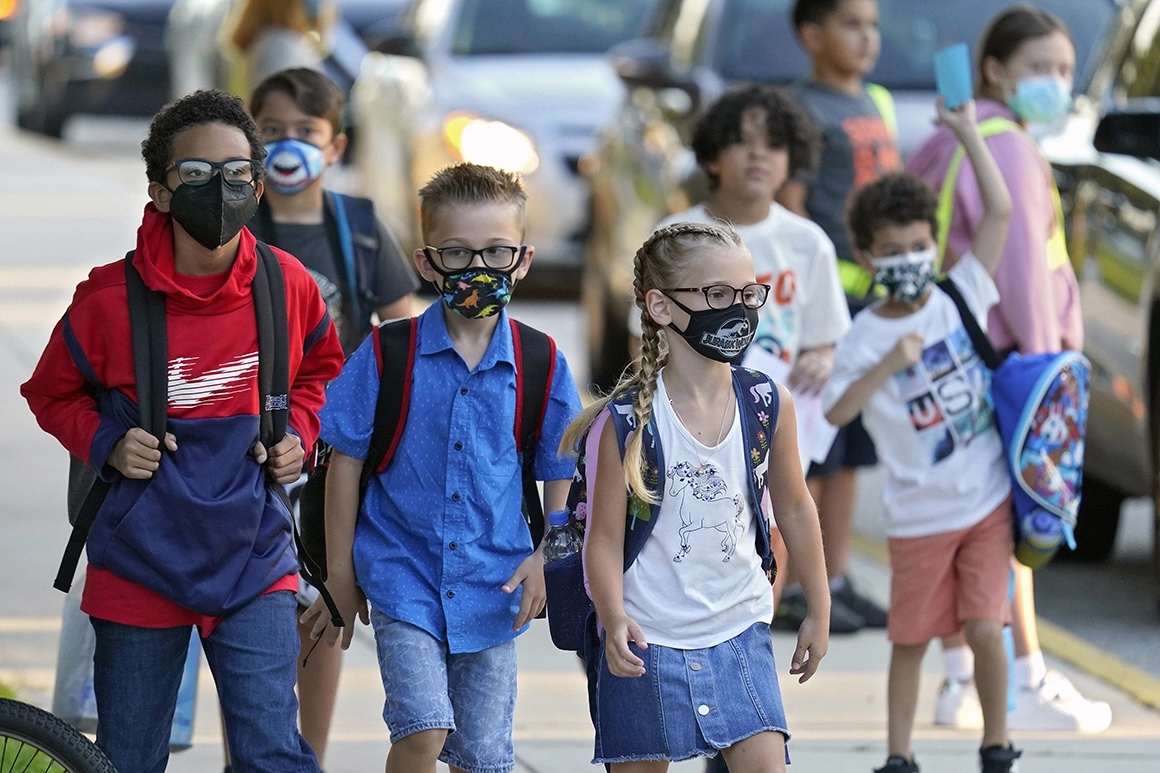
As an early childhood educator in Illinois during the pandemic, I witnessed the tangible fallout of these policies on young children. Mandates forced remote learning for preschoolers, followed by masked in-person sessions with strict distancing. Parents waited outside for drop-offs, temperature checks were mandatory, and weekly COVID testing added layers of stress. Managing this while tracking developmental milestones—through portfolios and observations—was exhausting, compounded by constant sanitizing and enforcement.
Research corroborates these observations: Lockdowns disrupted preschoolers’ social-emotional development, leading to increased anxiety, aggression, and oppositional behaviors. A Columbia University study found babies born during the pandemic scored lower in motor and social-emotional skills. In Illinois, children from low-income families faced amplified risks, with excessive screen time and isolation linked to impaired socio-emotional growth. I saw this firsthand: Children’s social skills declined, emotional regulation faltered, and fear was palpable. Post-pandemic, behavioral disorders rose, with more challenging behaviors and disrespect for authority—direct legacies of disrupted early interactions.
These developmental concerns extend to mental health. Illinois youth experienced sustained anxiety and depression, with emergency visits plateauing below pre-2016 levels but overall well-being worsening. Personally, the stress manifested in degradation—I was escorted from stores for forgetting a mask, heightening my sense of isolation. Yet, small businesses suffered most: Non-compliant ones were shut down, forcing families into hardship while trying to provide.
Pritzker’s post demands accountability from others, yet his administration’s transparency is questionable. During COVID, promises of resources for mental health fell short; isolation’s toll was acknowledged but under-addressed. A University of Chicago study linked lockdowns to parental stress and child behavior problems, particularly in low-income households. Public perception eroded as enforcement seemed arbitrary—protests allowed, churches restricted.
This inconsistency breeds distrust. When leaders like Pritzker invoke scandals like Epstein for attacks, it highlights a double standard: Accusing federal dishonesty while his policies misled on efficacy and ignored long-term harms. The new revelations about Clinton’s testimony and Tom Pritzker’s resignation only amplify this: If family and potential personal ties to Epstein exist, using the scandal as a political weapon reeks of deflection. As conservatives rooted in faith, we expect leaders to uphold truth, not exploit crises for political gain.
This pattern of hypocrisy persists, as evidenced by Governor Pritzker’s recent Facebook post on February 20th 2026, where he again targets former President Donald Trump, claiming “One year in, my message to Trump remains the same: You come for my people, you come through me” and asserting that “Donald Trump owes American families a refund.” While criticizing Trump on economic issues, Pritzker conveniently ignores his own role in devastating Illinois businesses during the pandemic. His administration deemed countless local establishments “non-essential,” forcing shutdowns that crippled small enterprises and families relying on them for livelihoods. Non-compliant businesses faced harsh penalties, including closures for refusing to enforce vaccine passports or mask mandates—measures that extended far beyond public health necessities and into overreach of executive power.
This latest jab reveals an inability to learn from past mistakes. Pritzker’s policies not only shuttered doors but shattered lives, contributing to economic hardship and mental health crises that Illinois families are still recovering from. Demanding refunds from Trump while evading accountability for his own actions underscores the double standard: a governor who wields power to control livelihoods but refuses self-reflection. True leadership requires humility and growth, not repeated attacks that distract from one’s own record.
In the rhetoric after the crisis, Pritzker’s posts reflect a failure in leadership standards. Mimicking Epstein redactions was tasteless, immature, and beneath the office—exploiting a scandal tied to his family for cheap points. Biblical wisdom calls for humility: “Let another praise you, and not your own mouth” (Proverbs 27:2, ESV). True leadership fosters unity, not division through juvenile graphics.
Illinois deserves better: Policies grounded in evidence, consistent enforcement, and empathy for lasting impacts. As we reflect, let’s demand accountability—not to assign sole blame, but to honor truth and protect the vulnerable. In standing firm, we defend the light, keeping our voices strong against hypocrisy.