

By Janelle Towne, Opinion Contributor
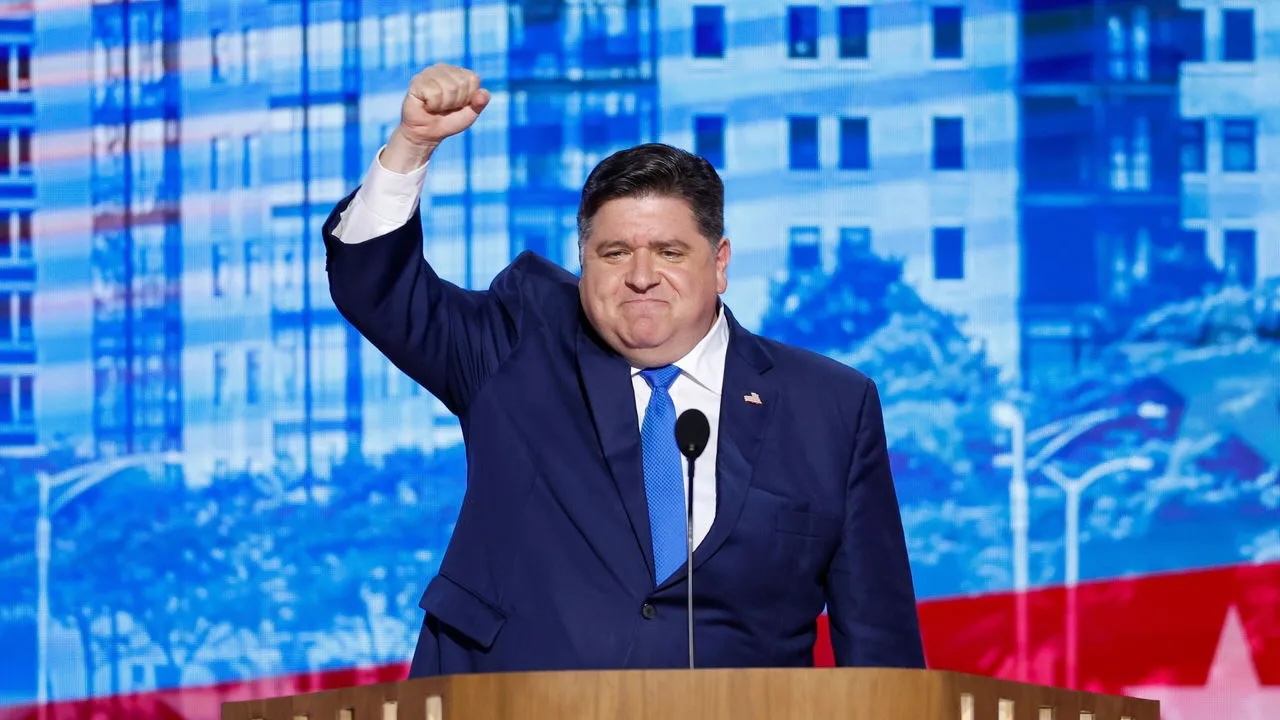
There is a quiet confidence surrounding Gov. JB Pritzker’s reelection bid, the kind that settles in early and lingers.
The polling reinforces it. The political class echoes it. Illinois, we are told, is not a state inclined toward surprises.
And yet, beneath that certainty, the reality is more complicated.
Pritzker enters this race with every structural advantage an incumbent could hope for: a formidable fundraising apparatus, a well-established political network, and, perhaps most importantly, the enduring strength of Chicago and Cook County, regions that have long functioned as the Democratic Party’s electoral anchor. On paper, the outcome appears straightforward.
But elections are not conducted on paper. They are shaped by turnout, by perception, and by the subtle shifts that occur far from the headlines.
For Darren Bailey, a victory would not come from revisiting the strategy that fell short in 2022. It would require something altogether different: a recalibrated coalition, a more disciplined campaign, and a political environment willing to bend, even slightly, in his direction.
That may sound unlikely. It is not impossible. The path begins, as it so often does in Illinois, in the suburbs.
DuPage, Lake, Will, and Kane counties have, in recent years, been described as reliably Democratic. But that characterization overlooks a more nuanced reality. These communities remain deeply sensitive to economic pressure, particularly when it comes to property taxes and the rising cost of living. They are not ideological strongholds so much as they are barometers of frustration.
If Bailey can make inroads here, incremental ones, not sweeping victories, he begins to alter the contours of the race. Suburban shifts do not need to be dramatic to be consequential. In a state where margins matter, even modest movement can reverberate statewide.
That, in turn, requires a reframing of the conversation.
Illinois voters are not immune to economic strain. The question is whether that strain becomes the defining lens of the election. For Bailey, the opportunity lies in presenting the race less as a referendum on national political divides and more as a reflection of everyday financial reality.
Campaigns that resonate most deeply are often those that feel personal rather than ideological. But perhaps the most underexamined factor in Illinois politics is not persuasion at all. It is participation.
The state’s demographic composition is often cited as evidence of its political direction: roughly 60 percent white, with Hispanic residents approaching one-fifth of the population and Black residents comprising just over a tenth.
Yet these figures do not translate evenly at the ballot box. Turnout varies, sometimes significantly, and just as importantly, a substantial share of eligible voters, across all backgrounds simply do not vote.
That absence carries weight. In close elections, the margin of victory is often smaller than the pool of those who stayed home.
Which is why the question is not only who voters support, but who chooses to participate at all.
Nowhere is that dynamic more consequential than in Chicago. The city has long served as the foundation of Democratic strength in Illinois, delivering margins that are difficult for any Republican to overcome.
Pritzker’s advantage depends, in no small part, on that continued turnout.
And yet, political energy is not constant. It ebbs and flows. If participation in Chicago softens, even marginally, it alters the statewide equation in ways that are not always immediately visible in early polling.
Bailey does not need to win in Chicago. He needs only to narrow the gap. Still, the most significant variable in this race may not be geographic or demographic, but personal.
In his previous campaign, Bailey was defined early, and often by voices beyond his own. This time, the opportunity exists to reshape that perception – to present a candidacy that is more measured, more focused, and more broadly accessible.
That does not require abandoning core positions. It requires communicating them with clarity and consistency.
Campaigns are rarely won by reinforcing what voters already believe about a candidate. They are won by changing what voters are willing to consider.
For now, Pritzker remains the favorite. The advantages he holds are real, and they are substantial.
But elections are not static. They evolve in response to circumstances, to sentiment, and to the unpredictable nature of human behavior. A modest shift in suburban sentiment, a change in turnout patterns, and a more disciplined campaign effort could begin to reshape a race that, at first glance, appears settled.
The path is narrow. It demands precision and, perhaps, a degree of political fortune.
But it exists.
And in a state as complex as Illinois, that is more than enough to make this race worth watching.
Homes gone. Houses burned. Costs climbing. Responsible flood protection? Vote Against Party Loyalty. Vote for Community Competence. By Jill B. Shestokas, Michelle Pennington, Tim Rueckert Imagine $9 -...
Read moreDetails