

By Jason Grossman, Guest Opinion Contributor
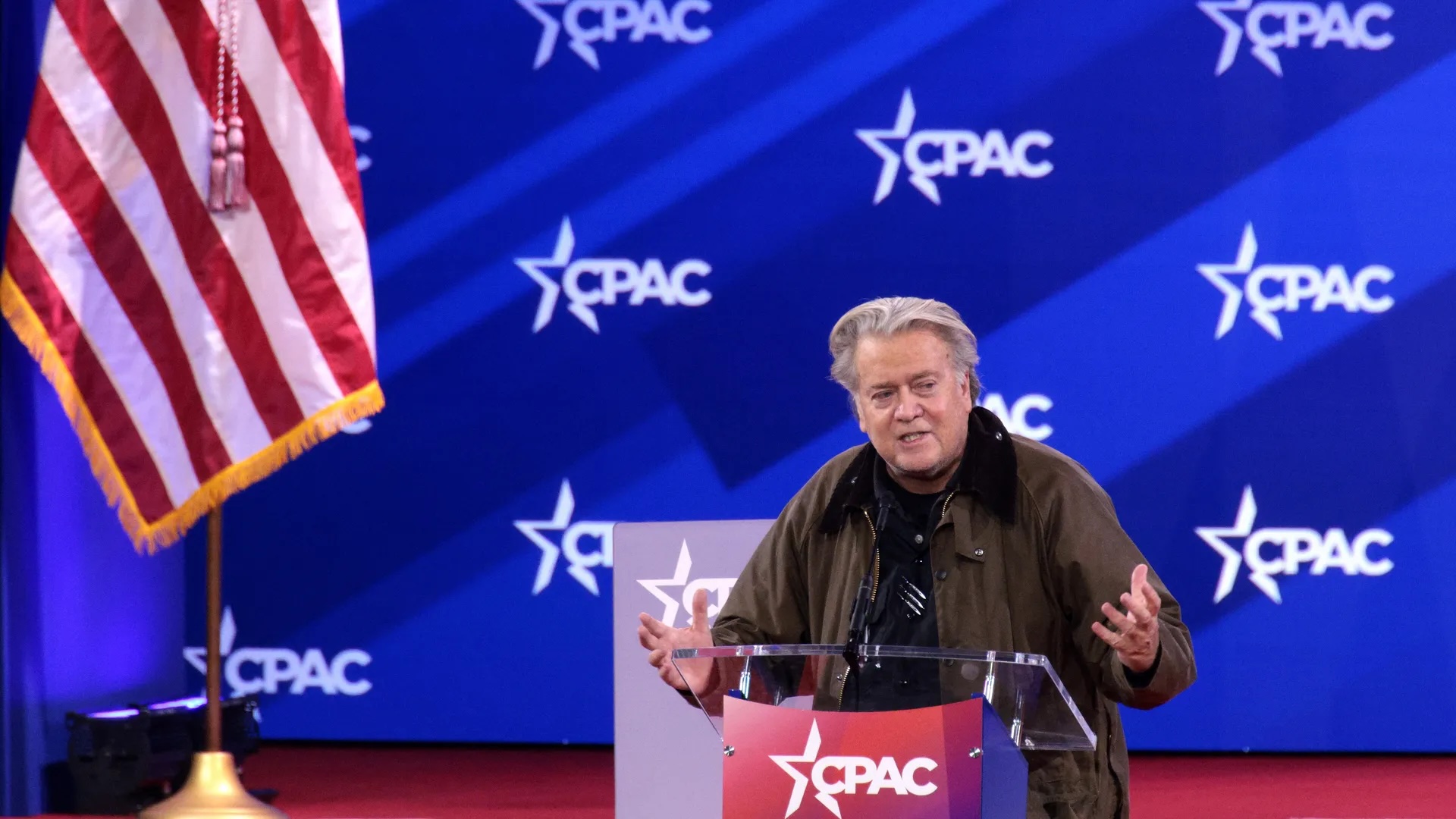
Over the decades, CPAC has hosted presidents, vice presidents, and high-profile influential figures, solidifying its status as a must-attend event for Republican hopefuls eager to measure authentic grassroots support. This year’s announcement—spotlighting the notoriously disingenuous fraudster Steve Bannon—shatters that legacy undermining the credibility of a once-revered organization.
By proudly featuring Steve Bannon as a 2026 headliner—the same fraud-convicted felon who exploited conservative donors in the “We Build the Wall” scam, diverting border-security funds while misleading trusting patriots—CPAC alienates the vital foundation of the Republican base and erodes its ethical standing.
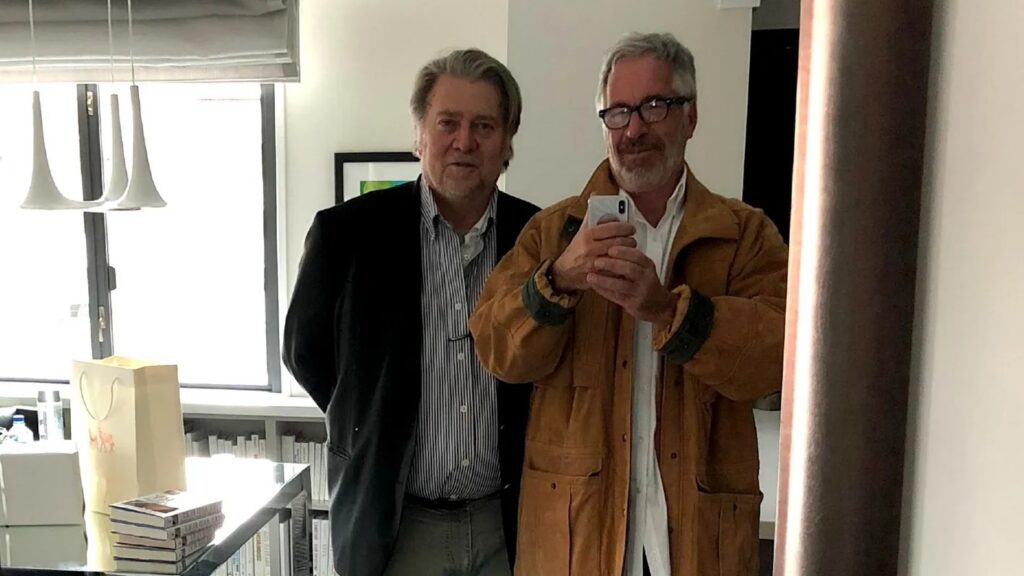
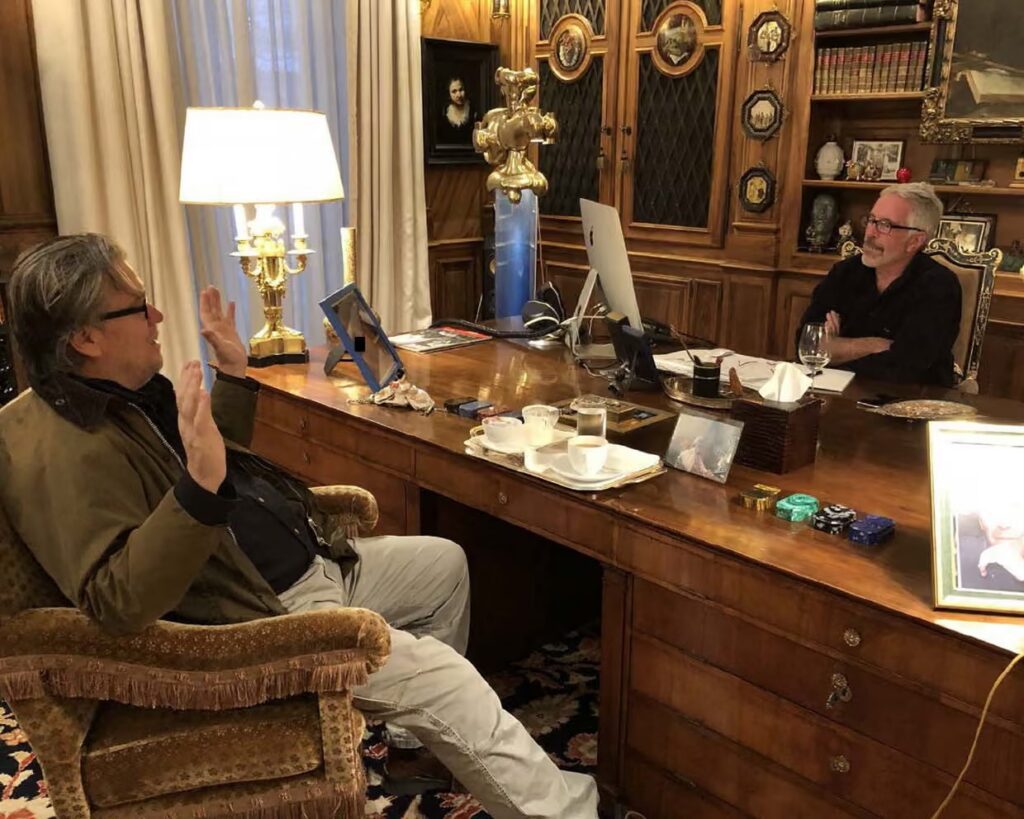
Bannon’s betrayals run deep, in 2018–2019, years after Jeffrey Epstein’s 2008 conviction for soliciting prostitution from a minor and procuring a person under 18 for prostitution, Bannon not only maintained a close, chummy friendship but actively coached the disgraced financier on media strategy, image rehabilitation, and public appearances, hardly the actions of a principled populist.
Steve Bannon’s slippery financial associations include promoting associate Guo Wengui’s (aka Miles Guo) schemes—where he has been identified as an unindicted co-conspirator—linking him to Guo’s convicted $1 billion fraud empire that includes the conservative social platform GETTR, which Guo helped fund and reportedly controlled.
Bannon heavily promoted GETTR on War Room as a key success in Guo’s network (alongside GTV—a Chinese-language video streaming and media platform co-founded by Guo and Bannon in 2020 for anti-CCP content, yet one that never went live despite massive investor anticipation—and Himalaya Coin), even as bankruptcy and seizure records show millions from Guo’s entities flowing to GETTR amid Guo’s convicted fraud that victimized thousands.
Public bankruptcy proceedings involving Guo—Bannon’s longtime partner in anti-CCP media ventures—reveal that a Bannon-linked firm, Whole Alpha Trading LLC (formerly Art Operation LLC), acted as a key financial conduit. The LLC obtained $500,000 from Guo’s intermediary companies and transferred $300,000 for media services pursuant to a Newnoah contract, casting further doubt on the sources of funding in Bannon’s sphere.
Bannon’s so-called professed loyalty to Trump rings hollow and fabricated. When the spotlight dims and the doors close, Bannon retreats to elite circles, rubbing shoulders with the very powerful insiders he claims to oppose, all while grifting off conservative ideals for personal gain. This choice doesn’t energize the movement. It exposes glaring hypocrisy and raises questions about who CPAC truly represents.
Since its inception in 1974, the Conservative Political Action Conference (CPAC) has long served to rally conservatives against liberal overreach in government. Its inaugural event featured then-Governor Ronald Reagan, setting the foundation for what would become an annual gathering of right-leaning luminaries, conservative activists, and aspiring politicians. That’s why it is important that CPAC reconsider its decision to use such a double-dealing figure.
CPAC has always been the forefront yearly gathering that focused on traditional conservative principles such as limited government, free markets, and anti-communism. It gained prominence during the Reagan era, serving as a launchpad for the Reagan Revolution, with influential speakers like William F. Buckley Jr. and Barry Goldwater helping shape the intellectual foundation of modern conservatism.
By the 1980s and 1990s, CPAC expanded to include social issues, attracting evangelical and pro-life leaders. Attendance surged, making it a key GOP event where straw polls often predicted nomination trends.
The dawn of the 21st century brought new challenges to CPAC. After 9/11, the Republican Party emphasized foreign policy and national security, but the rise of the Tea Party soon shifted focus to fiscal conservatism. In 2010, amid widespread backlash against Obama’s government overreach, CPAC experienced a surge in libertarian-leaning attendees, highlighted by Ron Paul’s decisive straw poll victory.
The pivotal moment in CPAC’s history came on February 10, 2011 when Donald Trump’s explosive entry as an outsider into the conservative spotlight, channeling the unspoken frustrations of so many Americans, marked a seismic shift toward populism that redefined the Republican movement.
Trump’s electrified speech captivated the audience with blunt truths on China’s economic dominance and unfair trade practices, OPEC’s role in driving up oil and gas prices, the need for tougher negotiations with exploitative nations, and opposition to tax increases. He strongly hinted at presidential ambitions, stating he would decide by June whether to run in 2012 and promising that America would “be great again” under strong leadership.
Following that debut, Trump became a CPAC staple, speaking nearly every year through his presidency and beyond. His appearances drew massive crowds and dominated media coverage, reinforcing CPAC’s role as the barometer for GOP energy.
Now, in 2026, CPAC faces a foundational ethical collapse, marked by scandals that mock conservative ideals. The conference, scheduled for March 25-28 in Grapevine, Texas, has announced Steve Bannon as a confirmed speaker, reigniting debates about the organization’s direction.
Bannon, the onetime Trump adviser and War Room host, has preached to MAGA crowds for years, but recent Epstein document dumps—revealing his communications with the convicted sex offender, his hands-on media coaching (from Michael Wolff’s Too Famous), and a prolonged, disturbingly close relationship well after Epstein’s 2008 conviction—have ignited heavy criticisms, exposing deep hypocrisy, revealing what was really going on behind closed doors, undermining core foundational conservative values.
Steve Bannon’s communications with Jeffrey Epstein went far beyond casual advice—he discussed political messaging on tax cuts and immigration, exchanged late-night notes on global events, and bragged about secretly building sections of a private border wall near El Paso. Even more alarmingly, texts show the two men contemplating invocation of the 25th Amendment to remove Trump from office during his first term, a stunning contradiction for someone who has long positioned himself as a staunch Trump loyalist.
These communications coming to light have generated substantial anger among the MAGA community as they clearly expose Bannon as a sell out.
For a self-proclaimed defender of the forgotten American, Bannon’s active role in rehabilitating Jeffrey Epstein’s image—via media coaching, strategy advice, “media training,” and a planned redemptive documentary—casts serious doubt on his loyalties and where his ethical compass actually points.
Adding to outright deception, a recently surfaced May 2019 flight booked via Epstein’s concierge—reveal e-tickets for Steve Bannon and associates to St. Thomas, the stepping stone to Little St. James, Epstein’s private island infamous for sex parties and abuse. This arrangement deepens questions about Bannon’s judgment and associations, underscoring his apparent willingness to follow Epstein into that dark orbit.
This kind of collaboration with a convicted pedophile and sex trafficker directly contradicts the moral values CPAC claims to uphold: family values, social conservatism, traditional principles, and an enduring moral order that prioritizes virtue, justice, and personal responsibility.
But that’s not the only betrayal staining his record.
In February 2025, Bannon pleaded guilty to defrauding donors out of more than $15 million in the infamous “We Build the Wall” scam, where he and his associates misled patriotic Americans eager to support Trump’s border security vision by promising every cent would go to construction—only to divert funds for personal use and luxuries.
This outright brazen fraud which exploited the trust of grassroots donors, resulted in a plea deal that spared him jail time but cemented his reputation as a self-serving opportunist who preys on the very movement he claims to champion.
For CPAC—a conference long defined by family values, social conservatism, and unwavering traditional principles—giving a prominent slot to someone with deep ties to a convicted pedophile and sex trafficker (including hands-on image rehabilitation efforts and a May 2019 e-ticket to St. Thomas, the gateway to Epstein’s notorious Little St. James island), fresh off a guilty plea for defrauding donors out of more than $15 million in the “We Build the Wall” scam, and with murky financial links to associate Miles Guo’s convicted $1 billion fraud empire—where Bannon has been publicly identified as an unindicted co-conspirator—is a direct affront to its core base and shreds any claim to principled authority.
Dropping Bannon from the lineup would signal that principled conservatism still matters to CPAC.
Before the mask slipped, Steve Bannon—once regarded as a key Trump strategist—has since shown himself devoid of any integrity. He weaponized his War Room platform to exploit conservatives financially, including heavily promoting the We Build the Wall campaign, which raised over $25 million from donors with promises that funds would go directly to border construction, and associate Miles Guo’s fraudulent Himalaya Coin cryptocurrency schemes as part of Guo’s convicted $1 billion fraud empire that victimized thousands.
These very damning exposures, combined with his long, well-documented relationship with Epstein, have demolished his reputation completely—laying bare a recurring habit of wielding influence to defraud and exploit supporters, as evidenced by his 2025 guilty plea to fraud in the border wall case.
It’s understandable that respected voices are now demanding a boycott of CPAC 2026 unless Bannon is dropped from the lineup—platforming him amid fraud convictions, Epstein ties, and donor exploitation clashes sharply with CPAC’s professed dedication to traditional American family values, moral integrity, and life, liberty, and prosperity.