


By Jacqueline Garretson, Opinion Contributor
There’s a hard truth many don’t want to say out loud: evil doesn’t disappear when we enter politics – it often finds a foothold there.
Not always in obvious ways. Not in headlines or speeches. But in the quiet moments – backroom deals, broken promises, backstabbing, and decisions driven more by ambition than by service. In the subtle shift from “How do we serve people?” to “How do we protect power?”
And then we ask a familiar question: Why can’t we unify?
Unity cannot be built on betrayal. It cannot be demanded after trust has been discarded. It cannot grow where people feel used, dismissed, or thrown aside the moment they are no longer politically convenient.
At the grassroots level, this tension is especially clear.
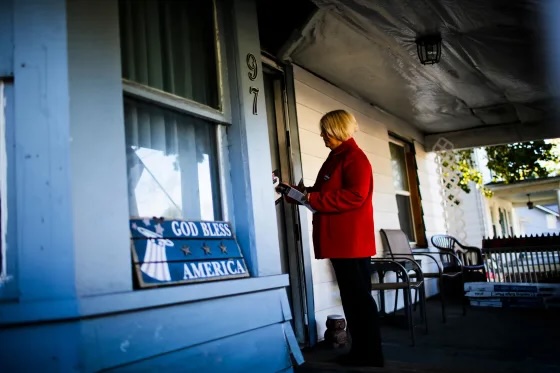
Precinct committeepersons are volunteers – something almost unheard of in any other field. There is no corporate equivalent where individuals give their time, energy, and resources simply to help advance someone else’s career. And yet, across the country, that is exactly what happens every election cycle.
People knock doors. They make calls. They organize, advocate, and sacrifice time with their families – not for recognition, but because they believe in something bigger than themselves.
They believe in values. In community. In the responsibility of citizenship.
The Republican Party, at its core, is meant to support candidates who uphold those values and serve the people. It is meant to be a vehicle for principled leadership – not a ladder for personal gain.
But when volunteers are treated as disposable – useful in one season and irrelevant in the next – we shouldn’t be surprised when enthusiasm fades and division grows.
And still, despite all of this, we are called not to walk away.
As Charlie Kirk shared:
“Our side says, ‘Oh forget it, I don’t need politics because politics is all just corrupt.’ You are obligated by God – Jeremiah 29:7 – demand the welfare of the nation you are in, because your welfare is tied to your nation’s welfare. God is commanding you not to give up and not to surrender. And guess what? If you are unsuccessful, you were still obedient and you did the right thing.”
That message cuts through the frustration.
Because disengagement may feel justified – but it is not the answer.
We are not called to participate only when it is easy, fair, or rewarding. We are called to stand firm in truth, to act with integrity, and to continue the work even when the outcome is uncertain.
History reminds us of this.
Jesus Himself was betrayed, denied, and persecuted – not by strangers, but by those closest to Him and by the very systems meant to uphold justice. Corruption, cowardice, and self-preservation were not new forces then – and they are not new now.
But neither is perseverance.
If we allow bitterness to take root, then the very dysfunction we criticize begins to shape us. If we disengage entirely, we leave the future in the hands of those willing to operate without principle.
So where does that leave us?
Not in blind unity. Not in forced silence. But in something stronger: principled engagement.
It means holding the line on values, even when others don’t. It means demanding better – from leadership, from the process, and from each other. It means remembering that unity is not about ignoring wrongdoing, but about rebuilding trust through accountability and shared purpose.
Most importantly, it means continuing to show up.
Not because the system is perfect – but because the responsibility is ours.
Politics will always be a battleground between ambition and service, between self-interest and sacrifice. The question is not whether those forces exist.
The question is which one we choose to embody.
Homes gone. Houses burned. Costs climbing. Responsible flood protection? Vote Against Party Loyalty. Vote for Community Competence. By Jill B. Shestokas, Michelle Pennington, Tim Rueckert Imagine $9 -...
Read moreDetails