

By Mark Vargas, Editor-in-Chief & Opinion Contributor
Published originally in The Washington Times
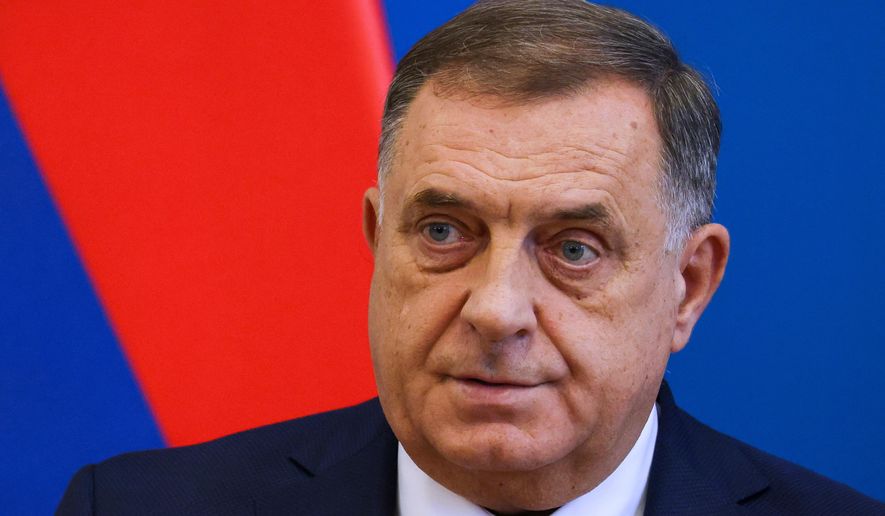
Judson University’s 2026 World Leaders Forum, scheduled for April 30 in Elgin, Illinois, is facing a coordinated pressure campaign aimed at canceling its featured speaker, former Republika Srpska President Milorad Dodik.
The effort has included waves of nearly identical emails and phone calls directed at university officials, along with a formal protest letter from Dr. Emir Ramić, director of the Institute for the Research of Genocide Canada.
Ramić’s letter, which was also circulated to international media outlets including the Sarajevo Times, urges Judson to rescind the invitation, arguing that hosting Dodik conflicts with the forum’s mission of promoting “genuine democratic leadership.”
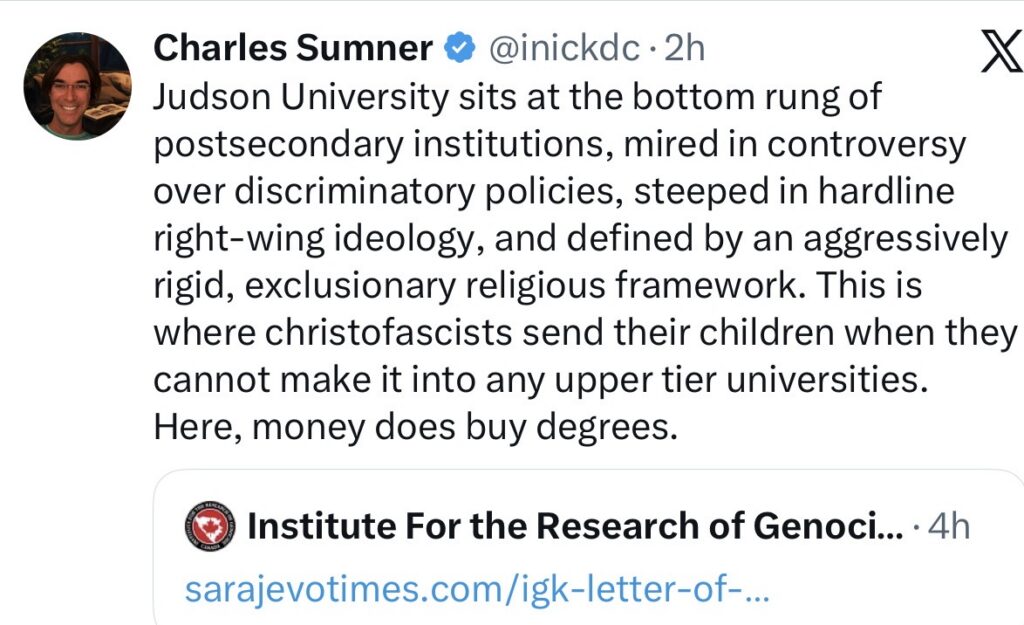
The pressure campaign has also spilled onto social media, where Ramić ally Charles Sumner has repeatedly targeted Judson University.
In one post, Sumner described the Chicagoland Christian liberal arts institution as sitting “at the bottom rung of postsecondary institutions, mired in controversy over discriminatory policies, steeped in hardline right-wing ideology, and defined by an aggressively rigid, exclusionary religious framework” – adding that it is a place where “christofascists send their children when they cannot make it into any upper tier universities.”
Sumner has consistently used his platform to defend Ramić and the Institute for the Research of Genocide Canada while promoting progressive causes such as Black Lives Matter and The 1619 Project. His posts frequently criticize conservative viewpoints and amplify anti-Israel rhetoric.
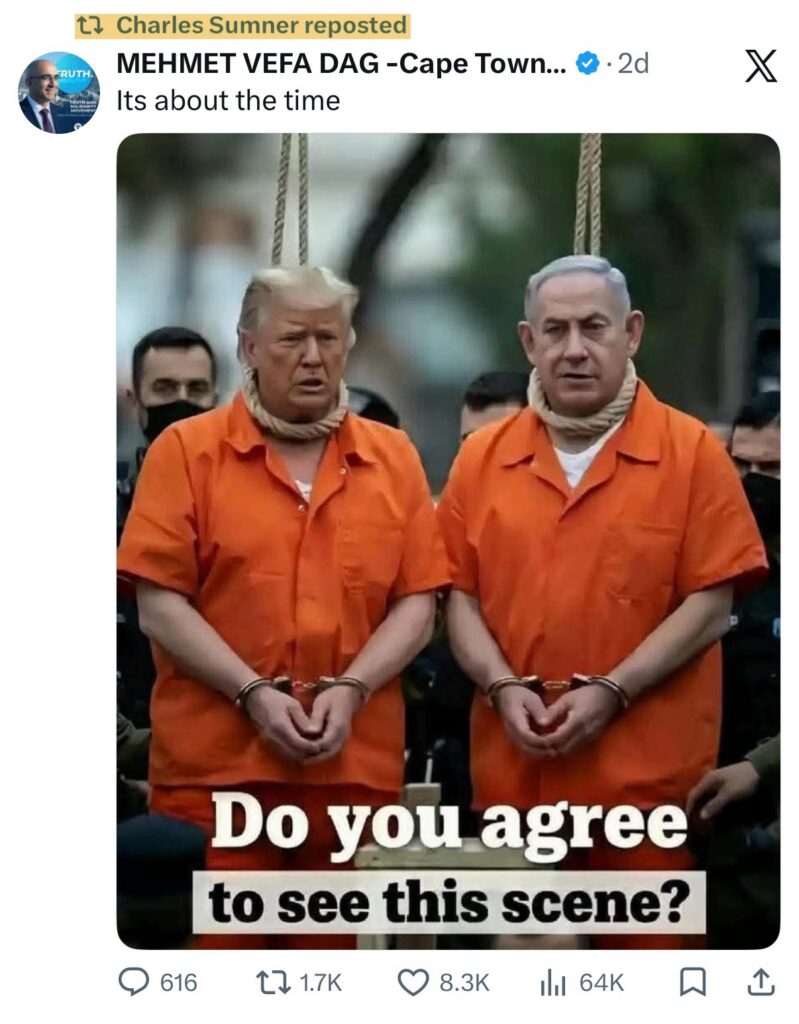
In one particularly troubling example, Sumner engaged with a post showing an image of President Donald Trump and Israeli Prime Minister Benjamin Netanyahu hanging from the gallows. The post asked, “Do you agree to see this scene?” and included a reply stating, “it’s about time.”
Critics of the cancellation campaign argue that these tactics undermine the very purpose of the World Leaders Forum. For years, the event has hosted speakers from across the political spectrum – including former President George W. Bush, former British Prime Minister Tony Blair, former Soviet leader Mikhail Gorbachev, Condoleezza Rice, Newt Gingrich, Ambassador Caroline Kennedy and Howard Dean – providing students and the public with exposure to a wide range of perspectives on leadership, governance, and democracy.
Inviting Dodik does not mean endorsing his views. Rather, it reflects a commitment to open dialogue and intellectual engagement, even when the speaker is controversial.
Canceling the event would send a troubling message: that universities are no longer venues for robust debate, but institutions that permit only “approved” viewpoints. That runs directly counter to Judson University’s mission as a Christian liberal arts institution dedicated to truth-seeking and the free exchange of ideas.
Despite the coordinated emails, media outreach, and social media attacks, Judson University does not plan to back down. The World Leaders Forum will proceed as scheduled under the theme Standing Up For Democracy.
The controversy highlights a broader trend – organized efforts that seek not to debate ideas, but to silence them through pressure and public shaming. Institutions committed to genuine inquiry must resist these tactics if open discussion is to endure.