

By Illinois Review
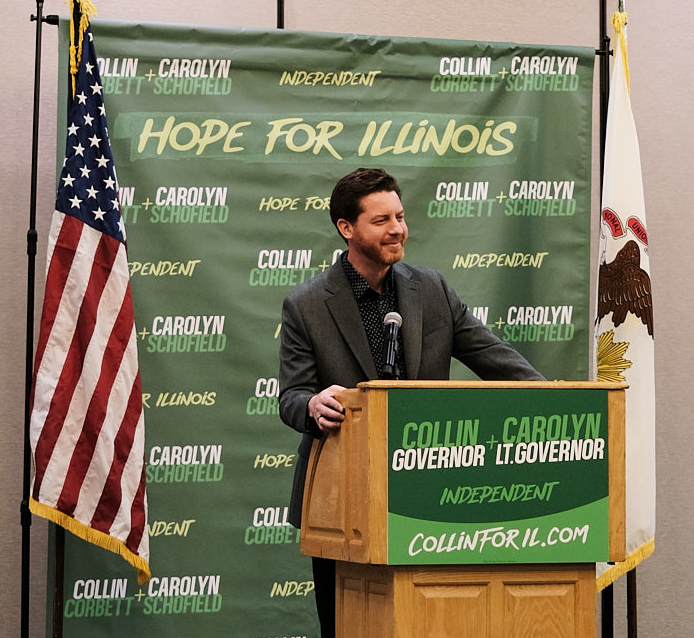
As Illinois heads toward the November 3, 2026 gubernatorial election, the surprise entry of longtime Republican strategist Collin Corbett as an independent candidate is adding a new layer of uncertainty to an already uphill race for Republicans in deep-blue Illinois.
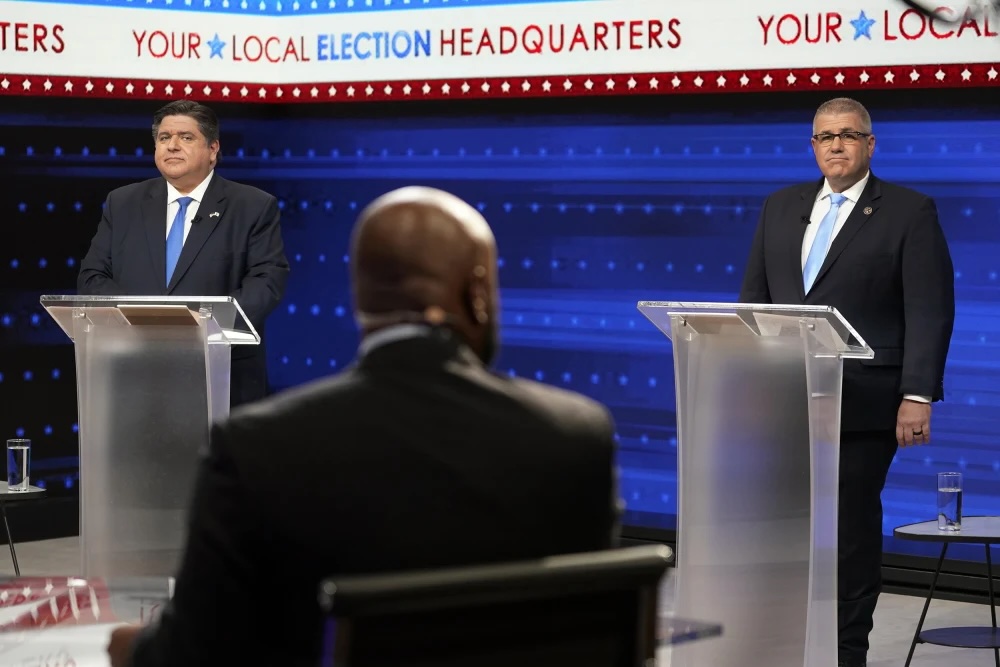
Incumbent Gov. JB Pritzker faces Republican Darren Bailey in a rematch of the 2022 election, which Pritzker won by nearly 13 points. But Corbett’s late entry into the race has intensified concerns about vote splitting and whether Republicans can unify enough support to seriously challenge the billionaire Democrat governor.
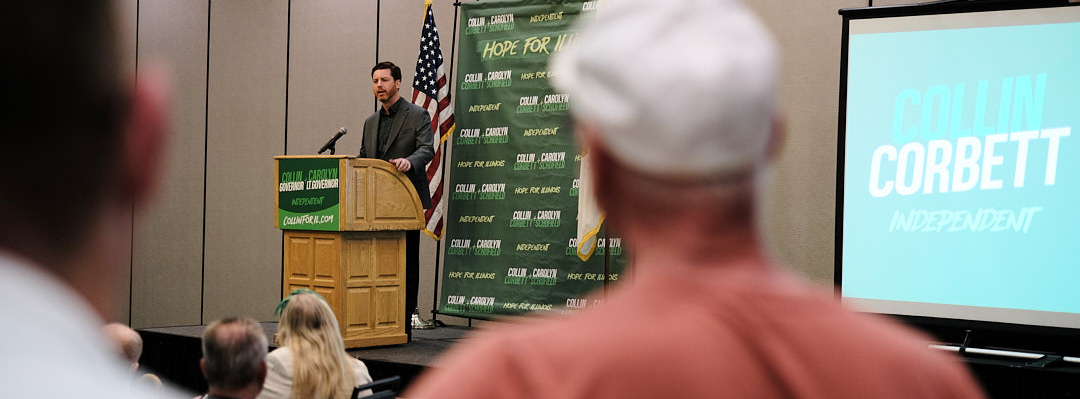
Corbett, a Palatine-based political consultant who publicly broke with the Republican Party just recently, filed petitions this week to run as an independent. He is positioning himself as a centrist alternative for voters dissatisfied with both major parties. His candidacy comes as Republicans continue struggling with low voter enthusiasm, fundraising disadvantages, and demographic headwinds statewide.
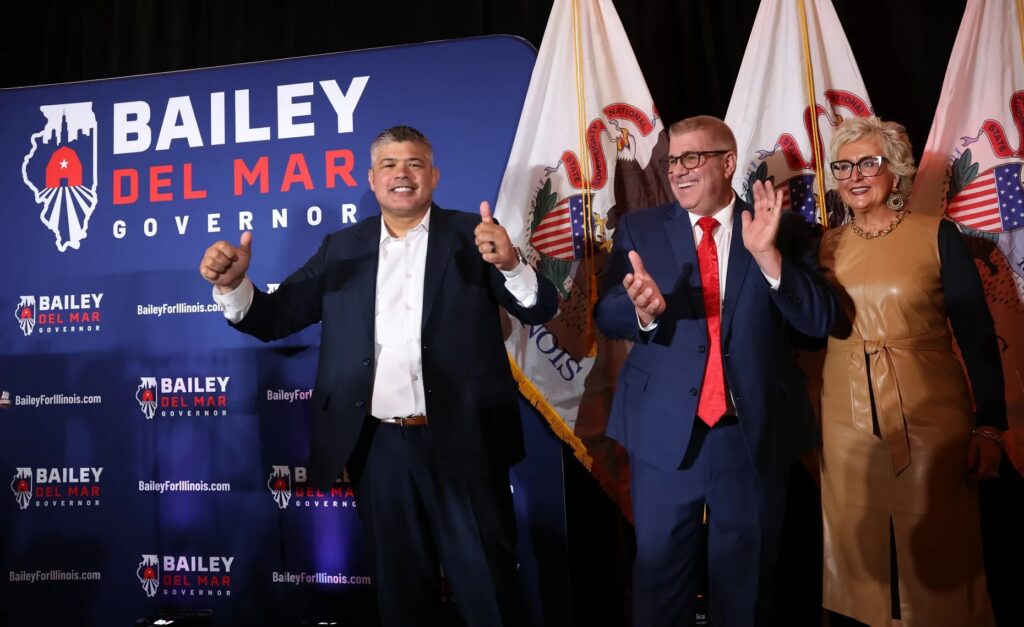
Adding another layer of intrigue to the race is Corbett’s longtime personal and political relationship with Bailey’s running mate, lieutenant governor candidate Aaron Del Mar.
Del Mar, the former Cook County Republican chairman and a central figure in suburban GOP politics, has been close friends with Corbett for decades. The two emerged from the same Palatine-area Republican political circles and built careers working alongside one another in Illinois politics.
Their relationship goes beyond politics, and Corbett has publicly referred to Del Mar in past social media posts as a “political brother.”
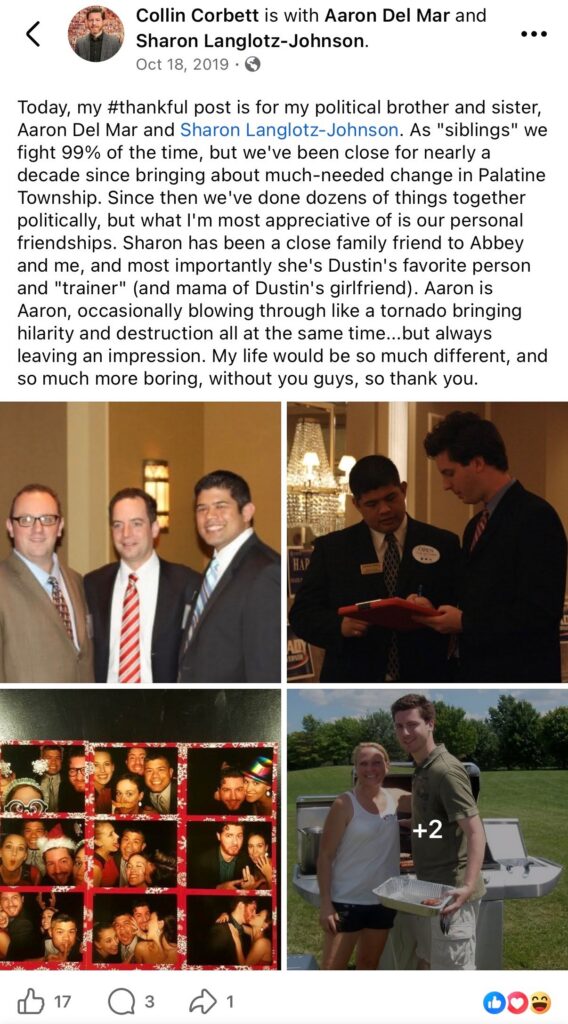
The friendship now creates an awkward dynamic inside Illinois Republican circles, as Del Mar campaigns on the Republican ticket while Corbett’s independent candidacy is widely viewed by GOP insiders as a direct threat to Bailey’s chances of defeating Pritzker.
Bailey’s campaign has sharply criticized Corbett’s independent bid, portraying it as a vanity project that ultimately benefits the incumbent Democrat governor by dividing anti-Pritzker voters.
Third-party and independent candidates have historically played limited but sometimes influential roles in Illinois gubernatorial politics. While such candidates rarely come close to winning statewide office, they have occasionally altered the political landscape during periods of voter frustration and party division.
In modern Illinois governor races from 2000 through 2022, most third-party candidates received between 2 percent and 5 percent of the vote — typically translating into roughly 50,000 to 150,000 votes statewide.
One of the strongest modern performances came in 2006, when Green Party candidate Rich Whitney captured more than 10 percent of the vote. Political analysts at the time believed Whitney drew more support away from Democrat Rod Blagojevich than from Republican Judy Baar Topinka.
Other notable independent or third-party runs include Conservative Party candidate Sam McCann’s 4.23 percent showing in 2018, Independent Scott Lee Cohen’s 3.64 percent performance in 2010, and Libertarian Scott Schluter’s 2.72 percent in 2022.
Historically, independent candidates tend to hurt the major party closest to them ideologically. Conservative-leaning independents often siphon support from Republicans, while progressive challengers typically weaken Democrats.
That reality has many Republican insiders deeply concerned about Corbett’s impact on Bailey’s already difficult path to victory.
Corbett argues his candidacy appeals to moderates and independents across the political spectrum. He has pointed to internal polling that he claims shows balanced support coming from both parties and suggests he could outperform Bailey in a hypothetical head-to-head matchup against Pritzker.
Still, many Republicans privately view Corbett as a spoiler candidate whose presence could further fracture anti-Pritzker voters.
Pritzker enters the race with overwhelming financial advantages. By late March, the governor reportedly held more than $14 million cash-on-hand and has already spent over $300 million of his personal fortune across prior campaigns.
Polling before Corbett entered the race consistently showed Pritzker leading Bailey.
Compounding Republican challenges is Illinois’ persistent turnout gap. Democrats continue to dominate statewide participation, while recent primary elections – including the 2026 cycle – showed depressed Republican turnout compared to Democrats.
That leaves Republicans with little margin for internal division.
While Corbett may attract some moderate Democrats unhappy with Pritzker, his longtime Republican ties and the reaction from GOP operatives suggest the greater political damage is likely to fall on Bailey.
In a state where Democrats already hold a significant structural advantage, even a modest independent showing of 3 percent to 5 percent could dramatically reshape the race – not by defeating Pritzker, but by making a Republican comeback even more difficult.