

By Illinois Review
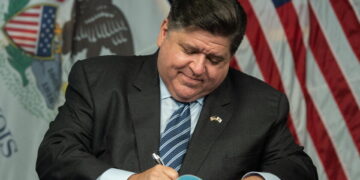
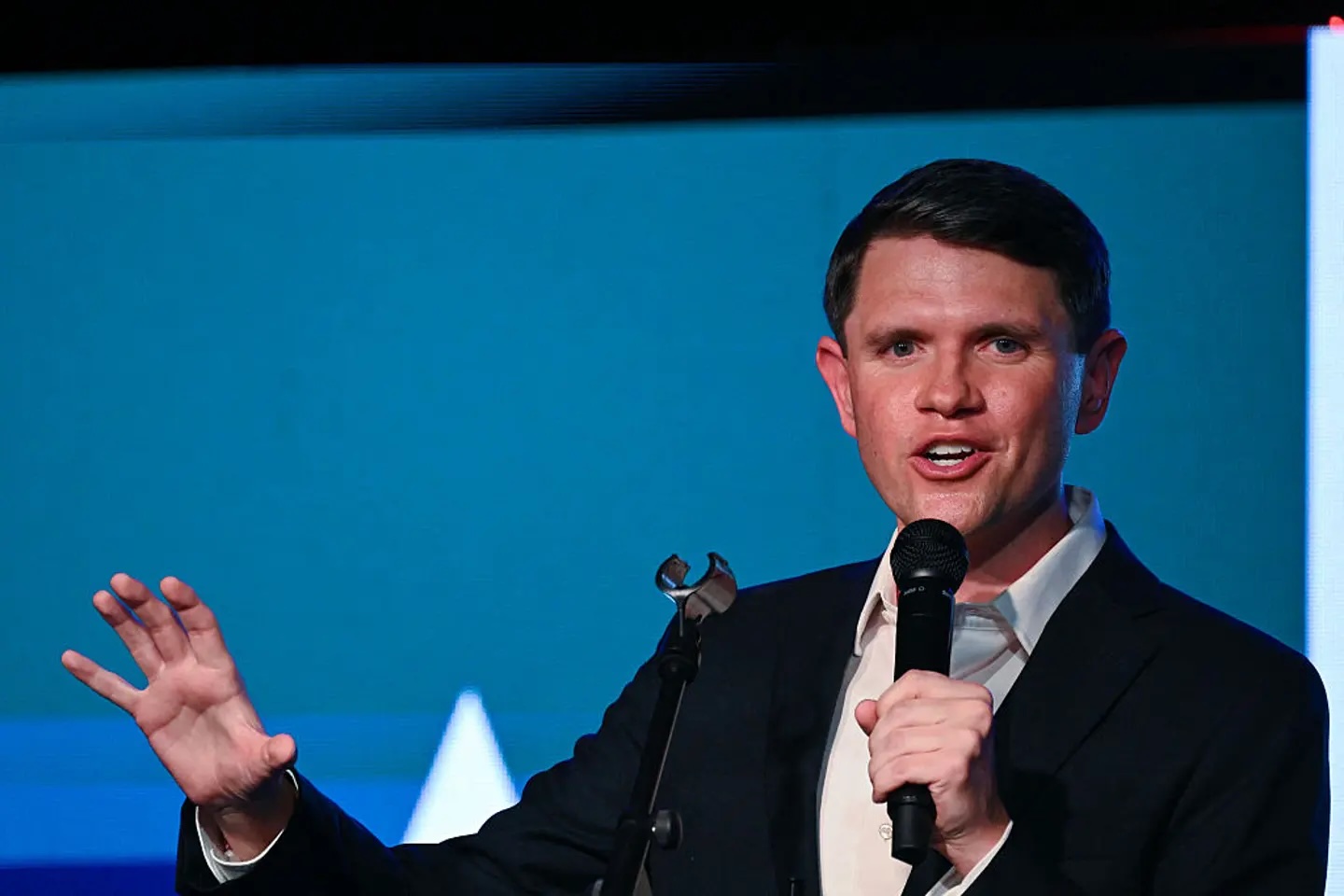
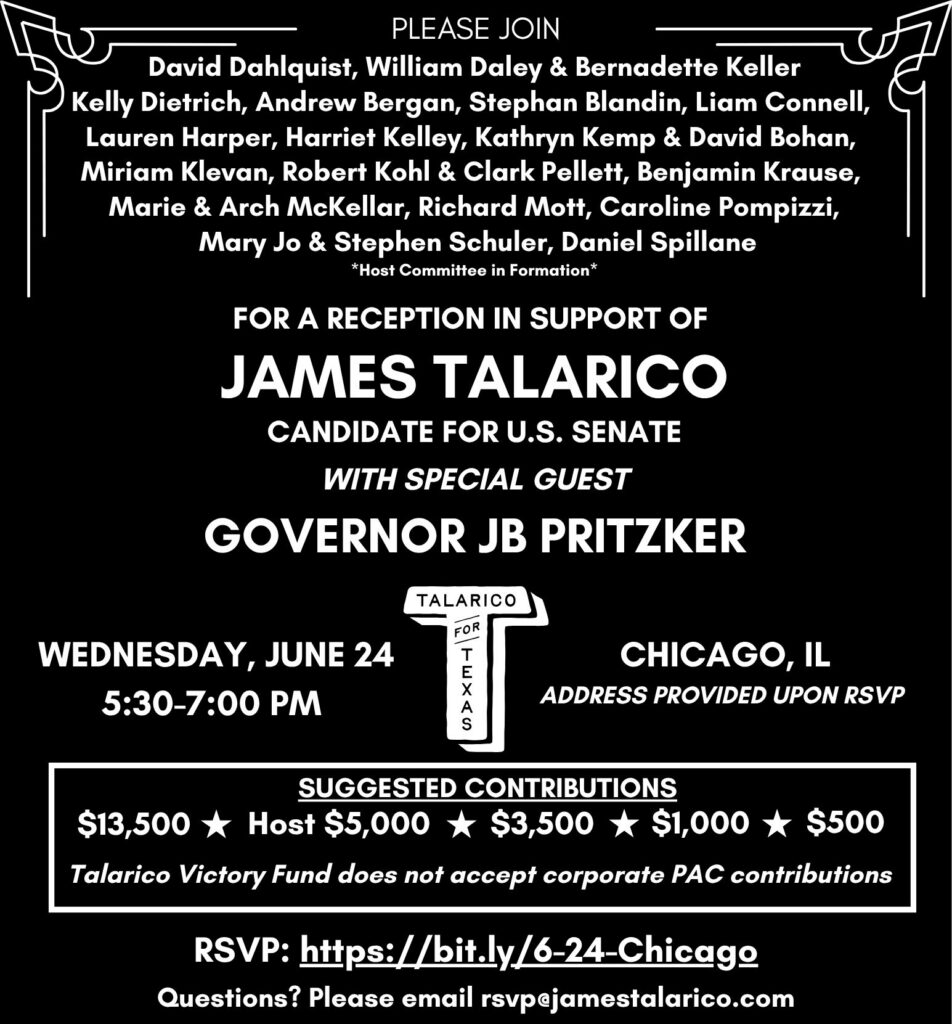
Illinois Governor JB Pritzker will appear as the featured guest Wednesday evening at a high-dollar Chicago fundraiser for Texas Democrat James Talarico, whose controversial comments on race, gender, and Christianity have made him one of the most polarizing figures in Democratic politics.
The fundraiser, scheduled for June 24 at a private Chicago location, will raise money for Talarico’s U.S. Senate campaign. Suggested contributions range from $500 to $13,500, with several prominent Illinois Democrats and members of Chicago’s political establishment serving on the host committee.
While Democrats continue searching for a winning message with working-class voters, Talarico has become a symbol of the party’s increasingly progressive wing – one that many traditional Democrats argue is driving longtime supporters away from the party.
Talarico sparked national criticism after claiming that “modern science recognizes” six different biological sexes, a statement that many scientists, physicians, and voters viewed as detached from basic biological reality.
The remark quickly became a flashpoint in the broader debate over gender ideology and its influence within the Democratic Party.
He also found himself embroiled in controversy over reports that he referred to former Congressman Colin Allred, a Black Democrat, as a “mediocre Black man” while contrasting him with Congresswoman Jasmine Crockett, whom he reportedly described as a “formidable and intelligent Black woman.”
Although Talarico disputed aspects of the characterization, the controversy raised questions about race-based political rhetoric inside a party that frequently accuses its opponents of engaging in similar behavior.
The controversy also invites scrutiny of Gov. Pritzker’s own record.
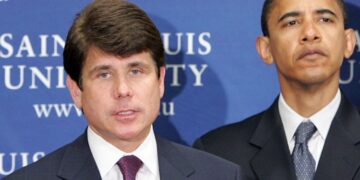
Pritzker’s enthusiastic support for Talarico raises eyebrows given the governor’s own history of racially charged political remarks. During his 2008 conversations with then-Gov. Rod Blagojevich about filling Barack Obama’s vacant U.S. Senate seat, Pritzker was captured on FBI wiretaps discussing potential African-American candidates.
In the recordings, Pritzker suggested appointing Secretary of State Jesse White as the “least offensive” African-American candidate, adding that it would “cover you on the African-American thing.”
He also referred to other Black political leaders, including then-Senate President Emil Jones, as “crass.”
The recordings resurfaced during Pritzker’s 2018 gubernatorial campaign, prompting criticism from political opponents and civil rights advocates. Pritzker later apologized for the “content” of the remarks while defending his intentions, saying he was “not my best self” during the conversations.
The episode offered a revealing glimpse into the transactional racial politics that have long characterized elements of Illinois’ Democratic political establishment.
The contrast is difficult to overlook. Pritzker, who once faced scrutiny over his own taped comments about Black political leaders, is now raising money for a candidate accused of referring to a fellow Black Democrat as a “mediocre Black man.”
While the circumstances differ, both controversies highlight the identity-based political rhetoric that has increasingly come to define Democratic Party debates.
For many traditional Democrats, these controversies are part of a larger problem. Blue-collar workers, faith-based voters, and moderate minority communities increasingly feel disconnected from a party consumed by ideological battles over race, gender, and cultural identity.
For many voters, Talarico’s comments about Christianity may be even more controversial.
The Texas lawmaker has publicly described himself as “a Christian who hates Christianity,” a statement that has drawn criticism from faith leaders and religious voters who view such rhetoric as hostile toward one of the world’s largest faith traditions.
While Talarico argues that he is criticizing institutional failures within organized religion, many Christians see the comments as emblematic of a broader progressive movement that increasingly treats traditional faith as something to be mocked, marginalized, or redefined.
That trend has become a growing political liability for Democrats nationwide.
Across the country, working-class voters, churchgoing families, Hispanic voters, Black voters, and other traditionally Democratic constituencies are increasingly expressing discomfort with the party’s embrace of progressive cultural activism on issues involving gender, race, religion, and identity politics.
Recent election cycles have shown measurable movement among these groups toward Republican candidates, particularly among voters who feel their values are no longer represented by Democratic leadership.
Pritzker’s decision to headline a fundraiser for Talarico signals where many Democrats believe the future of their party lies.
Rather than elevating moderates capable of appealing to a broad coalition of voters, party leaders continue investing in candidates who embrace the most controversial elements of progressive ideology.
Whether discussing multiple genders, racial identity, or attacks on traditional religious beliefs, Talarico has become a national spokesman for a political movement that increasingly prioritizes activism over persuasion.
As Illinois continues to lose residents and businesses to other states, Pritzker’s support for Talarico sends a clear message about the direction of today’s Democratic Party. Rather than moving toward the center, party leaders continue embracing candidates whose views often place them outside the political mainstream.
Whether that strategy delivers victories in Texas – or accelerates the erosion of support among traditional Democrats in places like Illinois – remains to be seen. What is clear is that the divide between the Democratic Party’s progressive activists and its traditional voter base continues to grow wider.