
By Janelle Towne, Opinion Contributor
There are moments when leadership requires making decisions that are guaranteed to draw criticism. The easiest path is usually the one that avoids confrontation, satisfies the loudest voices, and gets everyone back to business as usual.
The right path, however, is not always the easiest one.
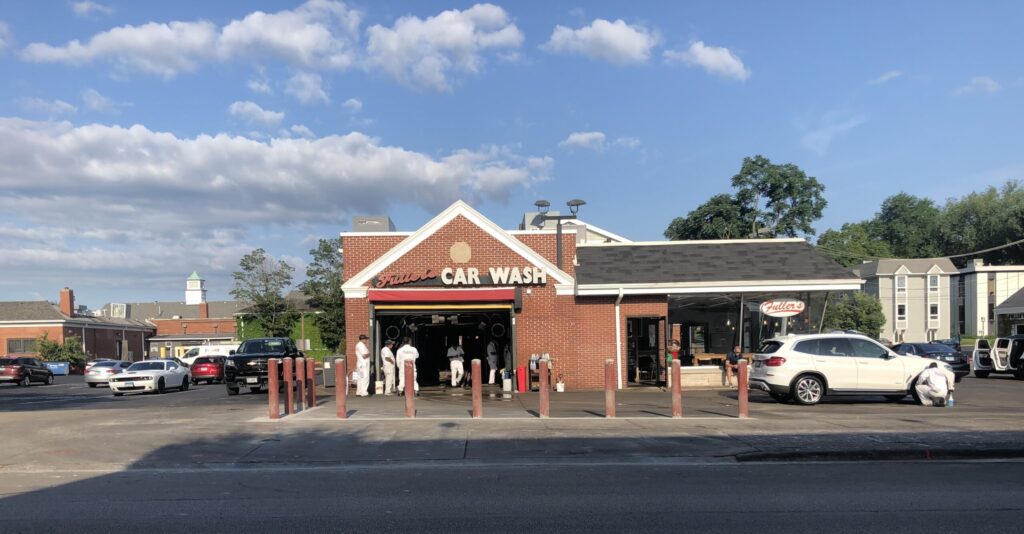
Hinsdale Village President Greg Hart understood that when he refused to rush Fuller’s Car Wash back into operation after another vehicle struck the protective bollards installed between the business and the public sidewalk.
For some, the temporary closure became a debate about government overreach and the economic impact on a local business.
I understand those concerns.
Small businesses matter, and no one wants to see a business lose customers or revenue. But reducing this decision to dollars and inconvenience ignores the painful history that brought Hinsdale to this point.
No one who lived through it will ever forget the heartbreaking death of 14-year-old Sean Richards.
Sean wasn’t just another headline or another statistic. He was a son, a friend, a classmate, and a young man with his entire life ahead of him. In a matter of seconds, that future was stolen when a vehicle left the car wash property and struck him.
The grief his family has endured is unimaginable, and the tragedy forever changed this community. Sean’s death also forced Hinsdale to confront an uncomfortable truth: the safety measures in place at the time were not enough.
The village responded by requiring stronger, engineered bollards designed to stop an out-of-control vehicle before it could reach pedestrians. Those barriers were not installed to satisfy bureaucrats or create unnecessary regulations. They were installed because a family had already paid the ultimate price, and no one wanted another parent to experience that kind of loss.
When another vehicle crashed into those same bollards this month, the barriers appear to have done exactly what they were designed to do.
Thankfully, no one was injured. But once a safety system absorbs the force of a collision, it is only common sense to make sure it can still do its job. No responsible public official should simply assume that steel, concrete, and engineering remain uncompromised after taking a direct hit.
Inspecting the damage, replacing the bollards if necessary, and ensuring they were once again capable of protecting the public was not an overreaction, it was responsible leadership.
Critics have argued that the closure is lasting too long. Perhaps it feels that way if your only concern is getting your car washed.
But if your concern is making sure another family never experiences what the Richards family has endured, then three weeks is a remarkably small price to pay.
Imagine the alternative.
Imagine the village had reopened the business immediately without ensuring the protective barriers were fully restored, and another vehicle had left the property. If someone had been seriously injured, or worse, the very people criticizing Greg Hart today would almost certainly be asking why village officials ignored the obvious warning signs.
That is why Hart deserves credit rather than criticism.
His responsibility is not to guarantee uninterrupted business operations. His responsibility is to protect the people who live, work, shop, and walk through Hinsdale every day. Sometimes leadership means making the unpopular decision because it is the prudent one.
The memory of Sean Richards should never fade into the background or become just another chapter in Hinsdale’s history. If his tragic death taught us anything, it is that public safety can never become secondary to convenience, politics, or economic pressure.
Every safeguard that exists today was born from one family’s unimaginable loss.
No family should ever have to stand where the Richards family has stood. If temporarily closing a business to inspect and replace damaged safety barriers helps prevent another tragedy, then Greg Hart made exactly the right call.
Some decisions are measured not by the complaints they generate in the moment, but by the lives they protect for years to come.