

By Mark Vargas, Editor-in-Chief & Opinion Contributor
The Illinois Legislative Inspector General’s report on former State Rep. Harry Benton answers important questions about one legislator’s conduct.
But it leaves one far more consequential question unanswered: What did House Speaker Chris Welch and his office know, and how did they respond after receiving allegations of sexual harassment in 2023?
That question deserves an independent federal investigation.
On Friday, Legislative Inspector General Michael McCuskey’s report was publicly released after unanimous approval by the bipartisan Legislative Ethics Commission. The report concluded that Benton committed two acts of sexual harassment and documented what it described as a broader “pattern and practice” of inappropriate conduct during his tenure in the Illinois House.
The report establishes accountability for Benton. It does not establish accountability for those responsible for responding after allegations first surfaced.
According to the report, Benton’s former district staffer emailed Speaker Welch’s office in April 2023 detailing allegations of inappropriate conduct. Because those allegations fell outside the Legislative Inspector General’s one-year statute of limitations, they could not be formally sustained as founded violations. Nevertheless, McCuskey included them as evidence of an ongoing pattern of behavior.
Those findings raise an obvious question.
After receiving those allegations in 2023, did Speaker Welch and his office take all appropriate steps to protect legislative employees and prevent future misconduct?
The report does not answer that question. Nor was it designed to. McCuskey’s assignment was to investigate Harry Benton – not the actions of the Speaker’s Office.
That distinction matters.
Democratic State Rep. Kelly Cassidy, herself a member of the bipartisan Legislative Ethics Commission, underscored that point following the report’s release. In a statement issued Friday, Cassidy argued that Speaker Welch’s response in 2023 may have allowed subsequent misconduct to occur.
“Had the Speaker intervened meaningfully in 2023, he may have been able to prevent the victimization of the other two women, who were harassed in May 2025 and January 2026, respectively. Instead, $1.4 million was spent to reelect Benton to his seat in 2024.”
Cassidy went on to criticize the Speaker’s public response:
“The Speaker must demonstrate a sincere desire to repair the harm he has done, and to correct the broken system in which we are all operating. To date, that has not been the spirit of his response. Instead, we have heard a series of excuses, victim blaming, and a failure to publicly acknowledge shortcomings. That has been disappointing.”
Another Democratic lawmaker has reached a similarly troubling conclusion.
In a July 29 Chicago Tribune opinion piece, State Rep. Fred Crespo (D-Hoffman Estates) questioned Speaker Welch’s handling of the allegations, writing:
“At best, his failure to adequately respond to sexual harassment complaints is the consequence of poor management and irresponsibility. At worst, the speaker doesn’t take sexual harassment seriously and his office normalizes such behavior.”
These are not criticisms coming solely from political opponents. They come from Democratic legislators – including a member of the bipartisan Legislative Ethics Commission – who have publicly questioned whether Speaker Welch and his office responded appropriately after learning of the allegations.
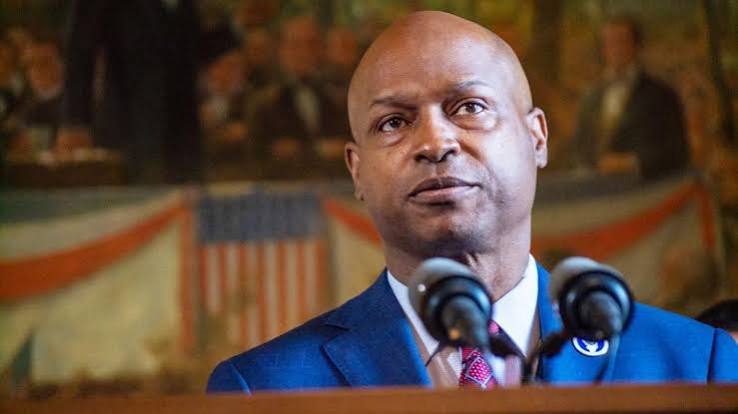
Speaker Welch has consistently maintained that his office followed established procedures, respected the wishes of those who came forward, and took appropriate action as additional allegations emerged. He has also pointed to the Benton report as evidence that his office acted responsibly and has called for structural reforms, including exploring a centralized human resources office and greater use of outside review.
Those explanations, however, underscore why an independent review is necessary. The public should not be asked to simply accept assurances from the very office whose actions are now being questioned.
Yet no state entity can investigate the Speaker’s own office without raising legitimate questions about institutional independence.
The Legislative Inspector General performs an important function, but the office operates within a structure that has long been criticized for lacking true independence. The Legislative Ethics Commission – which oversees many aspects of the inspector general’s work – is composed of lawmakers appointed by legislative leaders – including Speaker Welch.
Whether or not that structure influenced this investigation, it creates an unavoidable appearance of an institutional conflict whenever questions involve the Speaker himself.
The Illinois Attorney General’s Office presents similar concerns.
Although the Attorney General exercises independent constitutional authority, the office’s budget is appropriated by the General Assembly – the very institution led by Speaker Welch in the House and Senate President Don Harmon in the Senate. Whether or not that relationship affects any particular investigation, it creates an appearance problem whenever legislative leadership itself becomes the subject of potential scrutiny.
That is precisely why the Office of the United States Attorney for the Central District of Illinois should determine whether a federal investigation is warranted.
President Donald Trump nominated Gregory M. Gilmore to serve as U.S. Attorney on January 13, 2026. The United States Senate confirmed him on May 18, and he was sworn into office on June 1. As the chief federal law enforcement officer for central Illinois, headquartered in Springfield, Gilmore is uniquely positioned to determine whether the facts warrant a federal investigation and whether any federal laws may have been violated.
Earlier this month, I called on the U.S. Department of Justice’s Civil Rights Division to examine whether the Illinois House Democratic Caucus tolerated a hostile work environment in violation of federal civil rights law.
The Benton report does not answer those broader questions. It does not examine whether Speaker Welch’s office fulfilled its responsibilities after receiving complaints or whether institutional failures allowed additional alleged misconduct to occur.
Those questions extend beyond legislative ethics. They concern institutional accountability.
An investigation by the U.S. Attorney’s Office would not presume wrongdoing by Speaker Welch or anyone in his office. Nor should it. Its purpose would be to determine whether complaints were handled appropriately, whether any federal laws were implicated, and whether those entrusted with protecting legislative employees fulfilled their legal responsibilities.
Illinois has spent decades trying to overcome its reputation for insider politics and institutional self-protection. Public confidence requires more than investigating individual legislators after misconduct occurs. It requires determining whether those in positions of authority acted appropriately when they first learned of serious allegations.
The Benton report closed one investigation. It should open another.
The unanswered questions are no longer about Harry Benton. They are about whether Speaker Chris Welch and his office fulfilled their responsibilities after being placed on notice of serious allegations.
Illinois deserves those answers. Only an independent federal investigation can determine whether Speaker Welch’s office acted appropriately and whether any further action is warranted.