

By Illinois Review
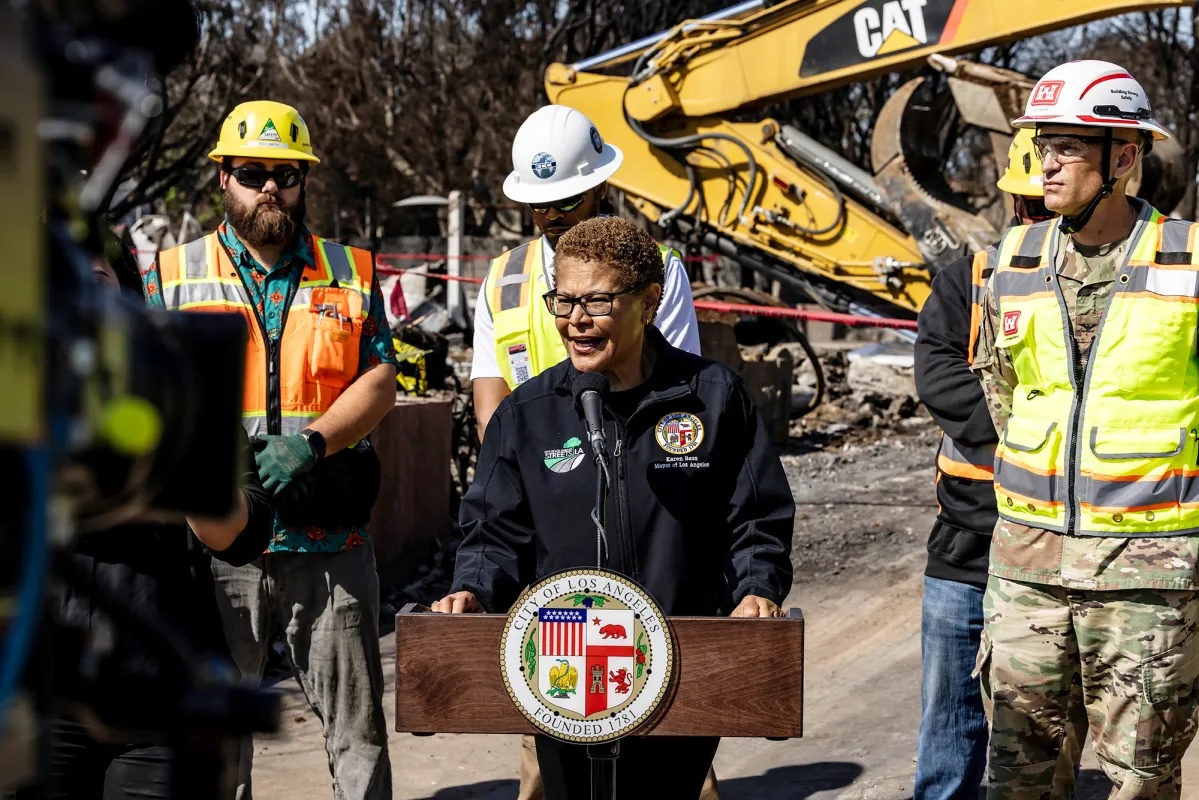
Los Angeles Mayor Karen Bass is facing national backlash after a viral campaign video highlighted an unusual feature of her re-election effort: private campaign donations can be multiplied with taxpayer dollars.
And while the controversy is exploding in Los Angeles, Illinois has its own version of taxpayer-funded campaign financing — in Evanston, where the matching rate is even higher.
In the video, Bass urged Los Angeles residents to donate to her re-election campaign while promoting the city’s voter-approved “Super Match” program.
“Your donation to our campaign right now is more critical than ever before,” Bass said.
“Let me explain,” she continued. “Thanks to LA’s super match program, every qualified donation from Los Angeles residents is matched 6-to-1 by the city. But after the primary, we had to start over from scratch, so we need you to rush your matching donation right now to help fuel this campaign.”
Under Los Angeles’ public campaign-financing system, qualifying contributions from city residents are matched with public dollars at a 6-to-1 rate.
For citywide candidates, including mayor, up to $257 from an individual contribution can qualify for the match. That means a $257 private donation can trigger another $1,542 in public money – turning that contribution into $1,799 for the campaign.
Mayoral candidates can receive more than $1 million in public matching funds during an election. And it’s perfectly legal.
The program was approved by Los Angeles voters, with roots dating back to the 1990s, and the City Council later increased the matching rate to its current 6-to-1 formula.
But Bass openly advertising the taxpayer subsidy has brought renewed attention – and criticism – to the program.
Critics argue that taxpayers should not be compelled to help finance politicians or political campaigns they may strongly oppose, particularly when cities are simultaneously struggling with crime, homelessness, infrastructure and other basic services.
Appearing on Newsmax on Thursday, Illinois Review Editor-in-Chief Mark Vargas discussed the controversy surrounding taxpayer-funded campaign matching in Los Angeles.
“Taxpayers who are so frustrated with their local political leadership are now being forced to subsidize a campaign that’s going to further drive their city into the rut,” Vargas said.
Los Angeles County Republican Party Chair Roxanne Hoge has also blasted the arrangement, describing it as “a system they set up to enrich themselves and their friends and get themselves elected.”
Supporters of public campaign financing counter that matching programs encourage small-dollar donations, broaden political participation and reduce candidates’ reliance on wealthy donors and special interests.
But Los Angeles isn’t alone. Illinois has its own public campaign-financing matching system – and it can be found in Evanston.
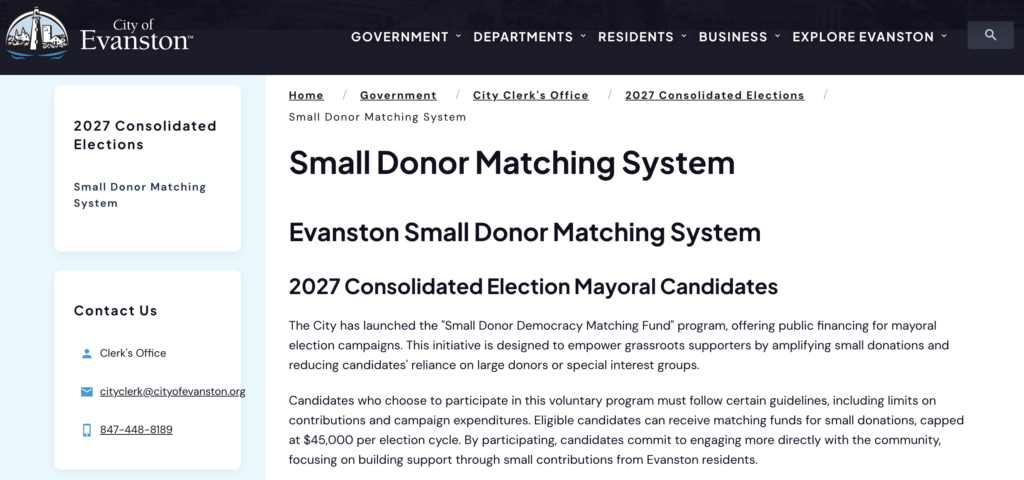
In September 2023, the Evanston City Council approved the Small Donor Democracy Matching Fund, making Evanston the first – and so far only – municipality in Illinois with a public campaign-financing matching program.
The voluntary program is limited to candidates for mayor and was originally structured to provide a 9-to-1 taxpayer-funded match on the qualifying portion of small donations from Evanston residents.
That means Evanston’s matching rate is actually higher than the 6-to-1 rate now drawing national attention in Los Angeles.
The city describes the program as a way to amplify small donors and reduce candidates’ dependence on wealthy contributors and special interests. Participating candidates must satisfy eligibility requirements and comply with contribution and spending restrictions.
No mayoral candidate took advantage of the program during the April 2025 election.
Neither incumbent Mayor Daniel Biss nor challenger Jeff Boarini opted into the public matching system. Unused money, however, rolls over for future election cycles, and the program remains active.
Evanston continues to maintain the program and has published information for candidates ahead of the 2027 election cycle.
As Bass faces national criticism for openly promoting Los Angeles’ 6-to-1 taxpayer match, Illinois residents may be surprised to learn that the concept has already arrived here – with Evanston standing alone in the state and offering a matching formula of up to 9-to-1 for qualifying small-dollar contributions.