

By Illinois Review
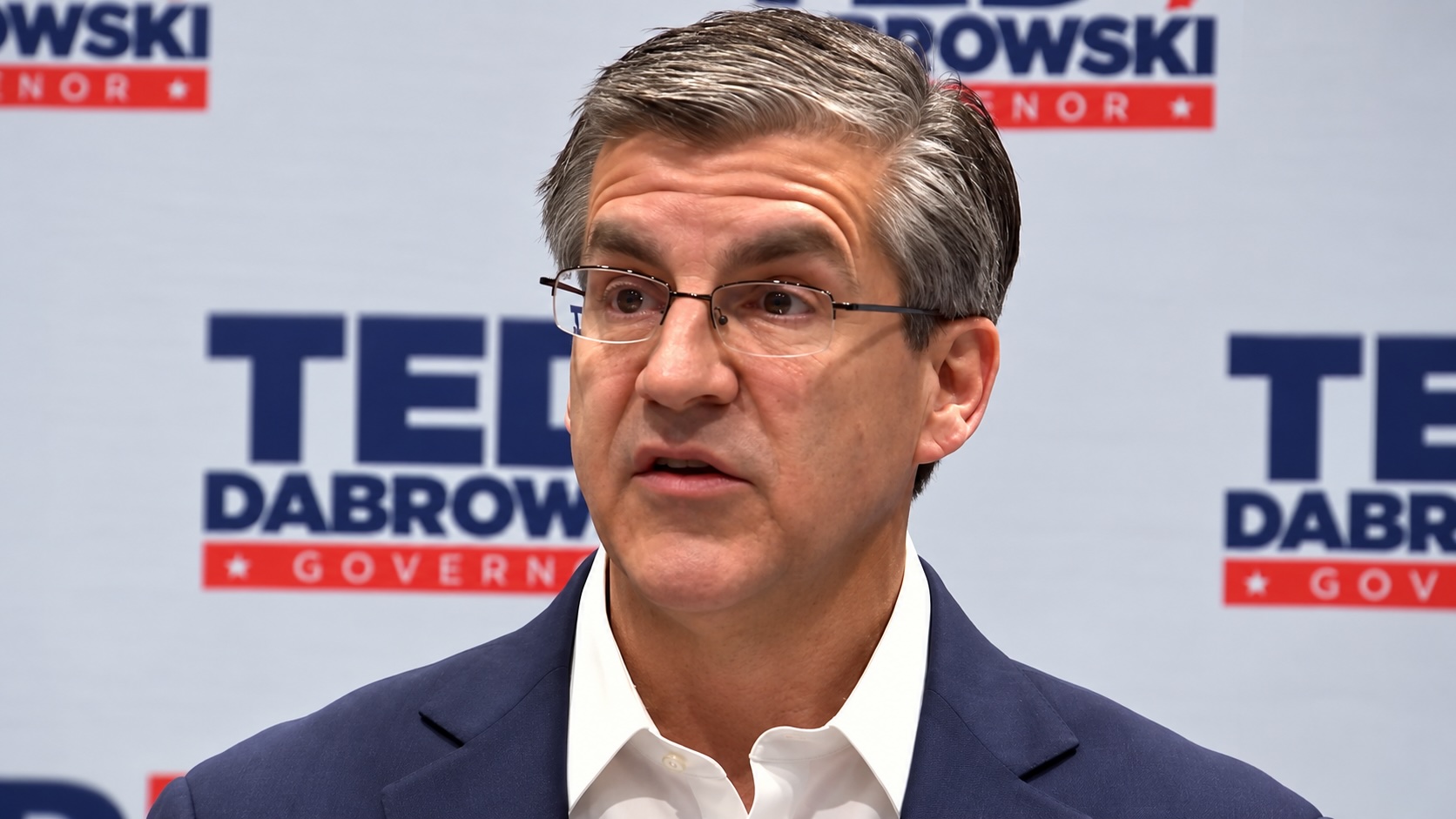
Ted Dabrowski’s newly launched organization is called Fight for Illinois.
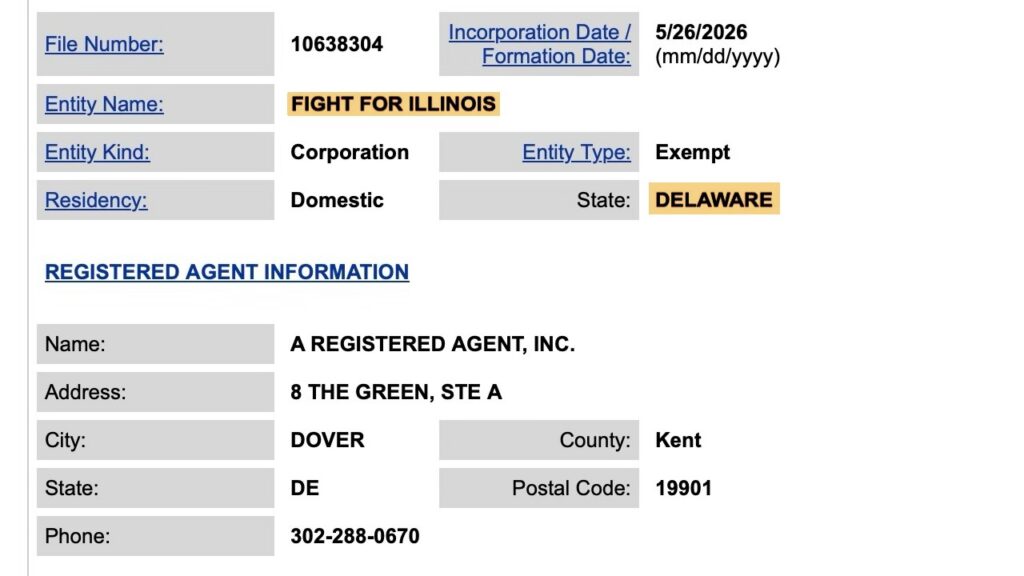
But according to corporate records reviewed by Illinois Review, the organization was formed in Delaware – not Illinois.
Delaware records show Fight for Illinois was incorporated there on May 26, roughly ten weeks after Dabrowski lost the March 17 Republican primary for governor to Darren Bailey. The only contact identified in the public corporate record is its registered agent, A Registered Agent, Inc., a commercial service in Dover, Delaware.
Nearly four months later, Dabrowski unveiled Fight for Illinois as a statewide advocacy organization focused on Illinois taxes, schools, crime, government waste and other state issues.
The organization describes itself as a “non-partisan, non-profit group” dedicated to organizing Illinoisans and says it is an “action group” focused on Illinois public policy.
A search of the Illinois Secretary of State’s corporate database found no registration for Fight for Illinois as either a domestic or foreign corporation.
Incorporating in Delaware is common, and the state is widely used by corporations and nonprofits because of its established body of corporate law. But for an organization whose name, mission and membership pitch are centered almost exclusively on Illinois, the choice stands out.
Other Illinois-focused advocacy groups have taken a different route.
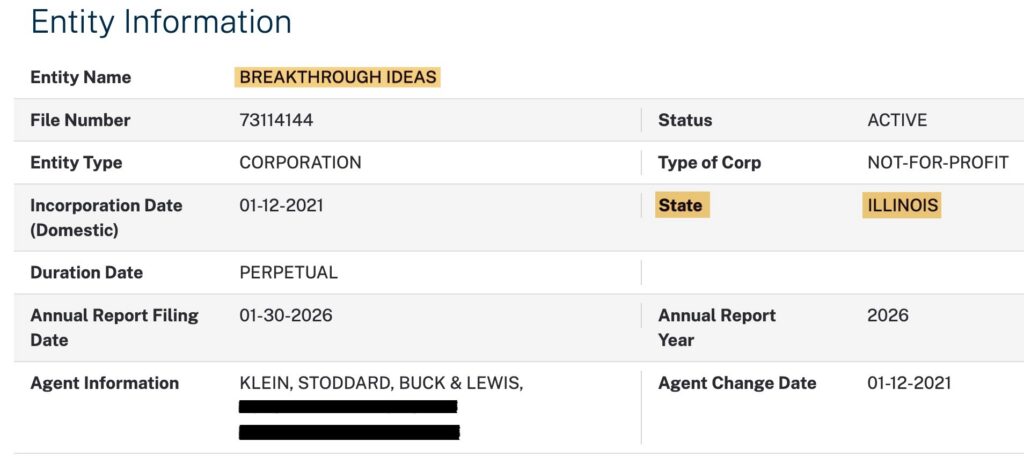
Corporate records reviewed by Illinois Review show that AWAKE Illinois and Breakthrough Ideas were incorporated as Illinois not-for-profit corporations. Breakthrough Ideas, based in Wheaton, describes its mission as educating Illinois residents about state policies and their impact.
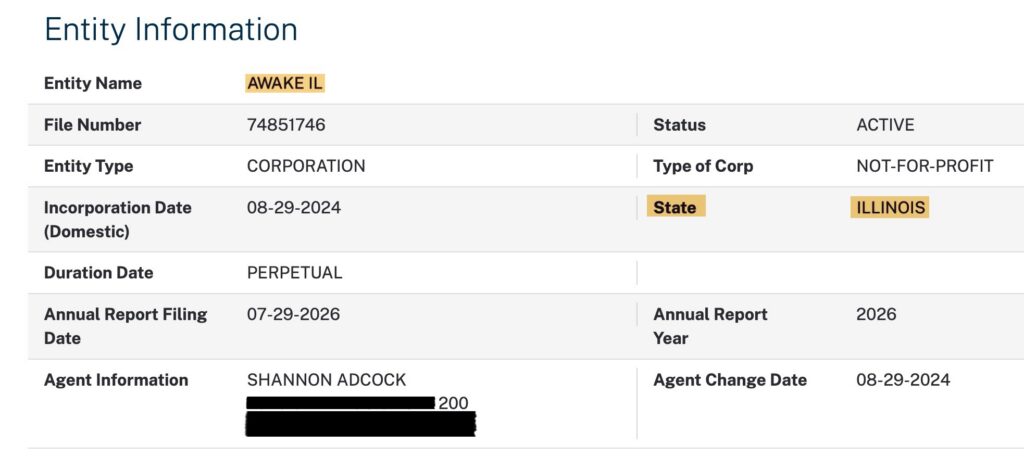
The distinction matters because Illinois not-for-profit corporations file annual reports identifying their officers and directors.
Delaware’s basic public corporate search provides considerably less information, generally showing an entity’s name, formation information and registered agent rather than immediately identifying its leadership.
And donor privacy alone does not explain the choice.
Federal tax law already provides substantial privacy for contributors to many tax-exempt organizations. The IRS generally does not require qualifying organizations to publicly disclose contributors’ names and addresses.
If Fight for Illinois ultimately files a full federal Form 990 or 990-EZ, its officers and directors would become publicly identifiable through that filing. But that disclosure could come months after the organization began soliciting support and organizing Illinois voters.
So what purpose does incorporating Fight for Illinois in Delaware serve?
At minimum, the structure makes it more difficult for Illinoisans searching their own Secretary of State’s database to identify the people formally governing an organization asking them to join, donate and help influence public policy in their state.
That creates a notable contrast with Dabrowski’s own political message.
During his gubernatorial campaign, Dabrowski promised to audit government spending and “expose the waste, fraud and abuse” in state and local budgets, arguing that Illinoisans deserve greater accountability.
Now, months after losing the Republican primary, Dabrowski has launched an organization promising to “Fight for Illinois.”
Its corporate paperwork, however, leads somewhere else.
Delaware.