

By Illinois Review
Six months after losing the Republican primary for governor, Ted Dabrowski has officially launched a new statewide political organization while Republican nominee Darren Bailey battles Gov. JB Pritzker in the general election.
On Tuesday night, Dabrowski unveiled Fight for Illinois, an organization complete with a website, policy agenda, fundraising operation and mobile app.
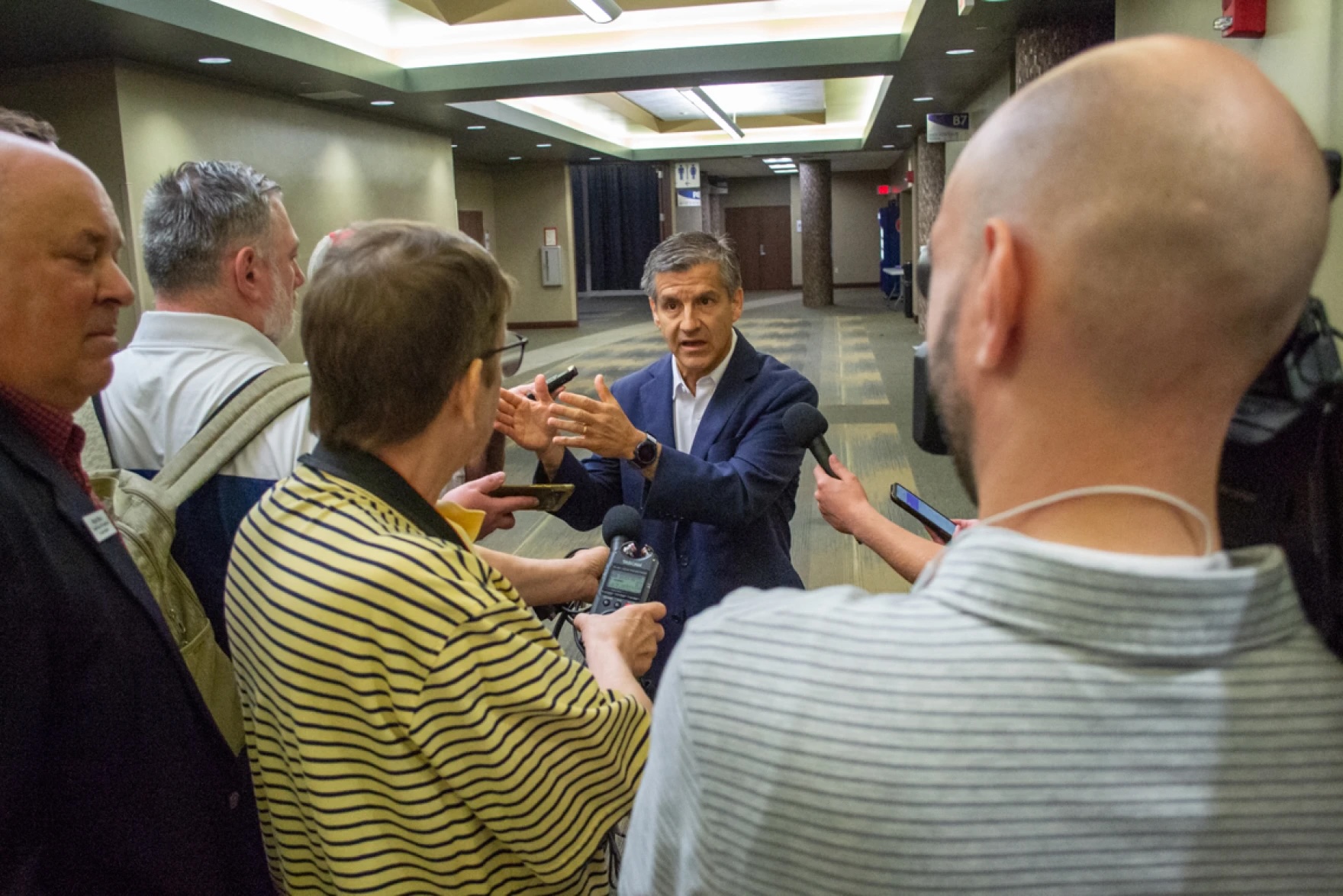
The launch follows weeks of questions about Dabrowski’s political plans. His Sept. 22 Bolingbrook event, titled “Ted Dabrowski Shares What’s Next,” urged supporters to “fight for Illinois” and build a reform movement – without mentioning Bailey.
Bailey defeated Dabrowski in the March primary by 25 points and is now the Republican nominee against Pritzker.
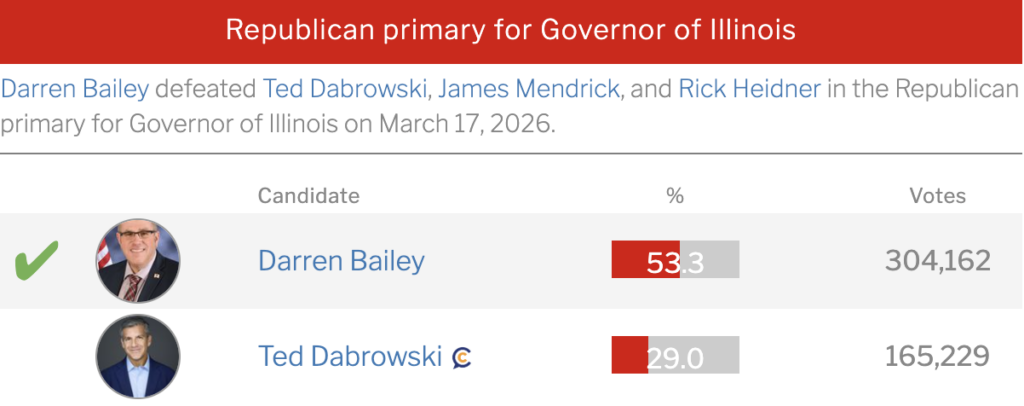
But since the primary, Dabrowski has not publicly emerged as a Bailey surrogate. He has not campaigned alongside him or publicly urged his supporters to vote for Bailey. Illinois Review also found no reported contribution from Dabrowski to Bailey’s campaign.
Instead, Dabrowski has spent the months since the primary maintaining and expanding his own political infrastructure.
His gubernatorial campaign website remains active, and Fight for Illinois now offers organizing tools, a taxpayer tip line, a policy platform closely resembling Dabrowski’s gubernatorial agenda and a mobile app designed to connect supporters with local and statewide issues.
Brian Costin of Americans for Prosperity Illinois also flagged the new organization on X.
“If you haven’t noticed, Ted Dabrowski’s x.com account has been rebranded @Fight4Illinois,” Costin wrote. “He has launched a new organization Fight For Illinois. FightforIllinois.org. Join the fight!”
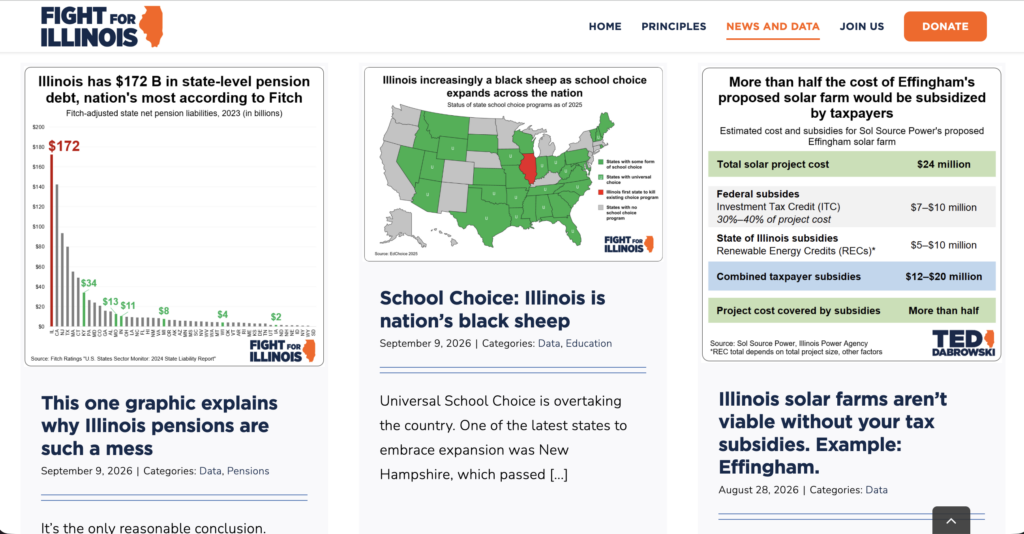
The crossover between the old campaign and the new organization is visible on the site itself. Some articles appearing on the Fight for Illinois website still carry Dabrowski’s gubernatorial campaign branding and logo, further blurring the line between his former campaign operation and the organization he launched this week.
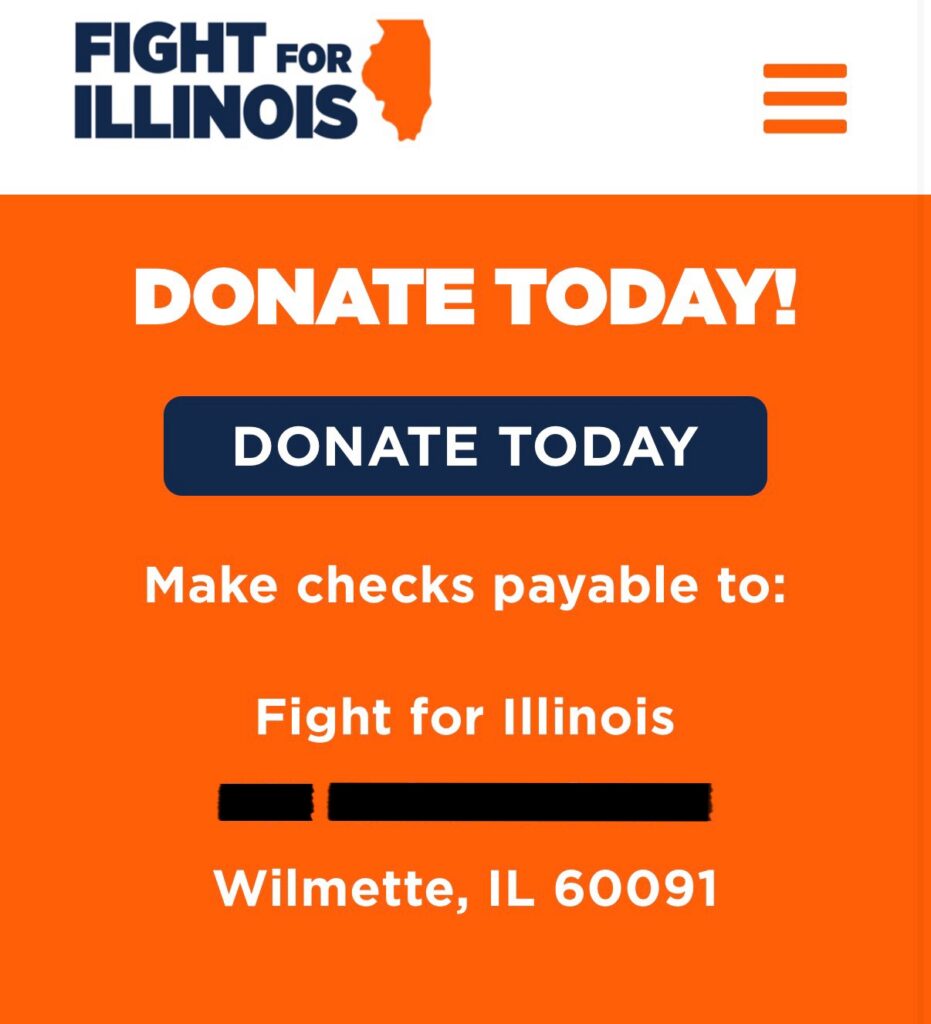
The organization is also soliciting donations with checks going directly to Dabrowski’s residence in Wilmette.
To a casual observer, the launch could look like the normal next step for a former candidate who wants to remain politically active. To political insiders, however, the timing is likely to draw attention.
Illinois is in the middle of a general-election campaign. Bailey is attempting to defeat a two-term Democratic governor with a massive financial advantage. Yet with Election Day approaching, Dabrowski is launching his own organization, raising money, building an app and cultivating his own statewide political network.
The timing raises a straightforward question: Why launch now?
Dabrowski could have waited until after the November election to unveil Fight for Illinois and spent the remaining weeks campaigning for the Republican nominee. Instead, his organization is launching during the final stretch of Bailey’s campaign against Pritzker.
The contrast is especially notable because Dabrowski and his running mate also skipped the Illinois GOP’s post-primary Unity Breakfast in Naperville, where Bailey and other Republican nominees began shifting their focus to the general election.
The launch also comes amid discussion in Republican circles about whether Dabrowski is positioning himself for another gubernatorial run in 2030.
Republican sources told Illinois Review that some major donors who backed Dabrowski in the primary are being encouraged not to financially support Bailey and instead remain patient ahead of a potential Dabrowski campaign in 2030.
There is nothing unusual about a losing candidate remaining politically active or forming an advocacy organization. What makes Fight for Illinois noteworthy is the timing.
The 2026 election is not over. Bailey is the Republican nominee, Dabrowski is not on the ballot, and Pritzker holds an enormous financial advantage.
Whether Fight for Illinois remains an advocacy organization or eventually becomes the foundation for another Dabrowski campaign remains to be seen.
But its launch ensures that, even before Republicans finish the 2026 governor’s race, questions about 2030 have already begun.