


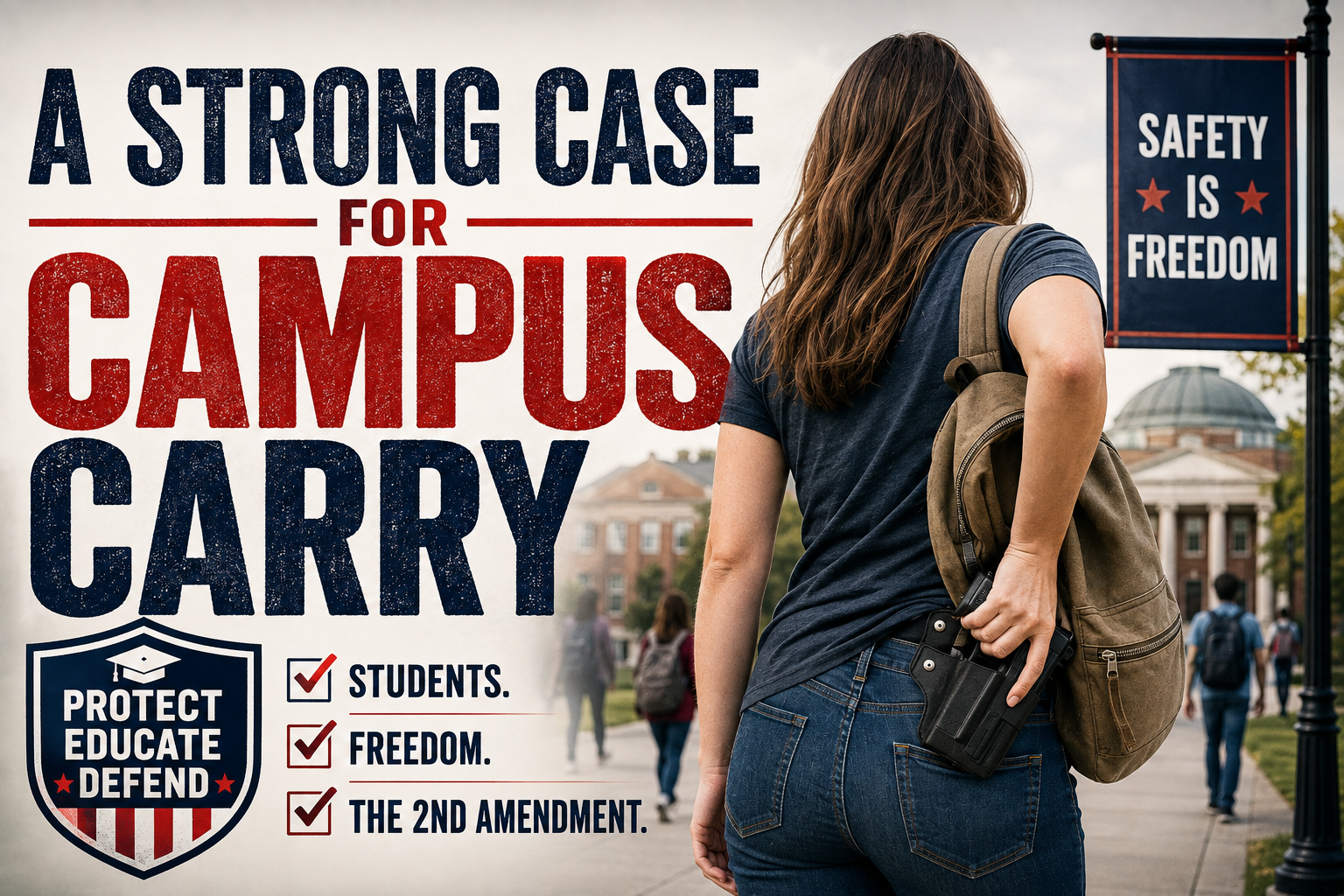
A young woman has an appointment to look at an off-campus apartment, but she misses the bus.
A man pulls up and offers her a ride. Perhaps she is too trusting; perhaps he claimed to be a
police officer. She accepts his offer and is never seen or heard from again.
Her name was Yingying Zhang. She was a 26-year-old visiting scholar doing research at the
University of Illinois Urbana-Champaign.
Although this is an extreme example of what can happen to a college student, it is true and it
should be instructive. College students are often targeted as victims, whether because of their
naivete, perceived wealth, criminals’ easy access to a concentrated population, or drug and
alcohol use of both victims and perpetrators.
According to the U.S. Department of Education, National Center for Education Statistics, in
2016 a total of 28,400 criminal incidents against persons and property on college campuses were
reported to police and campus security. This number included 8900 forcible sex offenses, 2200
aggravated assaults, and 1100 robberies. The Chronicle of Higher Education, in response to the
report, observed that the number of reported forcible sex offenses more than tripled from 2001 to
2016.
According to the National Crime Victimization Survey, in 2017, 34.7 per 1000 18-24-year-olds
were victims of crimes including rape or other sexual assault, robbery, aggravated assault, and
simple assault. (Murder is not included because of methodology.) The FBI Uniform Crime
Report shows that 3560 17-24-year-olds were murder victims in 2017.
The good news is that more and more states are allowing campus carry of concealed firearms for
those with licenses or permits. As with all state gun laws, however, the landscape is far from
homogeneous.
Ten states allow permitted concealed carry on college campuses: Arkansas, Colorado, Georgia,
Idaho, Kansas, Mississippi, Oregon, Texas, Utah, and Wisconsin. Twenty-three states allow each
institution to decide whether to allow or to ban concealed firearms: Alabama, Alaska, Arizona,
Connecticut, Delaware, Hawaii, Indiana, Iowa, Kentucky, Maine, Maryland, Minnesota,
Montana, New Hampshire, Ohio, Oklahoma, Pennsylvania, Rhode Island, South Dakota,
Vermont, Virginia, Washington, and West Virginia.
Illinois is one of 16 states that ban campus carry: California, Florida, Illinois, Louisiana,
Massachusetts, Michigan, Missouri, Nebraska, Nevada, New Jersey, New Mexico, New York,
North Carolina, North Dakota, South Carolina, and Wyoming.
The first problem is that every state that “allows” concealed carry on college campuses has a
different take on what that actually means. In Wisconsin, Oregon and Georgia, for example,
concealed carry is statutorily legal, but campus buildings are excluded. If you can’t carry your
gun to class, in your dormitory, to the student center or to a sporting event, then you can’t really
carry a gun on campus.
Armedcampuses.org says, “The Colorado Court of Appeals has ruled twice that under the
Colorado Concealed Carry Act (2003), the Colorado Board of Regents does not have the
authority to ban concealed carry license holders from carrying their firearms on public campuses.
Despite this ruling [sic], many colleges and universities have banned firearms from dorms,
dining halls, and event centers.” In the absence of any court rulings, the situation in Mississippi
is similar: the law says campuses must allow concealed carry for those who have enhanced
concealed carry permits, but many colleges and universities have banned firearms from campus
buildings anyway. The campus carry law in Arkansas only exempts the University of Arkansas
for Medical Sciences building, sports facilities and campus childcare facilities. Idaho’s law is
one of the best but still has an odd caveat: “Concealed and openly carried firearms are prohibited
in dorms and buildings and functions housing more than 1,000 individuals.” Texas’ law protects
concealed carry on campus and in campus buildings, but “each college and university may
determine certain sensitive areas and buildings where concealed weapons will continue to be
prohibited.” The only caveat in Kansas’ campus carry law is that concealed carry can be
restricted in facilities that are using metal detectors at the entrances.
And then there’s the Shangri-La known as Utah. Utah’s campus carry law has no exceptions,
restrictions or caveats. But Utah didn’t stop with college campuses: persons with Utah concealed
carry permits can also carry on any K-12 public school campus, which is probably the main
reason Utah has never had a school shooting. (The one attempted school shooting on record, in
2016, was stopped by the child’s own father, so good parenting won the day that day.)
An astute reader will notice that Tennessee has not been mentioned. That’s because their law is a
real outlier. Only full-time employees of public colleges and universities who have concealed
carry permits may carry on Tennessee campuses; they must also notify campus security or police
that they intend to carry. They are further prohibited from carrying at sporting events, in
meetings pertaining to discipline or tenure, and in medical facilities.
Not to be overly critical, but the second problem is that even the best states on the list logically
will not end up with a high rate of concealed carry on campus. With the exception of Idaho, the
minimum age for concealed carry in those states is 21, so at least half of the student body will
not be able to carry. (Idaho allows concealed carry at 18.) The students over 21, faculty and staff
will not have a concealed carry rate of 100%; if you assume a 10% rate of carry amongst those
who are eligible, potentially 5% of persons on campus could be carrying concealed. Hopefully
even that small number would give those with bad intentions pause. That hypothetical carry rate
would still be better than Illinois’ approximate 3% carry rate.
Texas’ campus carry law was met with vociferous protests despite the state’s reputation for a
strong gun culture. Professor Vicki Brittain, a political science professor at Texas State who led
campus implementation efforts, told the Texas Tribune, “I don’t know if you’re ever really going
to be able to determine that as a fact: Is it safer or is it not as safe? That may always be in the
area of opinion.” Recruitment of both faculty and students to Texas colleges is one negative
impact that both opponents and proponents agree is real since campus carry became legal.
After surveying the laws of the ten states that technically allow campus carry, it is clear that
some of those states don’t really have campus carry at all. As we know in Illinois, after Mary
Shepard and the ISRA finally won us the right to carry concealed, passing the law is just the first
step; fixing the law can continue in perpetuity. Most of those ten campus carry laws could be
improved, and those states’ residents should encourage their legislatures to do so. While Illinois’
concealed carry law leaves much to be desired by the 2A community, campus carry deserves a
place on the list of changes for which we fight.
Reprinted from The Illinois Shooter