

By Illinois Review
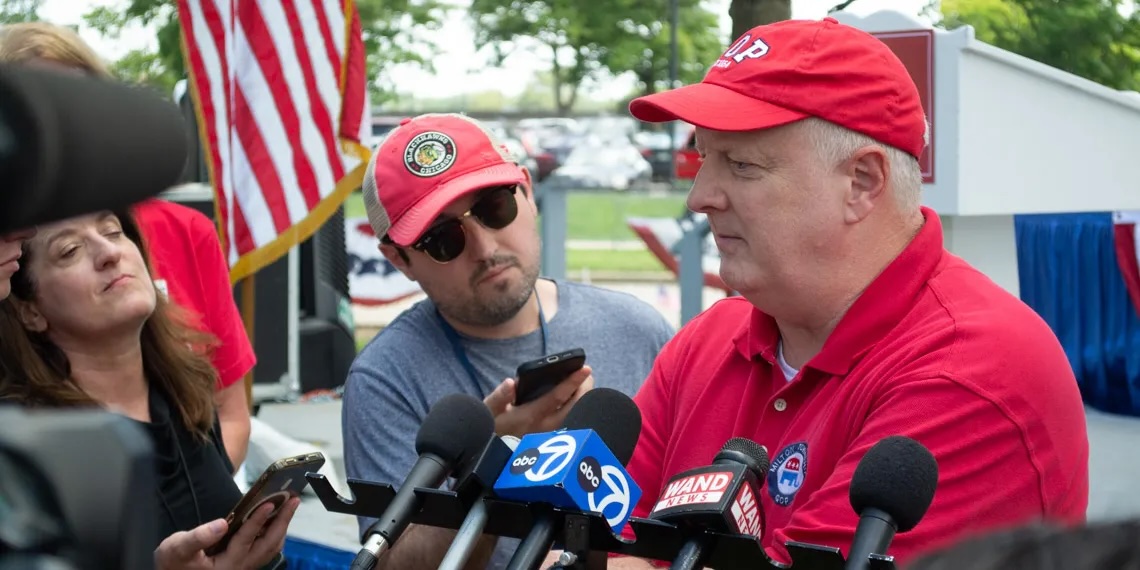
Illinois Republican Party Chairman Bob Grogan has made “party unity” the defining message of his young tenure.
Now Grogan faces a simple test: Does that rule apply to his close friend and longtime political ally, former Illinois House Republican Leader Jim Durkin?
During a recent CBS News Chicago interview, Durkin launched a blistering attack on President Donald Trump and Republican gubernatorial nominee Darren Bailey — declaring Bailey’s campaign “foolish” and blaming Trump and Bailey for Republican losses in Illinois.
“There’s really no election in November,” Durkin said.
“Darren Bailey, this is a foolish — uh, foolish campaign that he’s moving on. He adds nothing to the equation for Republicans. He’s not gonna help the Republican Party. He’s very intolerant.”
Durkin predicted Bailey would receive “the same result that he got last time,” before adding: “We’ve lost more Republicans because of people like Darren Bailey and Donald Trump in Illinois.”
That creates an uncomfortable problem for Grogan. Just weeks ago, Grogan was lecturing Republicans about the need to stop attacking one another.
“We have to go back to the Reagan rule, where if somebody agrees with us 80 percent of the time, they’re not a 20 percent traitor,” Grogan told Capitol News Illinois in July.
“Our entire Republican team is better than the entire Democratic team, and we need to pull together. We can’t purge our way to 51 percent.”
Grogan has also warned that “fratricide isn’t a good campaign strategy.”
Upon becoming chairman in May, Grogan proclaimed, “Illinois Republicans are united and I’m excited to get to work electing Republicans up and down the ballot in November.”
Apparently, Durkin missed the unity memo.
Rather than helping elect the Republican ticket, Durkin went on Chicago television and declared the party’s nominee for governor essentially defeated while attacking the Republican president.
There is also rich irony in Durkin lecturing Republicans about losing elections.
Republicans held 51 Illinois House seats following the 2016 election. By the time Durkin’s final election as Republican leader was over in 2022, the caucus had fallen to just 40 — a net loss of 11 seats.
Republicans lost five seats in 2022 alone.
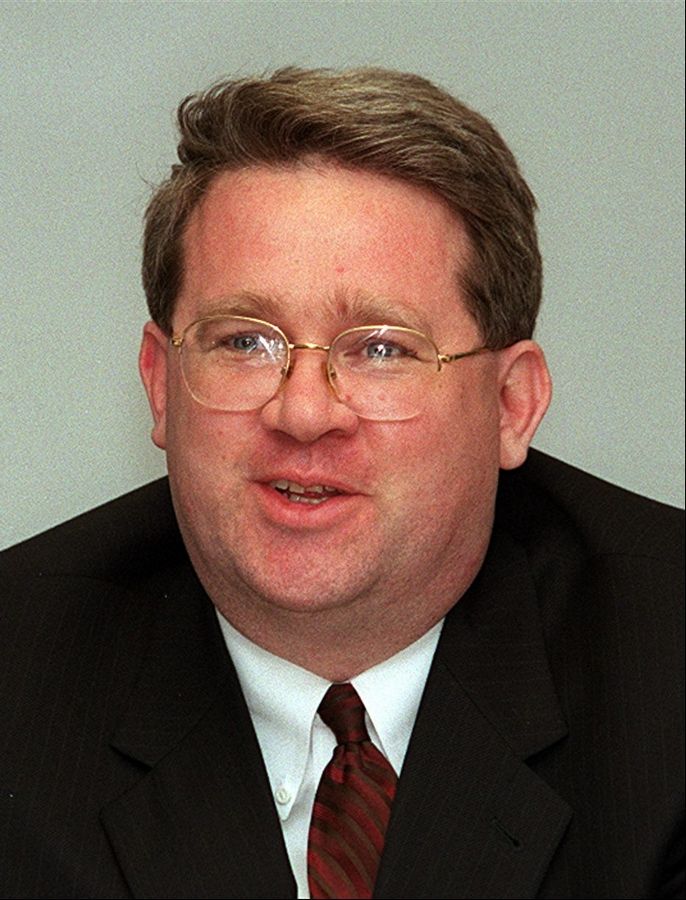
Durkin then stepped aside as leader and ultimately resigned from the legislature. Yet today, he is blaming Trump and Bailey for Republicans disappearing from Illinois government.
Grogan cannot have it both ways.
He cannot demand that conservatives stop attacking establishment Republicans, preach that Republicans must embrace their “80-percent” allies and condemn intra-party “fratricide” — then remain silent when one of his closest political friends publicly torches Trump and the GOP nominee for governor.
Bailey won the Republican primary. Trump leads the Republican Party nationally. And Grogan is chairman of the Illinois Republican Party.
If Grogan’s unity message means anything, he should publicly separate himself from Durkin’s comments and make clear that Durkin does not speak for the Illinois Republican Party.
Otherwise, Republicans may reasonably conclude that Grogan’s “unity” doctrine has an exception:
His friends.