

By Illinois Review
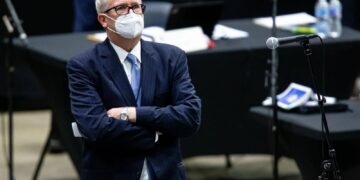
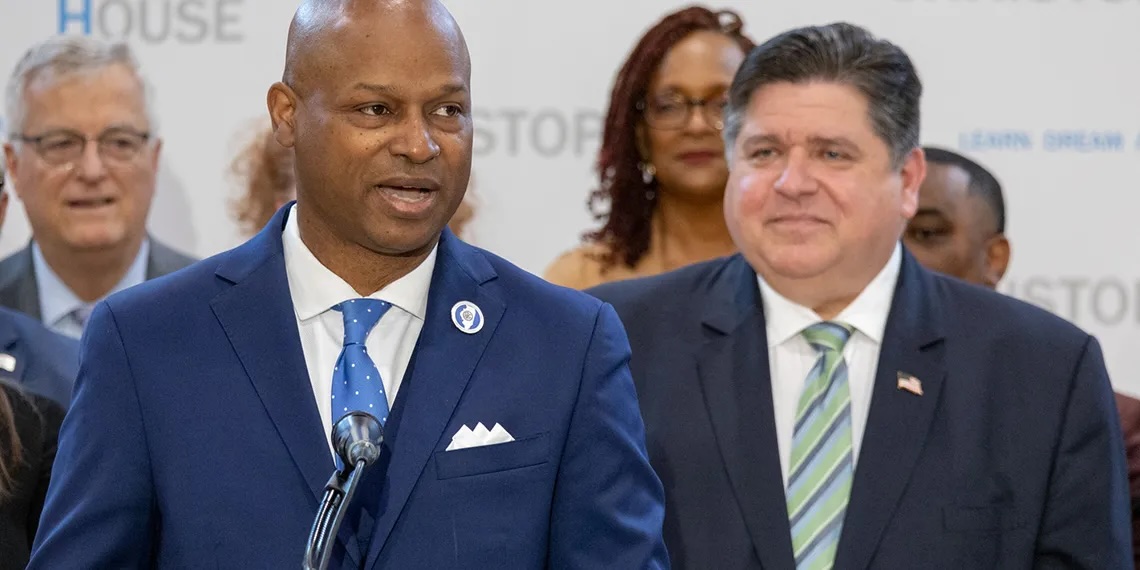
Illinois House Speaker Chris Welch’s political troubles are showing few signs of easing, as a lackluster reception from fellow Democrats at Illinois State Fair fundraisers adds to a growing list of warning signs surrounding his leadership.
The Chicago Tribune reported that Welch, a close friend and ally of Gov. JB Pritzker, received only light applause at Democratic events surrounding the State Fair. Multiple attendees who also spoke with Illinois Review described noticeably subdued enthusiasm for the Speaker – a striking reception for one of the most powerful Democrats in Illinois and a leader accustomed to commanding the support of his caucus.
The reception comes as Welch continues to face fallout over his handling of the Harry Benton sexual harassment scandal and amid growing private questions in Springfield about whether he still has the votes necessary to remain Speaker.
Illinois Review has not independently confirmed a formal vote count, but the chatter inside the State Capitol is increasingly pointed: Welch may no longer have the 60 votes needed to remain Speaker.
That alone marks a significant shift from where Welch stood before the Benton scandal erupted. Once viewed as firmly in control of his caucus, the Speaker is now facing open questions in Springfield about whether enough House Democrats are still willing to back him for another term.
And the State Fair reception is only the latest warning sign.
Three House Democrats previously named to Welch’s “Culture and Accountability” working group – State Reps. Kelly Cassidy, Gregg Johnson and Tracy Katz Muhl – publicly declined to participate in the Speaker’s response to the scandal.
Cassidy questioned whether the effort would amount to little more than “lip service or a PR stunt” and later described its rollout as “botched from the jump.”
Johnson said he had never agreed to serve and expressed concerns about the group’s composition, while Katz Muhl said she preferred an “independent, expert-driven process.”
The defections represented an unusual public rebuke of a sitting Democratic Speaker by members of his own caucus.
Welch has also found himself at odds with organized labor – traditionally one of the Democratic Party’s most powerful constituencies in Illinois.
In explaining why his political operation spent approximately $1.4 million supporting Benton’s 2024 re-election after Welch’s office had already received sexual harassment allegations involving the Plainfield Democrat, Welch pointed in part to Benton’s union connections.
Welch said Benton had complained to unions that the Speaker was not doing enough to support him and suggested Benton could have worked to undermine organized labor’s financial support for House Democrats.
The Illinois AFL-CIO publicly rejected that characterization.
“Any suggestion that Harry Benton – or any elected official – controlled labor’s support for a candidate or caucus is false,” the organization said.
The rebuke left Welch facing criticism not only over why he continued financially supporting Benton, but also over whether he was attempting to shift responsibility for that decision onto organized labor.
The political problems have continued to accumulate.
Democrat State Rep. Fred Crespo has publicly called for Welch’s resignation. Former Madigan-era whistleblower Alaina Hampton has also demanded that Welch step down, while Republican lawmakers have repeatedly called for his resignation and for an independent investigation into his handling of the Benton allegations.
Welch created his Culture and Accountability working group as part of his response to the scandal, but three Democrats publicly declining to participate raised fresh questions about whether members of his own caucus have confidence in the Speaker’s proposed reforms.
Now comes another, more subtle political signal: the reception Welch received from Democrats themselves.
Light applause at a political fundraiser does not constitute a vote count. But in Springfield politics, where power depends heavily on relationships, loyalty and the perception that a leader remains firmly in control, the reaction of fellow Democrats can matter.
Welch’s future as Speaker ultimately depends on votes – not applause.
But after three Democrats walked away from his working group, organized labor publicly rejected his explanation for supporting Benton, and members of his own party called for his resignation, the subdued reception at the State Fair political events raises an increasingly unavoidable question:
Does Chris Welch still have the votes to remain Speaker?
By Illinois ReviewFormer Illinois House Republican Leader Jim Durkin endorsed Democratic Gov. JB Pritzker for a third term Monday, breaking with Republican nominee Darren Bailey while working with...
Read moreDetails