


By Mark Vargas, Editor-in-Chief & Opinion Contributor
Colorado officials insist that keeping former Mesa County Clerk Tina Peters in prison is justice. But when incarceration becomes a direct threat to a person’s life, justice is no longer being served – the Constitution is being violated.
Peters is a 70-year-old, nonviolent inmate and cancer survivor whose health is rapidly deteriorating inside Colorado’s prison system. Her continued confinement now raises serious civil-rights concerns under both federal law and Colorado’s own constitution.
The question is no longer whether the state has authority to punish her, but whether it has the authority to do so at the cost of her life.
Article II, Section 20 of the Colorado Constitution prohibits cruel and unusual punishment. While it mirrors the Eighth Amendment, Colorado courts have long held that their constitution provides broader protections.
In People v. Gaskins, the Colorado Supreme Court made clear that state safeguards are not confined to federal minimums.
Colorado law also recognizes that a sentence may begin as lawful — even when the underlying prosecution is disputed — yet later become unconstitutional if circumstances change. Courts have held that when a prisoner’s medical condition deteriorates to the point that incarceration becomes dangerous or fatal, the punishment no longer serves a legitimate purpose.
In Ramos v. Lamm, Colorado adopted the rule that deliberate indifference to serious medical needs constitutes cruel punishment. In People v. Drake, the court confirmed that sentences can become unconstitutional when health conditions render them excessively harsh.
That is exactly where Tina Peters’ case now stands. Prison officials lack the equipment, staffing, and medical capacity to treat her condition. State leaders know this. Yet they refuse to intervene, allowing her politicized sentence to morph into a potentially lethal one.
This failure comes amid broader concerns. On December 8, 2025, the U.S. Department of Justice announced a sweeping civil investigation under the Civil Rights of Institutionalized Persons Act into conditions across all 21 adult facilities operated by the Colorado Department of Corrections and 12 youth facilities run by the Division of Youth Services.
Assistant Attorney General Harmeet Dhillon cited “multiple reports of unconstitutional and legally insufficient carceral conditions” as the basis for the probe. While Peters was not named, she remains incarcerated within the system now under federal scrutiny.
Traditional remedies have been exhausted. A federal habeas petition was denied this month on procedural grounds, not on the merits, and a presidential pardon issued by President Donald Trump, while symbolically significant, has been disregarded by Colorado officials who continue to hold her under state authority.
This is where Congress comes in.
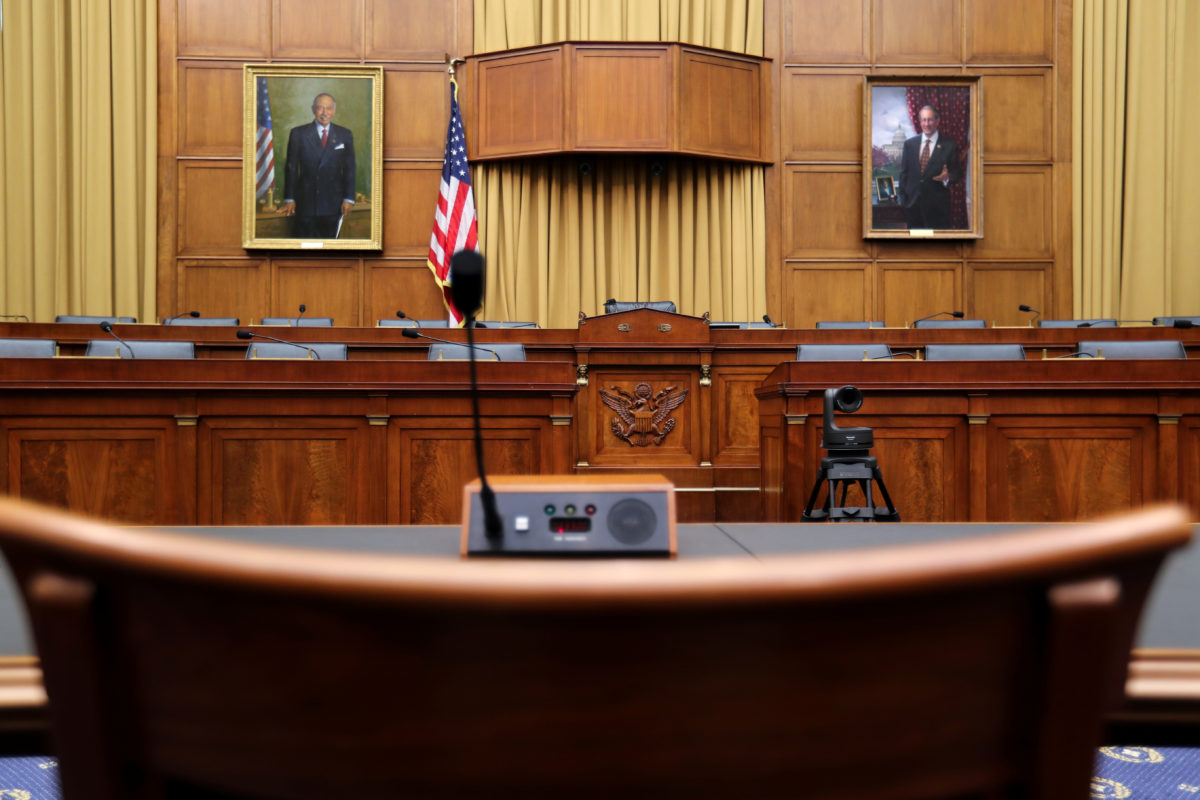
Under Article I of the U.S. Constitution, Congress has broad authority to investigate civil-rights violations and election-related matters. House committees possess subpoena power and may compel testimony from incarcerated witnesses by seeking a federal writ of habeas corpus ad testificandum.
Under the Supremacy Clause, Colorado would have no lawful basis to refuse compliance.
Peters could be called to testify as a former county clerk with firsthand knowledge of election-system security and chain-of-custody issues, or as an inmate experiencing conditions now under federal civil-rights investigation.
If Congress subpoenas Tina Peters, she would be transferred into federal custody as a federal witness. Her housing, safety, and medical care would fall under federal supervision.
Independent medical evaluations could occur, and allegations of mistreatment could be examined without fear of retaliation.
Importantly, federal custody is not limited to a single appearance. So long as Congress requires Peters’ presence for testimony or related proceedings, she may lawfully remain in federal custody — outside the prison system that has failed to safeguard her constitutional rights.
This would not overturn her state conviction. It would do something more fundamental – prevent Colorado from violating its own constitution while a federal civil-rights investigation proceeds.
At this point, a congressional subpoena is not a political maneuver. It is the last remaining constitutional path to protect Tina Peters’ civil rights — and possibly her life.