


By Illinois Review
New voter-participation data circulating among Illinois conservatives is highlighting what many now argue is the real and long-running crisis inside the Illinois Republican Party: collapsing enthusiasm, shrinking turnout, and a leadership class that has failed the base for more than two decades.
Illinois has 12.5 million residents, with roughly 10 million old enough to vote. About 8 million are registered. Yet only 6 million typically vote in a presidential cycle, and just 4 million show up for midterms.
According to attorney Tom DeVore, who has studied the numbers closely, the picture for Republicans is even worse.
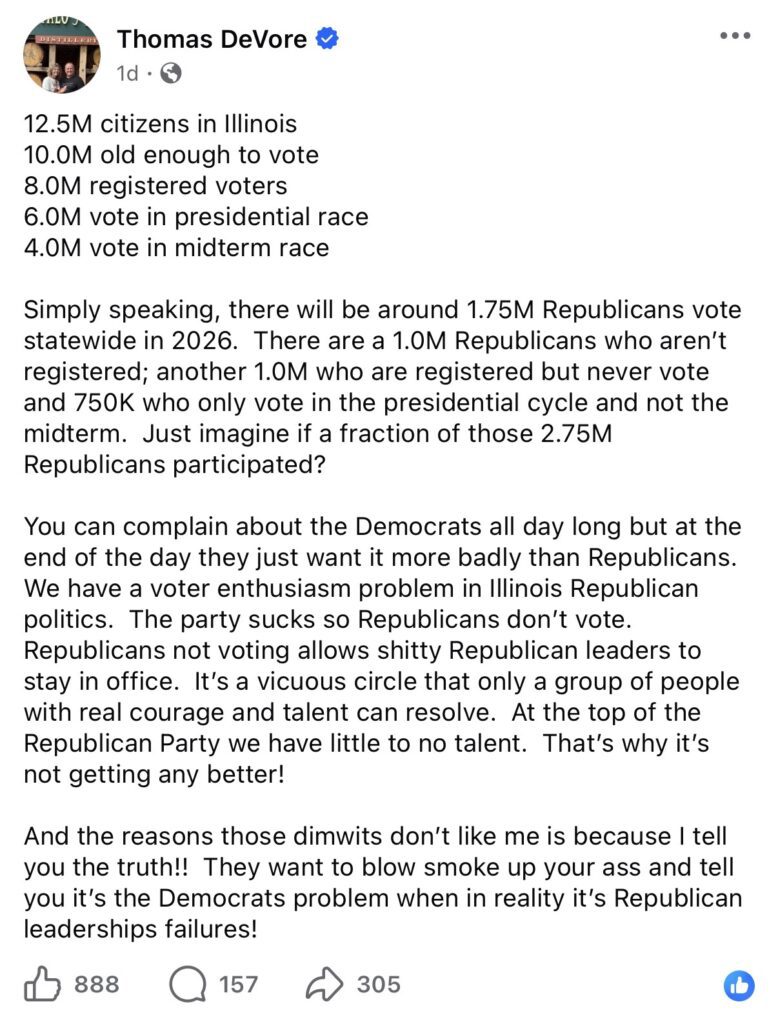
In 2026, projections show only 1.75 million Republicans will vote statewide. Meanwhile, an estimated 1 million right-leaning Illinoisans aren’t registered, another 1 million are registered but never vote, and 750,000 vote only during presidential years.
That leaves 2.75 million potential Republican voters sitting out the very elections that decide statewide power.
“Just imagine if a fraction of those 2.75 million Republicans participated?” DeVore said, arguing that even a modest increase in GOP turnout would fundamentally reshape the Illinois political map.
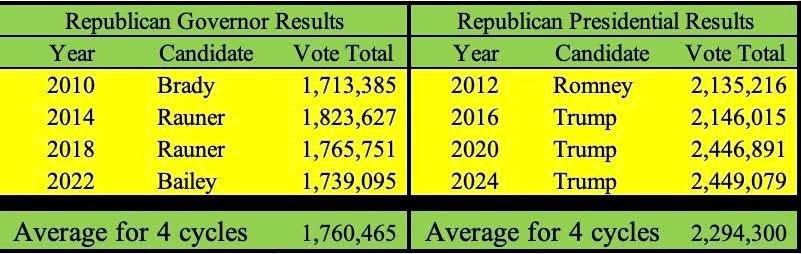
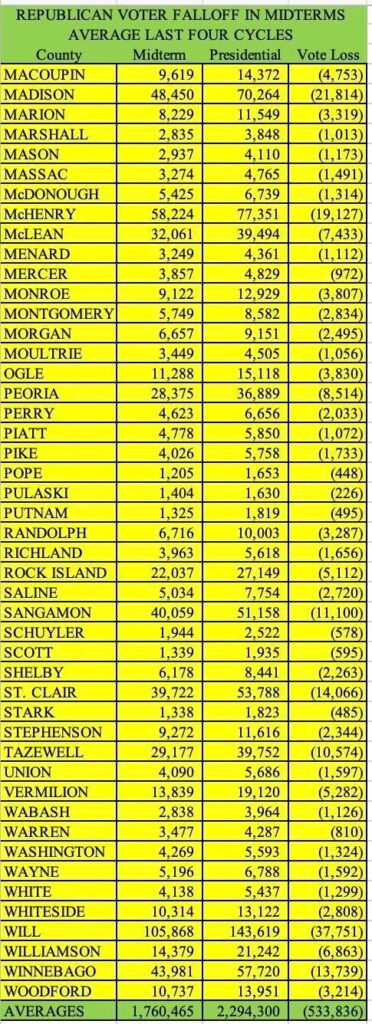
Instead, turnout continues to collapse — and history shows this is not a new problem.
Illinois Republicans lost the governor’s mansion in 2002, 2006, 2010, 2018, and 2022. They lost the state House majority in 1996 and have not reclaimed it since. The party has lost every statewide office except one since 2006.
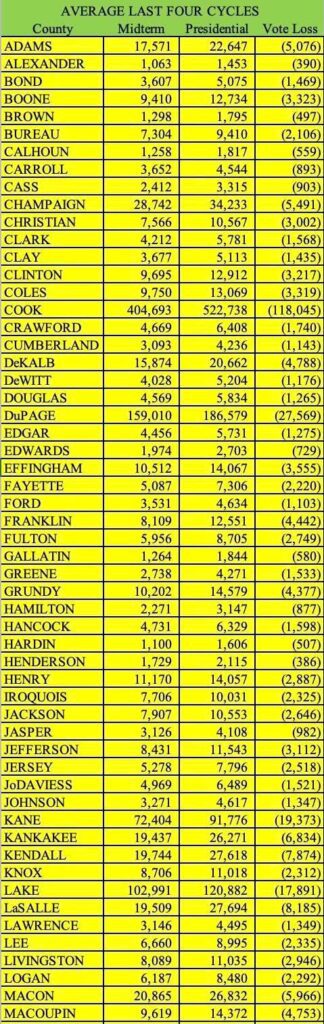
For twenty years, the Illinois GOP establishment has presided over shrinking maps, shrinking turnout, shrinking relevance, and a stunning refusal to engage real voters on real issues.
“You can complain about the Democrats all day long, but at the end of the day they just want it more badly than Republicans,” DeVore said. “We have a voter-enthusiasm problem in Illinois Republican politics. The party sucks, so Republicans don’t vote.”
He argues the problem is not Democrat strength — it’s Republican failure.
“Republicans not voting allows bad Republican leaders to stay in office,” he said. “It’s a vicious circle that only a group of people with real courage and talent can resolve.”
And while party insiders often bristle at criticism, DeVore says the truth is simple: “They want to blow smoke and tell you it’s the Democrats’ problem, when in reality it’s Republican leadership’s failures.”
Democrats already dominate every level of state government, and without a significant shift in Republican engagement, 2026 would simply reinforce the trend.
The emerging data shows a participation gap, not a population gap — and unless those millions of inactive Republican-leaning voters reenter the process, Illinois’ political landscape is likely to remain exactly where it has been for the past two decades.