

By Illinois Review
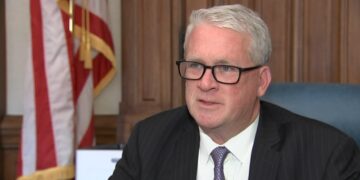
A new investigative report by the Chicago Tribune raises serious questions about how Illinois House Speaker Emanuel “Chris” Welch’s office handled sexual harassment allegations against former State Rep. Harry Benton years before the Democrat lawmaker ultimately resigned in disgrace.
According to the Tribune, Welch’s office received detailed complaints in April 2023 from one of Benton’s earliest legislative staff members, a young woman who alleged a pattern of harassment, much of it sexual in nature.
The allegations were reportedly made directly to Welch’s then-chief of staff and later became part of the Legislative Inspector General’s investigation that ultimately contributed to Benton’s downfall.
The Tribune reports that despite receiving the complaints in the spring of 2023, Benton’s interview with senior House staff did not occur until July – approximately three months later. By that time, the staffer had already resigned from her position, citing concerns for her mental health after the alleged misconduct.
According to the former staffer, Benton faced no disciplinary action following her complaints.
Welch’s office defended its handling of the matter, telling the Tribune that it responded “promptly” and took “appropriate action,” though it did not specify what that action entailed.
The Tribune’s reporting contrasts sharply with the Speaker’s public response in 2026, when Benton was quickly removed from House committees and the Democratic caucus after additional complaints surfaced.
Benton later resigned from the General Assembly following the release of a Legislative Inspector General investigation that found a pattern of inappropriate conduct.
The Tribune noted that the newly revealed timeline raises questions about whether House leadership complied with internal sexual harassment policies and state workplace standards, and why Benton was permitted to continue serving in office for nearly three more years after the initial allegations were reported.

The Inspector General’s investigation ultimately documented multiple allegations of misconduct involving legislative staff and recommended disciplinary action. House Speaker Welch later described Benton’s conduct as “outrageous, unethical, and unbecoming” when announcing his removal from committee assignments and the House Democratic caucus.
Benton subsequently resigned from the Illinois House but has remained in his separate elected position as Wheatland Township Highway Commissioner.
The Tribune’s investigation is likely to intensify scrutiny of how allegations of workplace misconduct are handled within the Illinois House of Representatives and whether reforms are needed to ensure complaints are investigated promptly and transparently.
The revelations also renew broader questions about accountability in Springfield, particularly whether legislative leaders acted swiftly enough when first alerted to allegations involving one of their own members.
While House leadership maintains that appropriate procedures were followed, the Tribune’s reporting suggests the lengthy delay between the initial complaint and any interview of Benton may become a focal point of renewed public and legislative scrutiny.
With the General Assembly continuing to emphasize workplace reforms in recent years, the handling of the Benton complaints may now become part of a larger debate over whether Illinois lawmakers have done enough to protect staff members who report misconduct and to hold elected officials accountable when allegations first emerge.