


By John F. Di Leo, Opinion Contributor
Much is being written about the “shocking” Colorado primary in which 29-year old Melat Kiros overthrew 15 term incumbent Diana DeGette to win a congressional nomination this June.
It’s a Democrat district, which DeGette herself inherited from the retiring Patsy Schroeder thirty years ago, so this means that this young Democratic Socialist is virtually guaranteed a seat in Congress when the November election rolls around.
Democrats are crying crocodile tears, in shock that such a dependable long-term incumbent has just been thrown over by an ungrateful young whippersnapper. They are worrying that Democrat voters are throwing out centrists and replacing them with scary radicals.
And if they were right, that would indeed be a problem for our society – but it may be an incorrect assumption.
The key element may not be the fact that Melat Kiros won, but the fact that there was a 29 year incumbent in the seat.
The incumbent is no centrist; the two of them are virtually identical on the issues. Diana DeGette has a lifetime ACU rating of 3%. Kiros is probably louder and more obnoxious, certainly more of an overt antisemite than the incumbent she defeated, but when it comes to voting records, they are certain to be virtually identical in the House.
Maybe the voters weren’t actually enamored of the siren song of Stalin and Mao; perhaps they were just tired of Do-Nothing Diana after 30 years, and they didn’t want to face another 30 years of her irritating face showing up in their mailbox (on franked mail that they paid for, like it or not).
Maybe it was just, finally, DeGette’s year to lose, and Kiros was in the right place at the right time.
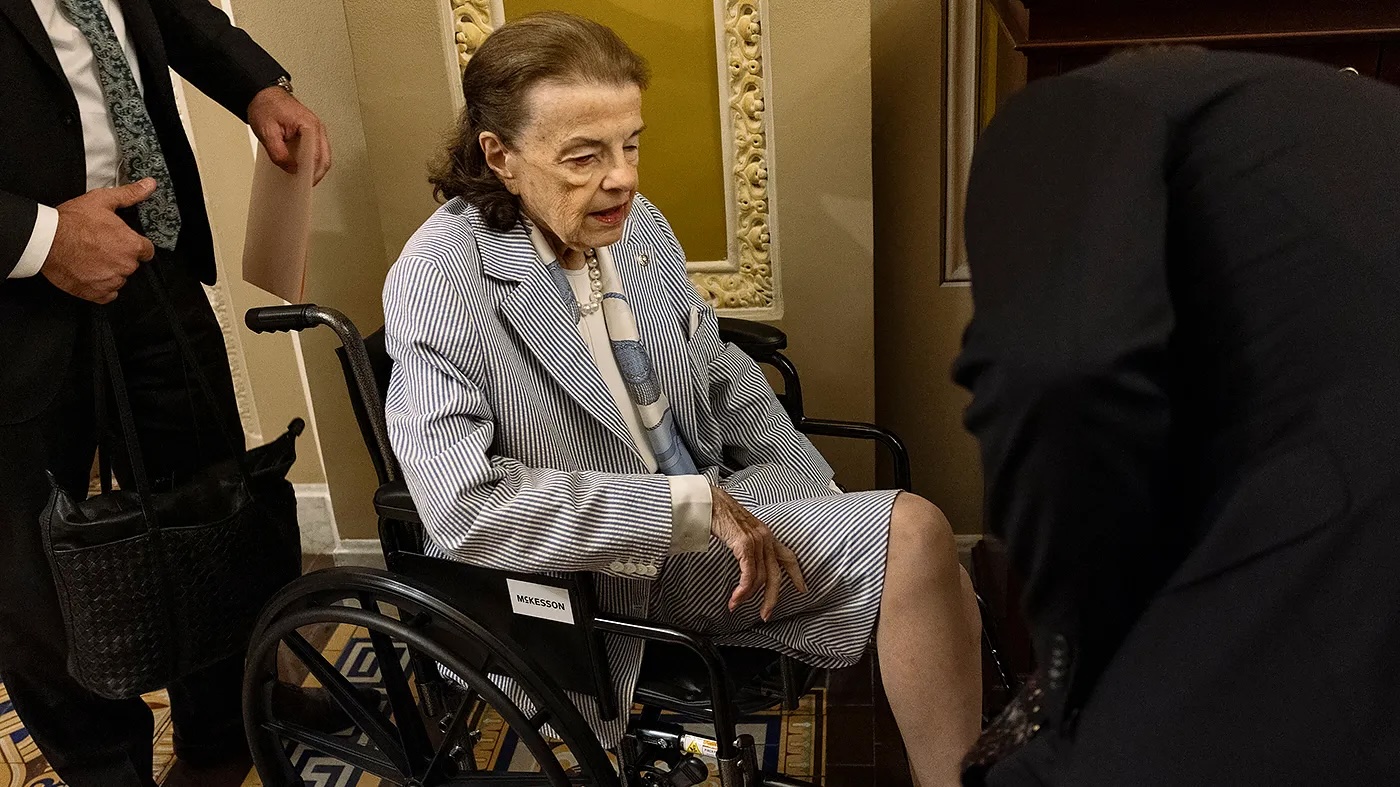
At the same time, a couple of states to the east, the Republican leadership of Kentucky is doing some nervous hand-wringing of its own. Longtime Senator Mitch McConnell, who has served in the U.S. Senate since 1985, hasn’t been heard from in weeks, after being found unconscious and rushed to the hospital by ambulance in mid-June.
At this writing, Senator McConnell is assumed to be noncommunicative, having likely suffered a heart attack, stroke, or similar major event, and his staff has just been hoping he’d get well enough to squeak through the election when his successor will finally be able to take over (perhaps there will be more news on his condition by publication, by I’m not hopeful).
Senator McConnell is in his seventh term of office, having spent almost half his long life in the U.S. Senate. Despite several years of disturbing physical condition, his fellow Republicans didn’t dare to pressure him to resign earlier in this term, because his Democrat governor hinted that he might appoint a Democrat to fill the rest of the term. This risk was finally corrected by a 2024 state law switching the filling of vacancies from gubernatorial appointment to special election, but now that it’s the final year of his final term, there was assumed to be no need, as he’ll naturally exit the stage at year-end.
McConnell has had a lifetime of injuries that would have killed other people, so he’s a pretty tough old guy. He’s made it to 84 despite having suffered childhood polio, heart bypass surgery, a number of bad falls, and a series of odd freezing incidents that look like mini-strokes over the past few years.
So, on the one hand, his resilience at being able to live this long is impressive, but on the other hand, the fact that he’s obstinately stayed in office this long shows very poor judgment.
These two very different examples – an old incumbent leftist overthrown by a young marxist, and an old incumbent Republican overthrown by his own failing health – provide one key lesson: that it’s unwise for politicians to stay in office too long.
There are exceptions, of course; President Trump, at 80, is remarkably energetic and productive. But most of the time, the exception proves the rule; we shouldn’t leave people in the same office for decades and decades. People are usually most productive in the early years of a new job; how good can you expect a legislator to be after sitting in the same office for twenty, thirty, forty years?
It’s not a partisan statement to say that – whether Republican or Democrat – the constituents deserve some fresh representation after a while.
There has long been pressure to mandate term limits for legislators by Constitutional amendment, just as we have for the presidency. This idea has its flaws, however: some partisan, some not.
First, term limits for legislators makes the legislator an automatic lame duck at some point. It’s hard to raise money for an expensive campaign if you’ll only be in office for another year or two. It’s hard to cut deals with other representatives if you can only help each other out in this one term, so it’s harder to pass compromise legislation and develop the alliances that a deliberative body needs. And as you near your exit date, you may start checking out as you prepare for your next job, as a college dean or lobbyist or lawyer or professor. Vacancies caused by retiring politicians, leaving before their terms are up, cause severe disruption to the process.
And from a partisan perspective, legislative term limits pose the challenge of a party risking loss of the seat. If your incumbent leaves at the right time, in a good year for the party, and a time when there’s a good successor to line up, it’s not so troublesome.
But there are lots of bad times too: What if your term limitation ends in a dicey midterm year for your party? What if your term limit hits during a census-driven redistricting year, when the district may be harder to win and therefore need a familiar incumbent on the ballot all the more?
Mandatory term limits aren’t bad because of the number of years; they’re bad because some of those years just happen to hit at a bad time.
For this reason, political parties need the ability to push their officeholders to start looking for a voluntary exit strategy at a reasonable time. Congressmen could start looking for a good year to pass the baton after three or four terms, staying through five or six if necessary. Senators could start looking for a good year to move on during the second term, willingly staying through the third term if necessary, but hopefully not.
Good politicians in lesser offices deserve some chance at moving up to higher office from the county board or the state house; constituents deserve some chance of their votes meaning something on election day, with real open seat decisions to make in primaries and generals too.
And the American system itself deserves to be made up of politicians who had to work hard and earn their offices, not politicians – of either party – who have sat there collecting dust for 30 or 40 years, taking their seats (and privileges) for granted.
President Jefferson once said that “the tree of liberty must be refreshed from time to time by the blood of patriots and tyrants.”
Perhaps the blood wouldn’t feel so necessary if the politicians would just step down of their own accord, before they reach their expiration date.
Copyright 2026 John F. Di Leo

By Mark Vargas, Editor-in-Chief & Opinion ContributorIn 2019, behind closed doors with House Intelligence Committee investigators, Michael Cohen made a prediction about Roger Stone: Donald Trump would never...
Read moreDetails