

By John F. Di Leo, Opinion Contributor
On March 13, 2026, President Trump issued an executive order calling for enhanced enforcement of origin marking regulations, in order to better protect consumers from unmarked foreign goods or deceptively marked domestic ones.
In this order, the President directed all federal departments with Country of Origin responsibility to direct their agents to focus on violations in this area, both in terms of referring cases for prosecution and of rewriting existing regulations to clarify and tighten the rules.
From a consumer’s perspective, this is obviously a terrific direction to take.
American consumers do want to know the origin of the goods they buy, so clear rules requiring sellers to mark them properly are appreciated. Patriotic shoppers rightly want to reward their neighbors by purchasing American-made goods when available and affordable – and hopefully, with the tax and regulatory improvements of the Trump administration, much more American manufacturing will be affordable now and in the future than it’s been for quite a while.
But that’s just from a consumer’s perspective.
From the perspective of manufacturers, wholesalers and retailers, this issue is not unlike most orders that come from the federal government: it’s another crackdown on often confusing regulations, rarely known or understood.
Worse, most of people’s assumptions about this subject are wrong, which means that even a well-intentioned seller may mark his goods incorrectly due to ignorance, putting him at risk of severe violations with five, six, or even seven figure level penalties.
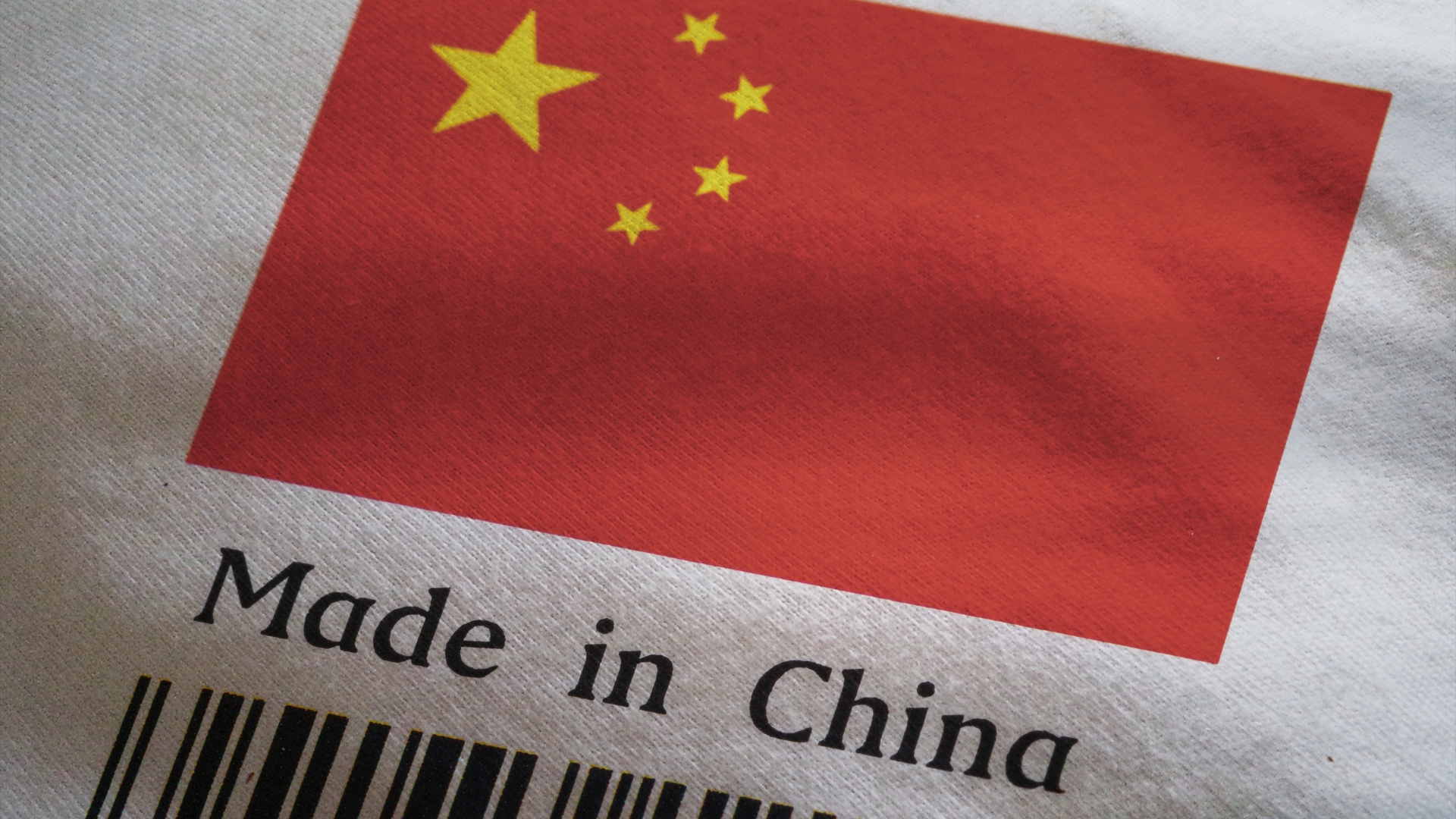
What would one expect? That a product made in China needs to be marked “Made in China,” and that a product made in the United States needs to be marked “Made in USA,” of course. Right?
Well, that would be wrong.
Or at least, it would often be wrong. Probably most of the time.
For one thing, the Customs rules governing imported goods generally require clear statements of origin on all imported goods – sometimes on the product, sometimes on the package, sometimes on both – and also on domestic made goods that include foreign accessories worth mentioning.
For example, picture a US-made vacuum cleaner that is sold with a set of foreign-made upholstery and drapery attachments included in the box; if the attachments total more than just two or three percent of the sale price of the set, their country of origin must also be stated (“Vacuum cleaner assembled in USA, attachments assembled in Mexico,” for example).
These regulations aren’t new; they haven’t even been substantially changed in generations.
But how many American manufacturers or resellers do you think fully understand these rules? And these are the easy ones; foods, textiles, clocks, and several other classes of products necessarily have much more confusing regulations.
Then there are the rules governing the wording of the “Made in USA” claim. These regulations work very differently, since their purpose is not really to make people aware of USA manufacture, but rather, to clarify whether USA-made goods are wholly of domestic content or not. The Federal Trade Commission has enforced these regulations since the 1950s, and every so often Congress tries to think of a less confusing way to write these rules, then gives up.
So it is that American-made goods have one of two classes of marking approaches: either an “unqualified claim,” indicating that the product is 100% made of American materials and components (or very very close to 100%), or a “qualified claim,” indicating that the product is not necessarily made entirely of domestic parts, so it’s definitely made here, but it just might be made of a third or a half imported components.
A qualified claim of USA origin means that the sentence includes a qualifier, such as “made in USA of foreign and domestic materials.” An unqualified claim, which can only be used on a product at least 95% of USA materials, needs no such qualifier, so it can be simple as “Made in USA.”
If you use that unqualified claim, you had better be able to prove that your product deserves it.
How many American manufacturers, wholesalers or retailers do you think understand the above, and have a good process in place for managing it?
It’s worth noting at this point that these are well-intentioned regulations. The government isn’t trying here to just create jobs for city sealers or federal inspectors; they aren’t requiring government permits to use a statement or imprint. All they’re trying to do is provide better information to the American consumer, so he can make a better-informed purchasing decision while ordering online, or perusing goods on a store shelf.
But despite these good intentions, the result is a very difficult set of requirements for the manufacturer, distributor, and final retailer.
Somehow they have to build a database in their system that keeps track of which of their products – and parts thereof, if they’re manufacturers – are made in which country. They need a system of managing the packaging artwork for boxes and bottles, labels and tags, that accurately print the right statement in the right place. They need a process for obtaining such information from their suppliers, and responding to changes in origin by correcting such marking in real time. They need to educate staff to understand that they must never obscure these origin statements with another sticker or price tag.
Again, this isn’t new; most of these rules have been in place for over half a century, virtually unchanged. But the market has changed; the supply chain has changed.
Most American manufacturers made everything out of domestic components a century ago. Gradually, over the years, they started sourcing more and more parts from Mexico or Germany, from England or Japan, then ultimately, more and more came from China.
Nowadays, thanks to our society finally realizing all the dangers that China poses to our economy – from China’s currency manipulation to their intellectual property theft, their work to gain control of industries by dumping practices, and more – our government has raised tariffs on Chinese goods, and American businesses are finally rushing to move to new vendors to reduce their reliance on China. American importers are finding new vendors in Malaysia and Thailand, South Korea and Taiwan, Vietnam and the Philippines, not to mention all the other low-cost countries around the world, in Central and South America, even Eastern Europe.
All these vendor changes require processes – for checking and correcting the statements on boxes, the wording carved into molds and dies, the labeling and documentation that’s printed by a company’s computer system.
And that’s still not all – because there are companies that utilize Export-Import Bank funding, federal contracting, free trade agreements deals, and Department of Defense purchasing rules, and foreign approval programs like CE marks for Europe and SASO approvals for the Middle East – each of which has different rules for handling or approving origin changes.
And that’s assuming that the U.S. export controls even allow such a change in origin, or even allow bidding it out in the first place. A lot of products are export-controlled, after all, by either EAR or ITAR.
Again, this isn’t about the government trying to intentionally make things hard for the business community. It’s about trying to increase domestic manufacturing, employing more American workers, and providing the consumer with more information. These are all noble goals.
But it’s a lot for a company to manage, especially since most companies don’t have the staff for it, and no matter how many MBAs your company employs, the odds are that none of them ever learned a word of this in school.
So it is that the American business community has one more thing to respond to. They can’t complain, since these aren’t new rules, but they need to find a way to increase their internal awareness – across Purchasing and Finance, and Marketing and Engineering, and IT and Shipping, and NPD and Quality.
Because, even though this new order was issued with the best of intentions, in one important way, it’s like anything else the government does: it’s always more work, cost, and risk for the business community.
Copyright 2026 John F Di Leo