


By Illinois Review
After months of negotiations, legislative maneuvering, and last-minute political drama, Illinois Democrats may have accomplished something few thought possible: helping drive one of the state’s most iconic sports franchises across the border to Indiana.
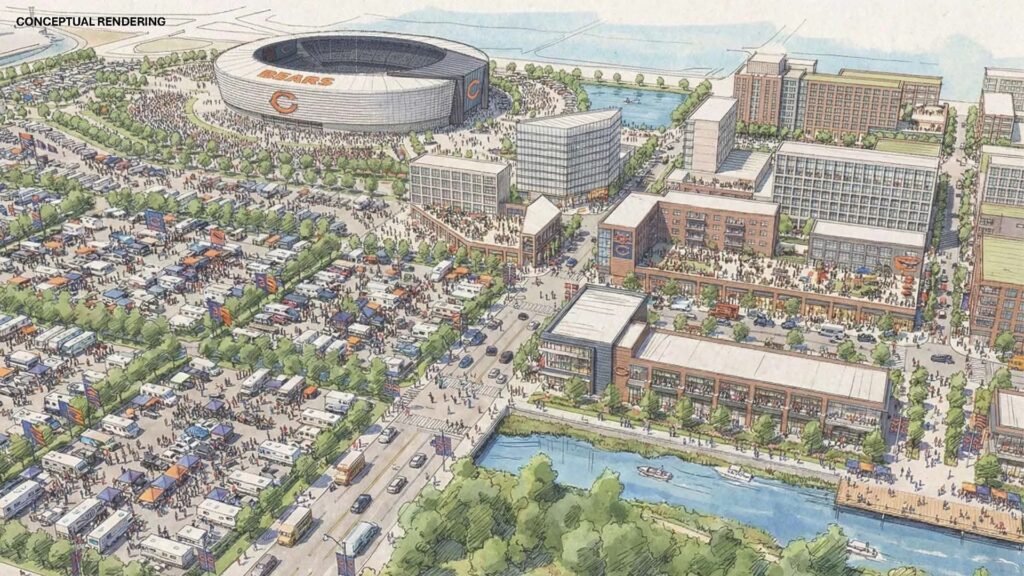
As the Illinois General Assembly adjourned its spring legislative session in the early morning hours Monday, lawmakers failed to deliver a clear path forward for the Chicago Bears’ proposed $5 billion stadium and entertainment district in Arlington Heights.
The collapse came despite months of negotiations and repeated warnings that Indiana was aggressively courting the team with more than $1 billion in potential public incentives.
The Bears have owned the former Arlington Park racetrack property since 2023 and have made it clear that Arlington Heights is their preferred Illinois location. However, team officials have long argued that the project’s financial viability depends on securing long-term property tax certainty through a special legislative framework.
The Democrat-controlled Illinois House appeared to provide that certainty in April when it approved a “megaprojects” bill designed to give large developments predictable tax treatment.
But once the legislation reached the Senate, Democratic divisions began to surface.
Progressive Democrats raised concerns about providing what they viewed as a subsidy to a billionaire-owned NFL franchise. Chicago-based lawmakers wanted additional time for Mayor Brandon Johnson to develop competing proposals to keep the team closer to the city.
Other Democrats questioned whether the Bears’ interest in Indiana was genuine or merely a negotiating tactic.
As the legislative clock ticked down, Senate Democrats abandoned the original House-passed proposal and scrambled to craft a new plan. Around 4 am Monday morning, the Senate narrowly approved a revised bill creating municipal stadium authorities that could own and operate stadium facilities in large Cook County municipalities.
The proposal passed 37-17 but arrived too late.
House Democrats adjourned without taking up the measure, citing the rushed process, insufficient review time, and lingering disagreements within their own caucus.
The result was a high-profile legislative failure that left the Bears without the certainty they had sought and Indiana with fresh momentum.
The timing could not be worse for Illinois.
The Bears have repeatedly stated that they are evaluating only two options: Arlington Heights and Hammond, Indiana. Team officials are expected to make a decision in the coming months, and the next regular opportunity for Illinois lawmakers to revisit the issue would not come until the fall veto session in October.
For critics, the Bears saga has become a symbol of broader dysfunction under one-party Democratic rule in Springfield. While lawmakers successfully passed a $55.9 billion state budget before adjournment, they failed to reach consensus on a project that supporters argue could generate billions in economic activity and thousands of jobs.
Whether the Bears ultimately remain in Illinois or head across the state line, one thing is clear: internal Democratic divisions, competing political agendas, and last-minute legislative chaos have complicated Illinois’ efforts to keep one of its most recognizable institutions at home.